
View more products about aluminium strip+
Material Composition and Alloy Selection
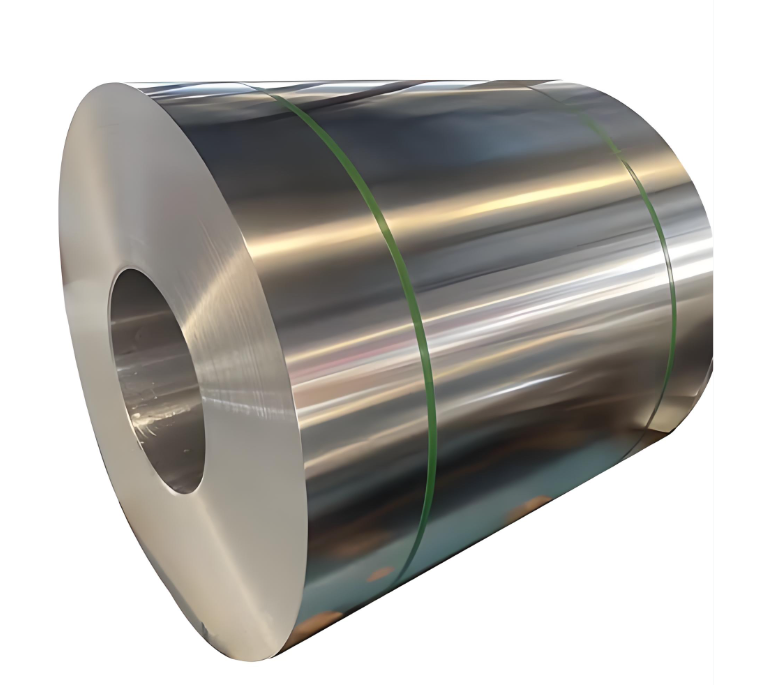
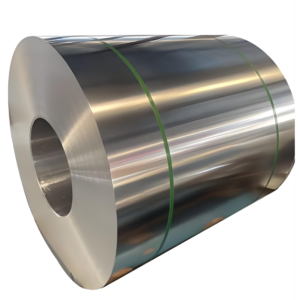
Transformer aluminium foil is manufactured from electrical-grade high-purity aluminium ingots, with a minimum purity of 99.50% . The most commonly employed alloys include 1050 (≥99.50% aluminium), 1060 (≥99.60%), 1070 (≥99.70%), and the electrical-grade 1350 alloy specifically formulated for conductor applications . While 1060 is the most widely used grade for distribution and dry-type transformers, 1070 is preferred for high-end dry-type transformers and high-current reactors due to its superior purity and conductivity .
The alloy selection directly impacts both electrical and mechanical performance. Higher purity grades exhibit lower electrical resistivity and improved conductivity, which is critical for minimising I²R losses in transformer windings. However, purity must be balanced against mechanical strength requirements, particularly for HV windings that experience greater mechanical stress during operation.
Electrical Conductivity and Resistivity
The defining electrical characteristic of transformer aluminium foil is its conductivity, typically specified as ≥61% IACS (International Annealed Copper Standard), with premium grades reaching 62% or higher . The corresponding maximum resistivity at 20°C is ≤0.02825 Ω·mm²/m, with some suppliers offering tighter limits of ≤0.027548 Ω·mm²/m for high-performance applications .
For context, at 20°C, aluminium with 61% IACS conductivity has approximately 1.64 times the resistance of annealed copper for the same conductor length and cross-sectional area . This does not preclude aluminium use; rather, it requires that conductor cross-sections be designed accordingly to achieve equivalent current-carrying capacity. The lower conductivity is partially offset by aluminium’s significantly lower density—approximately one-third that of copper—which reduces overall transformer weight and improves gravimetric power density.
Dimensional Specifications
Thickness Range
Transformer aluminium foil is manufactured in thicknesses ranging from 0.2mm to 3.0mm, with some suppliers offering material as thin as 0.02mm for specialised applications . The thickness selection depends on the transformer’s voltage rating, current requirements, and thermal management considerations. For dry-type transformers such as SCB series, thinner foils in the 0.5mm to 0.8mm range are commonly employed, while oil-immersed distribution transformers typically use foils from 0.8mm to 1.5mm. For higher-voltage applications such as 35kV reactors, thicker foils from 1.0mm to 2.0mm are preferred .
Thickness tolerances are strictly controlled to ensure consistent performance. Typical tolerances range from ±0.01mm for thinner gauges (0.2-0.4mm) to ±0.03mm for thicker gauges (1.8-3.0mm), with precision grades achieving ±0.005mm . Thickness consistency deserves special attention because if a 0.20mm conductor varies by 5%, its local cross-sectional area, DC resistance, and current density also vary proportionally, potentially creating hotspots within the winding .
Width Range
The width of transformer aluminium foil varies considerably to accommodate different transformer sizes and winding configurations. Standard widths range from 20mm to 1600mm, with some manufacturers offering widths up to 1600mm or 1700mm . Narrower foils (20-200mm) are used for smaller transformers and reactors, while wider foils serve large power transformers where the winding turn spans the full core width.
Width tolerances depend on the dimension: for widths below 100mm, tolerance is typically ±0.1mm; for 100-200mm, ±0.2mm; and for widths above 500mm, tolerances may reach ±1-2mm .
Annealed Edge Condition: A Critical Quality Parameter
Perhaps the most critical quality parameter for transformer aluminium foil is its edge condition. The foil must have smooth, substantially burr-free edges to prevent insulation damage during winding and to avoid electrical stress concentrations that could lead to partial discharge and premature insulation failure.
Burr Height Control
Burr height is controlled to 0.01-0.03mm depending on foil thickness, with collapsed side height maintained at 0.05-0.1mm . Many suppliers employ a special edge treatment process to ensure the edge is smooth without burrs . This edge conditioning—often referred to as “round edge” processing—is essential for dry-type transformers where foil edges are in direct contact with insulation systems .
Surface Quality and Cleanliness
Surface quality is equally critical for transformer aluminium foil, particularly for dry-type and cast-resin transformers where clean surfaces are essential for proper insulation adhesion. Surface residual oil is controlled to ≤15 mg/m², with precision cast-resin applications requiring ≤10 mg/m² . The foil surface must be free from scratches, oil trails, and visible defects that could compromise insulation performance .
The O-Temper Condition
Transformer aluminium foil is supplied in the fully annealed O-temper condition, which provides optimal ductility for winding operations. In this condition, the material exhibits tensile strength of 60-95 MPa and elongation of ≥20% to >25% . The high elongation value ensures that the foil can be bent and formed around the transformer core without cracking or work hardening excessively during winding. The O-temper also contributes to the edge quality, as softer material is less prone to developing burrs during slitting.
Application-Specific Considerations
HV Transformers
For high-voltage applications, the uniform capacitance distribution inherent to foil windings provides improved impulse voltage withstand capability. The foil construction minimises the potential gradient along the winding, which is particularly beneficial for HV applications where uneven voltage distribution can lead to insulation stress . However, the lower conductivity of aluminium means that HV aluminium-wound transformers may require larger cores or additional cooling to maintain acceptable operating temperatures.
LV Transformers
Low-voltage windings typically handle high currents, making foil construction particularly advantageous. Foil windings offer a high degree of electromagnetic balance, translating to superior mechanical short-circuit strength. The axial forces during a short circuit are limited to approximately one-tenth of those occurring in conventional strip windings . For a 10kV oil-immersed distribution transformer using 0.8-1.5mm 1060 aluminium foil, cost reductions of 55-60% and weight savings of 18-22% can be achieved compared to copper equivalents .
Medium-Frequency Transformers
Recent research has demonstrated that aluminium foil windings can offer superior performance in medium-frequency applications. In a 20 kVA, 50 kHz medium-frequency transformer design, aluminium foil windings achieved a 17.02% reduction in secondary-winding AC resistance and a 28.1% improvement in gravimetric power density compared to copper-wound counterparts . This is attributed to reduced eddy-current generation leading to more uniform current distribution at medium frequencies.

Reviews
There are no reviews yet.