
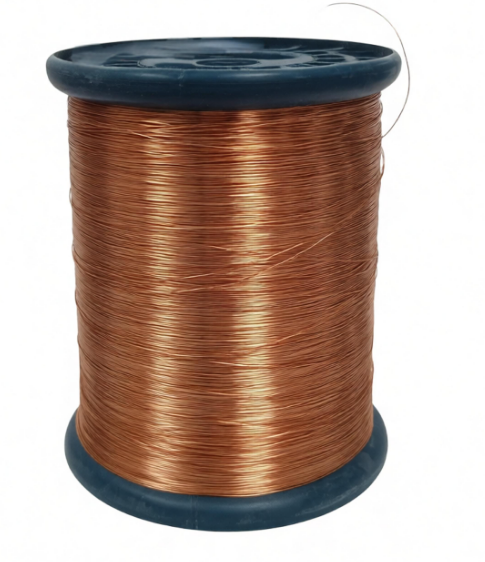
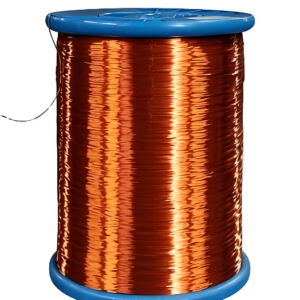
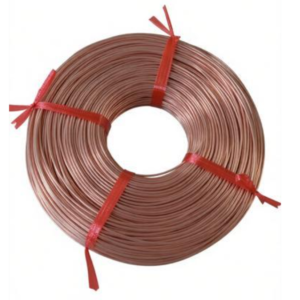
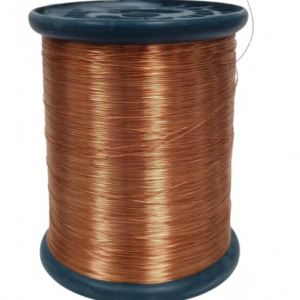
View more products about enameled cca wire+
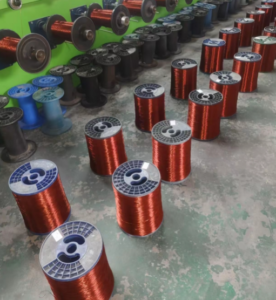
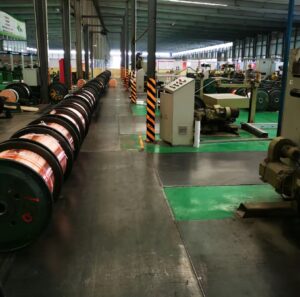
Manufacturing Process
Zhengzhou Tasuu employs a sophisticated production process to ensure consistent quality and performance of its Class 155 ECCA wire:
1. Cladding and Drawing: The production begins with high-quality copper strips concentrically wrapped around the aluminum core rod. Through a heating and drawing process, the copper and aluminum form a metallurgical bond at the interface. Advanced drawing machines with nanocrystalline diamond composite coating dies progressively reduce the composite to the target 0.35mm diameter, maintaining the 30% copper volume ratio throughout the process.
2. Annealing: The drawn wire undergoes continuous annealing to relieve internal stresses, soften the conductor, and optimize its flexibility and conductivity. This step is critical for achieving the required elongation performance (typically >15-20%) and ensuring reliable winding behavior.
3. Surface Cleaning: Deionized water cleaning removes drawing lubricants and oxides from the conductor surface, ensuring proper enamel adhesion and preventing insulation defects.
4. Enameling: The cleaned wire passes through a precision enamel application die to apply the Class 155 polyurethane or modified polyester insulation. Multiple coating passes—typically 8 to 12 layers depending on the required Grade—ensure uniform insulation thickness and minimize pinhole defects.
5. Baking and Curing: The coated wire enters a high-temperature oven where solvents evaporate and the enamel resin cross-links to form a tough, continuous insulating film. Precise temperature control is essential to achieve the thermal properties required for Class 155 rating.
6. Quality Control: Zhengzhou Tasuu maintains comprehensive testing procedures, including solderability testing, dielectric strength testing, and dimensional inspection to ensure each batch meets IEC, NEMA, and GB standards.
Product Advantages
Cost Efficiency: The 30% copper cladding significantly reduces material cost compared to pure copper wire, with savings typically exceeding 30% in raw material expenditure.
Weight Reduction: The density of 30% ECCA wire is approximately 3.63 g/cm³, about 40% that of pure copper. For the same weight, ECCA wire provides 2.5 times the length of pure copper wire, substantially reducing transportation and handling costs.
Excellent Solderability: The copper cladding ensures the same solderability as pure copper wire, requiring no special pretreatment, stripping, or fluxing. The polyurethane enamel is directly solderable, eliminating the need for chemical or mechanical stripping processes.
Reliable Performance: The metallurgical bond between copper and aluminum layers ensures consistent electrical conductivity and prevents delamination during winding and processing.
Applications
The Class 155 0.35mm ECCA wire from Zhengzhou Tasuu is extensively applied across multiple industries:
Transformers: High-frequency transformers, general transformers, and inductor coils benefit from the wire’s excellent high-frequency transmission characteristics and thermal stability.
Motors: Household motors (washing machines, fans, blowers), air-conditioner compressors, anti-explosion motors, and micro-motors leverage the wire’s lightweight construction and reliable thermal performance.
Audio Equipment: Voice coils, audio drivers, and CD-ROM special wires utilize the wire’s combination of good conductivity and reduced moving mass.
Automotive Electronics: Sensors, ignition coils, and relays in automotive systems use the wire for its vibration tolerance and corrosion resistance.
Display Equipment: Deflection coils and degaussing coils for monitors and televisions benefit from the wire’s precision winding capability.

Reviews
There are no reviews yet.