
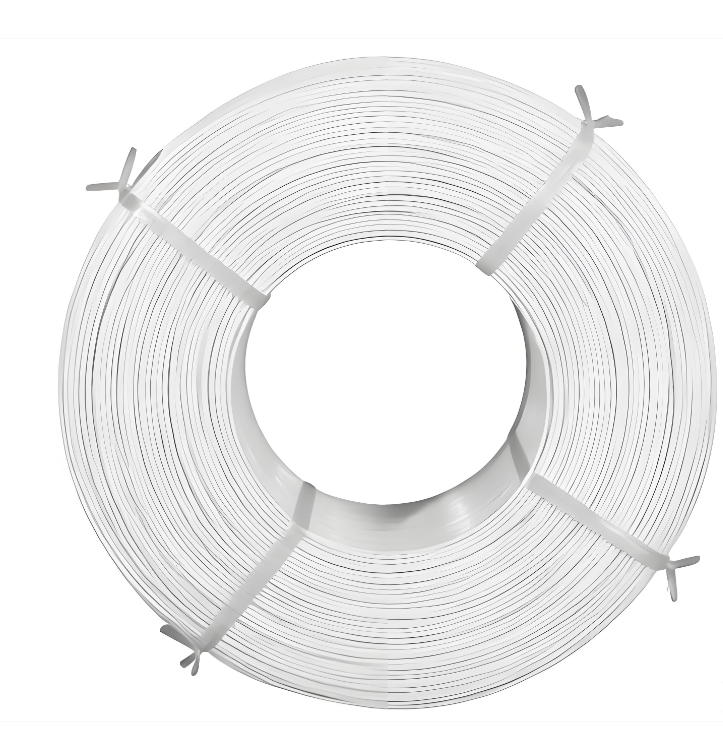
View more products about submersible pump winding wire+
The Demands of Submersible Operation
Submersible motors operate in environments where water is not merely present but surrounds the motor completely. Unlike surface-mounted motors that can rely on air cooling and dry insulation systems, submersible motors must function with their windings either directly immersed in water or in close proximity to it. This fundamental difference drives the need for specialized winding wire that can maintain its electrical integrity despite constant moisture exposure.
The water in which submersible motors operate is rarely pure. Industrial applications, groundwater pumping, and marine installations expose motors to water with varying pH levels, dissolved minerals, and even corrosive elements. As documented in technical literature on submersible motors, the water pH for submersible pump applications typically ranges from 6.5 to 8.5, with water temperatures that can reach significant levels depending on the depth and application. Our PET+BOPP insulation system is designed to withstand these varied water conditions while maintaining consistent electrical performance.
Critical Performance Requirements
Submersible winding wires must meet several critical performance criteria to ensure long-term reliability. The JB/T 4014 series of standards, which govern submersible motor winding wires in China, specifies rigorous requirements that include:
-
Insulation resistance: After 24 hours of water immersion, insulation resistance must meet specified minimum values at 20°C
-
Voltage withstand: Wires must withstand AC test voltage (minimum 3000V) for one minute after water immersion without breakdown
-
Water pressure testing: Wires must maintain integrity under specified hydrostatic pressure conditions
-
Accelerated life testing: Wires must demonstrate sufficient service life under accelerated aging conditions
Our PET+BOPP submersible winding wire is manufactured to meet and exceed these requirements, providing transformer and motor manufacturers with confidence in the product’s long-term reliability.
Insulation System: PET+BOPP Composite Structure
Material Selection
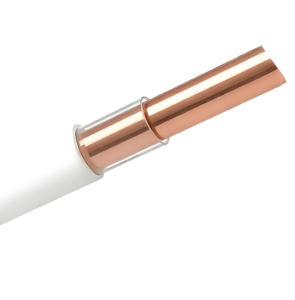
The PET+BOPP insulation system combines two complementary polymer films to create a composite that offers superior performance characteristics. PET (Polyester) provides excellent mechanical strength, dimensional stability, and heat resistance, while BOPP (Biaxially Oriented Polypropylene) offers outstanding electrical properties, low moisture absorption, and chemical resistance.
According to Indian Standard IS 8783 (Part 4/Sec 3), which specifically covers polyester and polypropylene insulated winding wires for submersible motors, this insulation system is suitable for applications where conductor temperatures do not exceed 105°C under the combination of ambient temperature and temperature rise due to load. This temperature rating makes PET+BOPP insulation suitable for the vast majority of submersible motor applications.
Multi-Layer Construction
The insulation is typically applied in a multi-layer configuration using a wrapping process with precise tension control. The most common construction utilizes three layers of tape, with configurations varying among manufacturers. Some manufacturers apply one layer of polyester tape followed by two layers of BOPP tape, while others use three layers of BOPP tape with different properties (transparent and opaque) to achieve optimal coverage.
The wrapping process is performed on specialized machinery with sophisticated wrapping heads and in-line continuous heat shrinkage furnaces to achieve uniform covering. The heat-shrinkable nature of the films ensures that the insulation conforms tightly to the conductor, eliminating air gaps that could compromise dielectric performance.
Key Properties
The PET+BOPP insulation system exhibits several properties that make it ideal for underwater applications:
Water Resistance: The multiple-layer construction with heat-sealable films rules out water penetration, ensuring that the insulation maintains its integrity even under continuous water immersion. This is a critical advantage over conventional PVC-insulated wires, which have higher water absorption coefficients.
Thermal Performance: PET+BOPP insulated wires can withstand temperatures up to 130°C for short periods and continuous temperatures of 60°C to 105°C. This thermal capability provides a significant safety margin for submersible motor operation.
Dielectric Strength: The multiple-layer construction ensures high dielectric quality, with the insulation placed concentrically around the conductor for consistent electrical performance. Each coil is typically tested at 3500V to verify insulation integrity.
Mechanical Robustness: The biaxially oriented construction of the BOPP film makes tear propagation difficult and provides remarkable resistance to cut-through and scrap abrasion. This mechanical strength is essential for withstanding the stresses of motor winding and the vibration experienced during operation.
Leakage Current: PET+BOPP insulated wires maintain constant and significantly higher insulation resistance even at elevated temperatures, ensuring minimal current leakage. This characteristic contributes to improved motor efficiency and reduced energy losses.
Dimensional Specifications
Our PET+BOPP submersible winding wire is available in a comprehensive range of conductor sizes to accommodate various motor designs and power ratings. The product offerings include:
Solid Copper Conductors
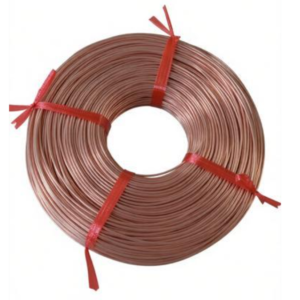
For smaller cross-sectional applications, solid conductors are available with diameters ranging from 0.6 mm to 4.0 mm, with the most common range being 0.8 mm to 4.5 mm. The corresponding cross-sectional areas typically range from 0.5 mm² to 19.6 mm². For applications requiring larger conductors, stranded constructions are also available. Indian Standard IS 8783 specifies detailed dimensions for round solid conductors with cross-sectional areas from 0.125 mm² to over 2.0 mm², with corresponding insulation thickness requirements.
Stranded Copper Conductors
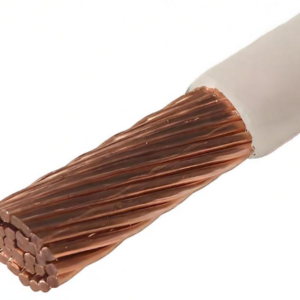
For higher current applications, stranded conductors provide improved flexibility and reduced skin effect. Stranded conductors are available with diameters ranging from approximately 3.6 mm to 17.1 mm, with cross-sectional areas from 8.0 mm² to 150 mm². According to JB/T 4014.4-2013 specifications, stranded conductors are constructed from multiple wires of TR-type soft round copper wire, with controlled lay ratios and stranding directions to ensure consistent performance.
Insulation Thickness
The insulation thickness of PET+BOPP submersible winding wire is specified according to the conductor size and voltage rating. For 500V rated motors, the insulation thickness is typically 0.30-0.40 mm, while for 1000V applications, a 0.50-0.60 mm insulation thickness may be required. For larger conductor cross-sections, insulation thicknesses of up to 0.65 mm may be specified.
Indian Standard IS 8783 specifies minimum total insulation thickness requirements for various conductor sizes, with typical values of 0.20 mm for smaller conductors up to 0.25-0.30 mm for larger sizes, with polyester and polypropylene layers each contributing to the total thickness.
Technical Standards Compliance
Our PET+BOPP submersible motor winding wire is manufactured in compliance with relevant international and national standards to ensure quality and compatibility with global equipment designs:
-
JB/T 4014.1-2013: General requirements for submersible motor winding wires
-
JB/T 4014.3-2013: Specifications for polyethylene insulated winding wires
-
JB/T 4014.4-2013: Specifications for XLPE insulated and nylon sheathed water-resistant winding wires (rated voltage 600/1000V and below)
-
IS 8783 (Part 4/Sec 3): Indian Standard for polyester and polypropylene insulated winding wires for submersible motors
-
ISO 9001: Quality management system certification
Applications
Our PET+BOPP submersible motor winding wire is suitable for a wide range of underwater and wet-environment applications:
-
Submersible Pumps: Domestic, agricultural, and industrial submersible pump motors of all sizes
-
Offshore Oil and Gas: Subsea pumping systems and platform equipment
-
Mine Dewatering: Pumps for mining operations where continuous water removal is required
-
Municipal Water Supply: Large-scale water supply systems and booster stations
-
Irrigation Systems: Agricultural water pumping for crop irrigation
-
Geothermal Applications: Pumps operating in warm water conditions

Reviews
There are no reviews yet.