
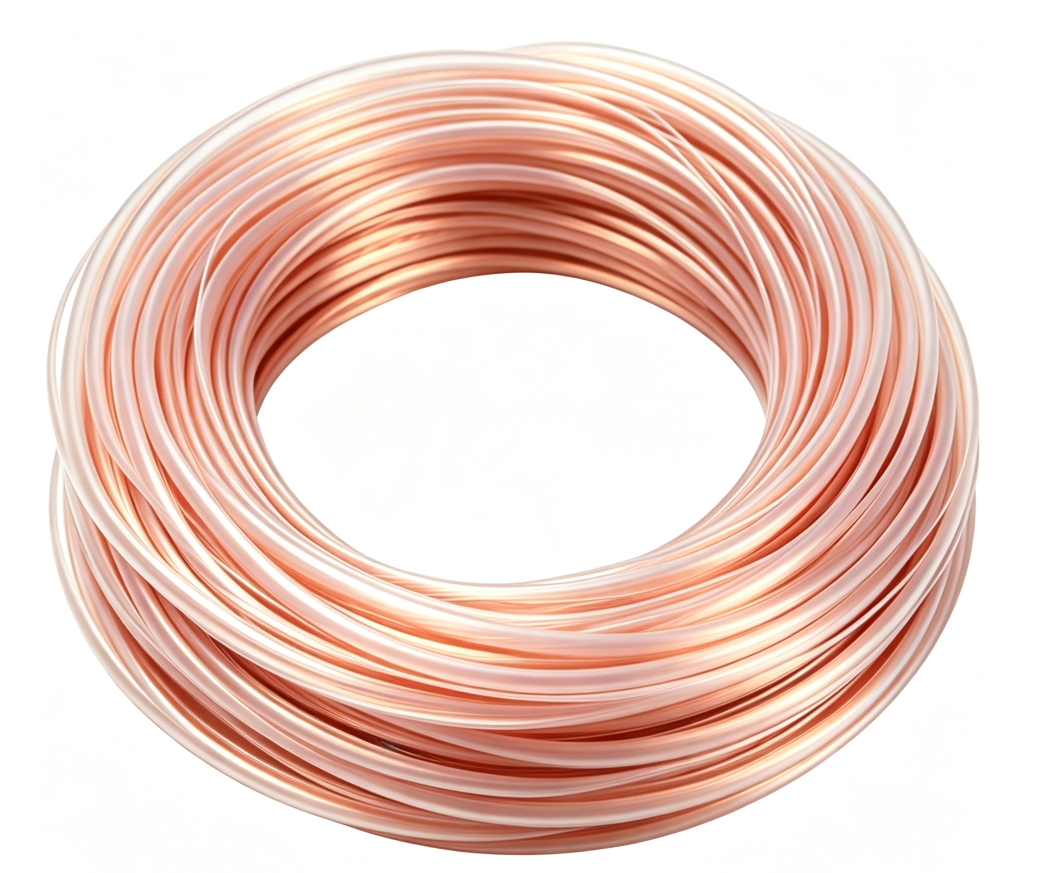
View more products about submersible pump winding wire+
Structure and Composition
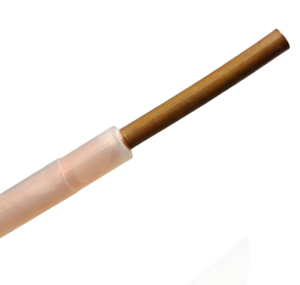
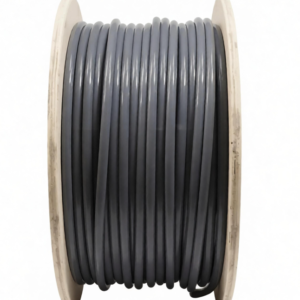
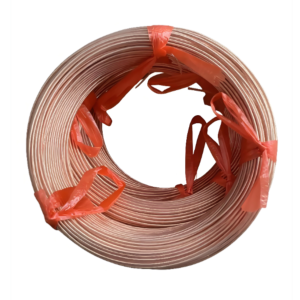
PE2-PA winding wire consists of a solid or multi-stranded bare copper conductor. The conductor is first coated with cross-linked polyethylene (PE2), which provides the primary electrical insulation. The cross-linking process transforms the polyethylene from a thermoplastic to a thermoset material, significantly improving its resistance to heat and deformation. A thin polyamide (PA) sheath is then applied over the PE2 layer for surface protection .
The polyamide outer sheath serves several critical functions. It protects the polyethylene insulation from mechanical damage during winding and operation, provides a smooth surface finish that facilitates efficient winding, and adds a secondary barrier against water ingress .
Key Technical Properties
The dielectric breakdown strength of PE2-PA winding wire reaches 70 kV/mm at 50 Hz when tested at 20°C per DIN VDE 0303-21. The specific insulation resistance measures 10¹⁰ Ω·cm at 20°C according to IEC 60093. The dielectric constant at 800 Hz is 2.3, indicating favorable insulating characteristics .
Mechanically, the wire achieves a tensile strength of at least 10 N/mm² and elongation at break of at least 100% at 23°C, tested in accordance with IEC 60811-1-1. After aging at 80°C for seven days, these values remain stable, demonstrating the long-term reliability of the insulation system .
The thermal rating allows continuous operation at temperatures up to 90°C, with the cross-linked polyethylene structure preventing the insulation from softening or deforming under thermal stress . PE2-PA winding wire is available in conductor diameters from 0.8 mm to 3.4 mm for typical submersible pump applications .
Applications in Modern Pumping Systems
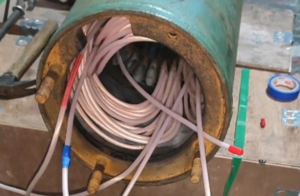
PE2-PA winding wire is the preferred insulation for water-filled submersible motors, commonly known as “wet motors.” In these motors, the stator winding is directly exposed to the surrounding fluid, making the water resistance of the insulation system the single most important factor determining motor reliability and life .
The wire is used across a broad spectrum of submersible pump applications. In agricultural irrigation, deep well pumps must operate reliably for years with minimal maintenance access. In municipal water supply, submersible motors draw drinking water from aquifers. In industrial settings, these motors handle process water, cooling water, and wastewater. The oil and gas industry uses electric submersible pumps (ESPs) for artificial lift in wells, where motor assemblies contain stator windings of insulated wire designed to withstand the downhole environment .
The wire‘s high resistance to voltage fluctuations provides a safety margin that standard motor windings lack. This characteristic is particularly valuable in regions where grid stability cannot be guaranteed. The smooth surface finish of the polyamide sheath also facilitates automated winding processes, improving manufacturing efficiency .
Global Technical Standards
The manufacture and testing of PE2-PA winding wire is governed by a patchwork of national and international standards that, while sharing common technical foundations, differ in their specific requirements and certifications.
China maintains the most comprehensive standard system for submersible motor winding wires. The JB/T 4014 series, first issued in 1985 and revised in 2013, covers all aspects of design, manufacture, and testing. Part 4 specifically addresses cross-linked polyethylene insulated nylon sheathed water-resistant winding wires with rated voltages up to 600/1000 V . These standards are administered by the Ministry of Industry and Information Technology and are widely referenced by Chinese manufacturers serving both domestic and export markets.
India has developed its own standard framework under the Bureau of Indian Standards. IS 8783 addresses winding wires for submersible motors in multiple parts, including Part 4 Section 2, which specifies requirements for cross-linked polyethylene insulated and polyamide jacketed wires .
Germany and the broader European market rely on DIN VDE standards for electrical testing, particularly DIN VDE 0303-21 for dielectric breakdown strength. The IEC 60811 series provides international test methods for insulating and sheathing materials, while IEC 60093 covers insulation resistance measurement . These standards are often cited in product specifications regardless of the manufacturer’s location, facilitating international trade.
International harmonization efforts continue through the IEC 60317 series, which specifies general requirements for particular types of winding wires. While IEC 60317 does not currently have a dedicated section for PE2-PA submersible winding wire, its testing methodologies are widely adopted by manufacturers and referenced in national standards

Reviews
There are no reviews yet.