
View more products about submersible pump winding wire+
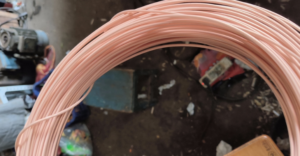
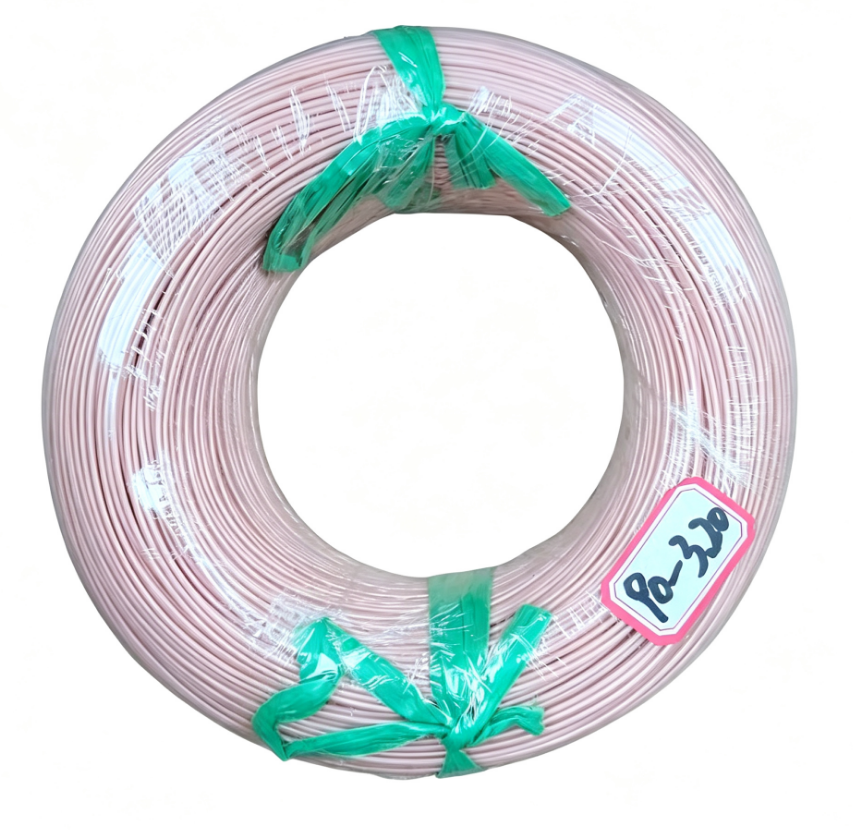
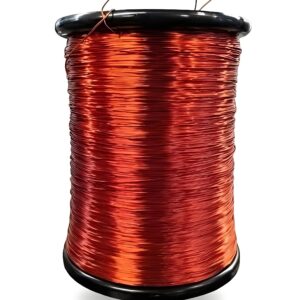
Fabrication Technology of PE2+PA Winding Wire
Conductor Drawing and Preparation
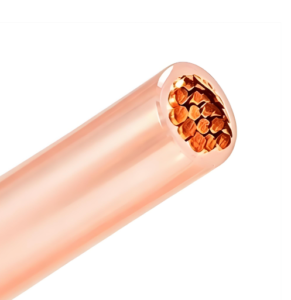
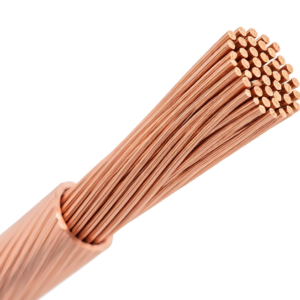
The manufacturing sequence begins with copper rod, typically 8 mm in diameter, which is drawn down through a series of dies to the final conductor size. Solid conductors for submersible motor windings range from 0.6 mm to 4.6 mm in diameter, corresponding to cross-sectional areas from 0.28 mm² to 16.6 mm². For larger current-carrying capacities, multiple strands are twisted together to form a stranded conductor, with overall diameters reaching 17.1 mm. The drawing process must produce a conductor with precise diameter tolerance and a smooth, clean surface free of drawing lubricant residue. Any contamination on the copper surface will compromise adhesion between the metal and the subsequently extruded polymer layers, potentially creating pathways for moisture ingress during service.
Cross-Linked Polyethylene Extrusion
The cleaned conductor passes through a crosshead extrusion die where molten polyethylene is applied at controlled temperature and pressure. The polyethylene compound used for PE2 insulation is formulated to be free from lead and chlorine, addressing both environmental concerns and the long-term chemical stability requirements of submerged operation. The insulation wall thickness is governed by the intended operating voltage, typically ranging from 0.3 mm to 3.5 mm. For wires rated at 3 kV and above, a semiconducting layer of 0.1 mm to 0.3 mm thickness may be applied between the copper and the polyethylene to equalize the electric field at the conductor surface.
Following extrusion, the polyethylene coating must be cross-linked to achieve its characteristic thermal stability. Cross-linking creates covalent bonds between polymer chains, transforming the thermoplastic polyethylene into a thermoset material that will not soften or flow at elevated temperatures. The method employed determines the wire’s designation: chemical cross-linking using peroxide or silane agents produces what some manufacturers call VPE, while physical cross-linking by electron beam radiation yields the PE2 designation. The radiation process is particularly well-suited to continuous production lines, as it can be performed inline immediately after extrusion, reducing handling and inventory costs.
Polyamide Sheathing Application
The cross-linked polyethylene surface, while electrically excellent, lacks the mechanical toughness required to survive the stresses of winding insertion. The solution is a second extrusion pass that applies a thin polyamide sheath directly over the PE2 layer. Polyamide, commonly nylon, is selected for its combination of toughness, low friction, and compatibility with the polyethylene substrate. The sheath thickness ranges from 0.1 mm to 0.3 mm, depending on the underlying insulation diameter. This outer layer serves purely mechanical functions: it protects the PE2 dielectric from abrasion during handling, facilitates wire feeding through automatic winding equipment by providing a smooth low-friction surface, and resists cut-through when the wire is bent around slot edges or crossed over itself in end-turn regions.
Testing and Quality Control
Completed PE2+PA wire undergoes final testing before spooling. High-voltage routine testing is performed with the wire immersed in water, applying alternating current to verify insulation integrity under conditions simulating actual service. Dimensional checks confirm conductor diameter, insulation concentricity, and overall diameter. Mechanical tests may include tensile strength and elongation measurements on the insulation, with minimum values of 10 N/mm² tensile strength and 100% elongation specified under standards such as IEC 60811-1-1. These values must be maintained even after accelerated aging at 80°C for seven days, ensuring the insulation will not embrittle during years of thermal cycling in service.
Price Competitiveness and Market Position
The production technology described above is well-established and widely licensed, which has important implications for pricing. Unlike specialty high-temperature wires that require exotic fluoropolymer resins and tightly controlled processing, PE2+PA wire relies on commodity polyethylene and polyamide materials. The cross-linking step adds cost compared to simple thermoplastic extrusion, but the equipment and know-how are widely available. Chinese manufacturers, in particular, have leveraged their scale and manufacturing efficiency to offer PE2+PA winding wire at price points that make it accessible for motor rewinding operations and pump manufacturers across Southeast Asia.
The economic argument for PE2+PA wire extends beyond the initial purchase price. A submersible motor rewound with this insulation can operate at water temperatures up to 50°C without derating, compared to the 30°C limit imposed by PVC insulation. For pumps installed in deep wells where water temperatures rise during operation, this thermal margin directly translates into longer service intervals and reduced life-cycle cost. The price premium over PVC wire, where it exists, is typically recovered within the first extended service interval.
Thai Water Pump Brands Using PE2+PA Winding Technology
Several prominent water pump brands active in the Thai market incorporate submersible motors wound with PE2+PA insulation, either as standard equipment or as part of their premium motor ranges.
Franklin Electric maintains a significant presence in Thailand through its Southeast Asia operations, with a regional facility near Bangkok providing warehouse, service, testing, and assembly support. Franklin Electric submersible motors, including the 4-inch and larger series widely used in Thai borehole applications, employ high-quality insulation systems suited to the demanding conditions of agricultural and municipal water supply. The company’s vertical turbine pump installations in regions such as Ubon Ratchathani have demonstrated the reliability of its motor technology under continuous agricultural duty.
Ebara (Thailand) Limited, a subsidiary of the Japanese pump manufacturer established in Thailand in 1993, produces and distributes submersible pumps including the BEST ONE series for clear water applications. Ebara’s submersible motors are engineered for durability in drainage, water supply, and agricultural applications, with motor designs that reflect the company’s long experience in pump manufacturing. While specific insulation specifications vary by model, Ebara’s engineering standards for submersible motors align with the use of high-grade winding insulation appropriate to continuous submerged operation.
Grundfos has been active in the Thai market for decades, particularly in agricultural and solar-powered pumping solutions. The SQFlex series, extended into Thailand and other Asia Pacific markets, employs permanent magnet motors with sophisticated electronic control and insulation systems designed for reliability in off-grid and remote installations. Grundfos pumps are widely distributed through Thai dealer networks for applications ranging from farm irrigation to industrial water supply.
DAB Pumps, an Italian manufacturer represented in Thailand through authorized distributors, offers submersible pumps including the FEKA and NOVA series for drainage and clean water applications. DAB motors incorporate high-quality insulation and thermal protection systems, with insulation class ratings suitable for demanding operational conditions.
Panelli, part of the Pedrollo Group, manufactures submersible motors in the 4-inch through 10-inch range, including water-filled rewindable designs that are compatible with variable frequency drive operation. The company’s P4000 and P600/P800/P10000 series motors employ insulation systems designed for long service life in borehole and industrial applications.
These brands, along with other international and regional manufacturers, benefit from the availability of PE2+PA winding wire at competitive prices. The wire technology enables motor builders and rewinders to deliver products that meet the performance expectations of Thai customers without imposing the cost premium associated with specialty high-temperature insulation systems.

Reviews
There are no reviews yet.