
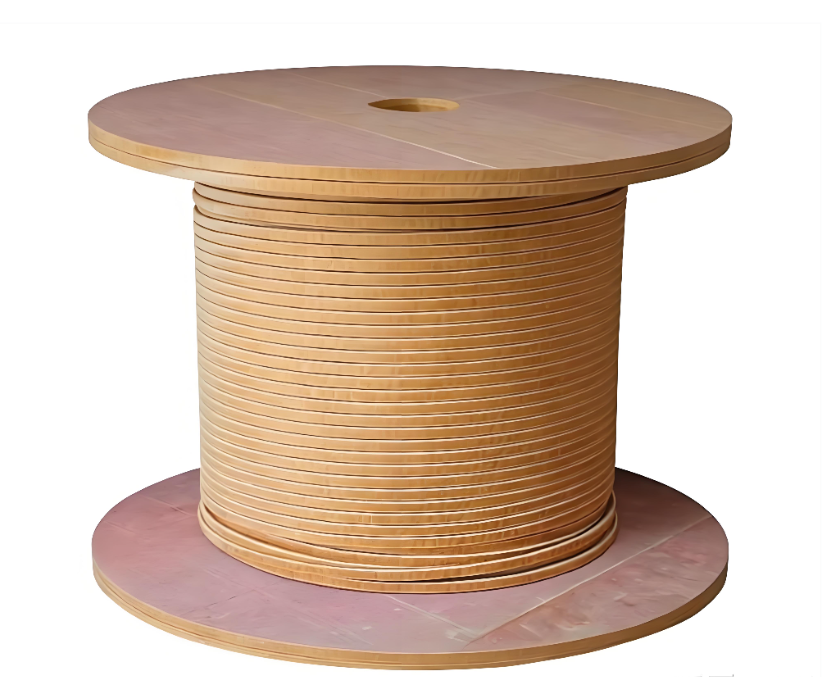
View more products about fiberglass covered winding wires+
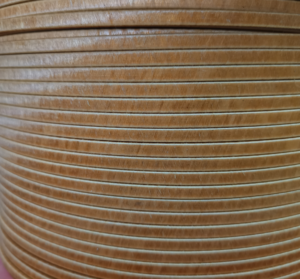
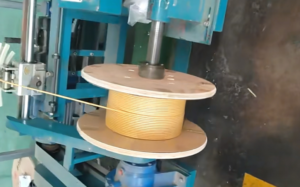
Abrasion Resistance
The winding process subjects insulated wire to significant mechanical stress. Conductor feeding through tensioners, bending around mandrels, and insertion into stator slots all create opportunities for insulation damage. Scratches or cuts in the insulation layer create weak points that can lead to dielectric failure under operating voltage.
Our fiberglass covering provides substantial mechanical protection. The glass fiber yarn is inherently abrasion-resistant, and when impregnated with varnish, it forms a hard, durable surface that resists cut-through and scraping. Standard electrical insulation tests, such as unidirectional scrape and repeated scrape tests, demonstrate the superior mechanical robustness of this insulation system . For motors and generators operating in high-vibration environments, this mechanical durability translates directly into extended service life and reduced maintenance costs.
Solvent and Chemical Resistance
Industrial environments expose electrical equipment to a wide variety of chemicals. Transformers and motors may come into contact with mineral oils, synthetic lubricants, cleaning solvents, or refrigerants. Many organic insulation materials degrade when exposed to these substances, leading to gradual loss of dielectric strength and eventual failure.
Our fiberglass covered wire exhibits excellent resistance to a broad spectrum of chemicals. Tests under standards such as IEC 60317-70 and IEC 60317-50 verify resistance to solvents, hydrolysis, and transformer oil . The glass fiber itself is chemically inert, and the impregnating varnish is selected for its resistance to the specific chemical environment specified by the customer. This combination ensures that the insulation remains intact even when the equipment operates in chemically aggressive conditions.
Dimensional Ranges
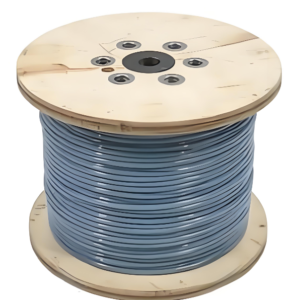
We manufacture fiberglass covered copper wire in rectangular and round profiles to suit different application requirements.
Rectangular Conductors :
-
Thickness (a): 0.80 mm to 5.60 mm
-
Width (b): 2.00 mm to 16.00 mm
These dimensions comply with IEC 60317-32 for 155°C class and IEC 60317-31 for 180°C class rectangular copper wire . The specified combinations of width and thickness must follow the ratios defined in IEC 60317-0-4.
Round Conductors :
-
Diameter: 1.70 mm to 6.00 mm
For round conductors, single and double glass-fibre coverings are available, with maximum overall diameter tables defined in IEC 60317-0-6
Thermal Performance
Temperature rating determines the application envelope of any winding wire. Our fiberglass covered copper wire is available in multiple thermal classes, with the specific rating governed by the impregnating resin system selected during manufacturing.
Class F (155°C) employs polyester-based impregnating varnishes and is suitable for standard industrial motors and transformers operating in typical ambient conditions. This thermal class provides reliable performance for the majority of general-purpose electrical equipment.
Class H (180°C) uses polyesterimide resins, offering improved thermal stability and greater resistance to thermal aging. This rating benefits motors and generators operating in higher ambient temperatures or with increased power density.
Class C (200°C) achieves the highest practical temperature rating for organic insulation systems through silicone resin impregnation. This thermal class is specified in IEC 60317-50 and serves traction motors, high-power generators, and specialized equipment where thermal management is critical.
The practical impact is substantial. A motor wound with Class H insulation can deliver approximately 20% more power than an equivalent Class F motor, as the higher temperature rating allows greater current density. Alternatively, for a given power output, the higher thermal class permits a smaller motor design, reducing material costs and installation space.
Breakdown Voltage Characteristics
Breakdown voltage defines the maximum electrical stress the insulation can withstand before dielectric failure occurs. Our fiberglass covered wire is available in multiple insulation configurations, each providing a distinct level of voltage protection.
Single glass-fibre covering provides a minimum breakdown voltage of 350 volts, adequate for low-voltage applications where a minimal insulation build is preferred.
Double glass-fibre covering raises the minimum breakdown voltage to 560 volts. The two layers, wound in opposite directions, create a more robust dielectric barrier suitable for motors and transformers operating in the 400V to 690V range.
Fiberglass film wrapped constructions significantly elevate breakdown voltage capability. At 0.20mm insulation thickness, breakdown voltage reaches 2,500V for 1,000V to 1,500V systems. Increasing thickness to 0.30mm through 0.50mm raises breakdown voltage to 5,000V for 3,000V to 3,600V systems. The thickest configurations (0.60mm to 0.90mm) achieve 6,000V, protecting the most demanding high-voltage applications.
Insulation Thickness and Tolerances
For fiberglass film wrapped constructions, standard insulation thickness options range from 0.20 mm to 0.90 mm, with a typical tolerance of ±15% . The specific thickness is selected based on the working voltage and dielectric margin required for the application.
Electrical Resistivity
The copper conductor must meet specified resistivity requirements to ensure efficient electrical performance. For copper rectangular wire conforming to GB5584.2-2009, the resistivity at 20°C is no more than 0.01724 Ω·mm²/m .
Applications
High-Voltage Motors
Large induction motors and synchronous motors used in industrial processing, mining, and oil extraction often operate at elevated voltages and temperatures. The high mechanical strength and thermal capability of fiberglass covered wire make it suitable for stator windings in these demanding applications . The insulation system withstands the start-up stresses, thermal cycling, and vibration that characterize heavy-duty motor operation.
Generators
Power generation equipment requires winding insulation that maintains its integrity under continuous thermal stress and high electrical fields. Fiberglass covered wire is widely used in generator stators and rotors, providing the reliability essential for uninterrupted power production . The wire’s resistance to moisture and temperature cycling contributes to the long service life expected of utility-grade generators.
Traction Motors
Railway traction motors operate under severe conditions: high power density, frequent thermal cycling, vibration, and exposure to dust and moisture. Corona-resistant fiberglass covered wire is particularly valuable in this application, as it resists the partial discharge that can occur in the high-voltage windings of traction equipment .
Reactors and Transformers
Power reactors, dry-type transformers, and converter transformers all benefit from the robust insulation provided by fiberglass covered wire . In these applications, the wire’s ability to withstand the electrical and thermal stresses of continuous operation ensures long-term reliability. The solvent resistance is also valuable for oil-immersed transformers where the insulation must maintain its integrity in contact with transformer oil.
Inverter-Duty Motors
Modern variable frequency drives subject motor windings to high-voltage spikes and rapid voltage transients. The corona-resistant properties of our fiberglass covered wire make it suitable for inverter-fed motor applications, where standard insulation systems can suffer premature failure from partial discharge

Reviews
There are no reviews yet.