
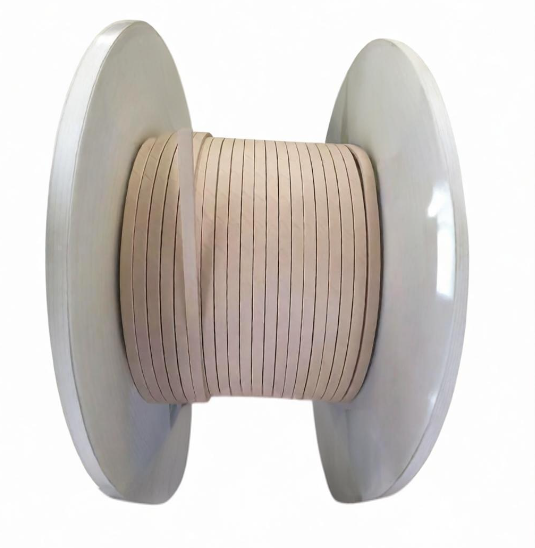
View more products about paper covered winding wires+
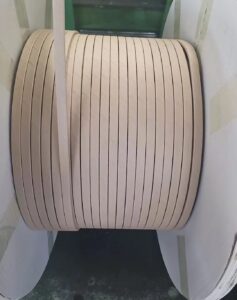
The 0.08mm Per Lay Specification
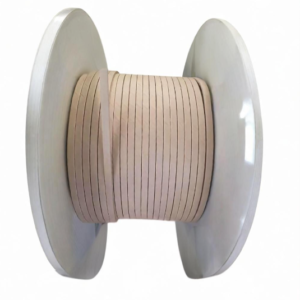
The 0.08mm paper thickness per lay represents a carefully selected insulation gauge. Papers used for this application include telephone cable paper (also known as plain paper), Kraft paper, 3M paper, and high-voltage cable paper, each offering specific dielectric and mechanical properties . Crepe paper in 0.08mm thickness is also utilized where flexibility is required during winding operations .
The 4-Layer Configuration
The 4-layer construction ensures adequate insulation for the voltage levels encountered in transformer applications. This covering consists of two or more layers of paper tape wound continuously and compactly around the conductor without wrinkles . The multiple layers provide:
-
Enhanced dielectric strength: Each layer contributes to the overall breakdown voltage rating, with individual layers typically exceeding 950-1000V per layer .
-
Redundancy: Multiple layers offer protection against minor defects in any single layer.
-
Oil impregnation capability: The paper layers absorb transformer oil, enhancing the overall dielectric performance of the insulation system.
Transformer Applications
Primary Use: Oil-Immersed Transformers
Paper covered aluminium wire is primarily intended for winding coils for oil-immersed transformers . In this application, the wire serves as the winding conductor for both power and distribution transformers . The 0.08mm per lay with 4-layer configuration is typically specified for transformers requiring reliable insulation under continuous operation.
The compatibility of paper insulation with transformer oil is a critical feature. During transformer operation, the paper layers become impregnated with insulating oil, which fills any microscopic voids and enhances the overall dielectric strength of the winding insulation system.
Additional Applications
Beyond power and distribution transformers, this wire is also used in:
-
Reactors and similar electrical coils
-
Rectifier transformers
-
Specialized transformer applications where paper insulation is preferred over enamel coatings
Thermal Class and Operating Conditions
Paper covered aluminium wire for oil-immersed transformers typically operates at a thermal class of 105°C . The insulation paper is designed to maintain its properties when immersed in transformer oil, with excellent compatibility with insulating liquids and resistance to conductive particle contamination . This ensures long-term reliability in the transformer’s operating environment.
Manufacturing Process Flow
The production of 0.08mm per lay, 4-layer paper covered aluminium wire follows a structured process to ensure consistent quality and reliable insulation performance.
Conductor Preparation
Step 1: Raw Material Preparation
The process begins with pure aluminium material, which is drawn into aluminium rod wire . Quality control checks are performed on incoming materials to ensure they meet strict standards .
Step 2: Extrusion and Drawing
The aluminium rod undergoes extrusion and coarse drawing operations through a production line to achieve the required specification of bare aluminium wire . This step reduces the cross-section to the desired conductor dimensions while maintaining surface quality. Precision size control is maintained to tolerances as fine as 0.001mm .
Step 3: Inspection of Bare Wire
The bare aluminium conductor is inspected to verify that it meets the dimensional and surface quality requirements before proceeding to the insulation stage .
Step 4: Annealing
The bare aluminium wire is annealed to restore ductility and optimize electrical conductivity . This thermal treatment relieves internal stresses introduced during drawing and ensures the wire has suitable mechanical properties for subsequent winding operations.
Paper Covering Process
Step 5: Paper Preparation
Insulation paper is precision cut to the required width for wrapping the conductor . The choice of paper type—telephone paper, Kraft paper, 3M paper, or other specified papers—depends on the specific transformer requirements .
Step 6: Pay-off and Tensioning
The prepared bare aluminium coil is positioned on a pay-off stand, and the wire is fed through straightening and tension leveling operations . Proper tension control is essential for achieving consistent paper wrapping.
Step 7: Paper Winding (4-Layer Application)
The 4-layer covering is applied in a continuous wrapping process. For a specification of 0.08mm per lay with 4 layers, the total insulation thickness would nominally be 0.32mm, though actual thickness may vary slightly depending on the overlap and tension during wrapping. Each layer is wound continuously and compactly without wrinkles, with the wrapping direction typically consistent across all layers .
The winding method can be customized according to customer requirements . Multiple insulation paper options are available, including Kraft, 3M, Nomex, and telephone papers, each selected for specific electrical and mechanical properties .
Step 8: Inspection
The finished paper-covered wire undergoes inspection to verify:
-
Insulation thickness compliance (tolerance typically ±0.05mm for standard thicknesses)
-
Absence of wrinkles or gaps in the paper covering
-
Bend testing to ensure the paper does not crack or detach during bending
-
Overall dimensional accuracy
Step 9: Take-up and Packing
The finished product is wound onto spools (typically 30kg, 50kg, or 150kg wooden spools) and prepared for shipment .
Quality Considerations
Standards Compliance
Paper covered aluminium wire for transformer applications is governed by international standards including:
- IEC 60317-27-4: Specifications for paper tape covered rectangular aluminium wire
- IEC 60317-27-2: Specifications for paper tape covered round aluminium wire
- GB/T 7673 (Chinese national standard)
- NEMA and JIS standards

Reviews
There are no reviews yet.