
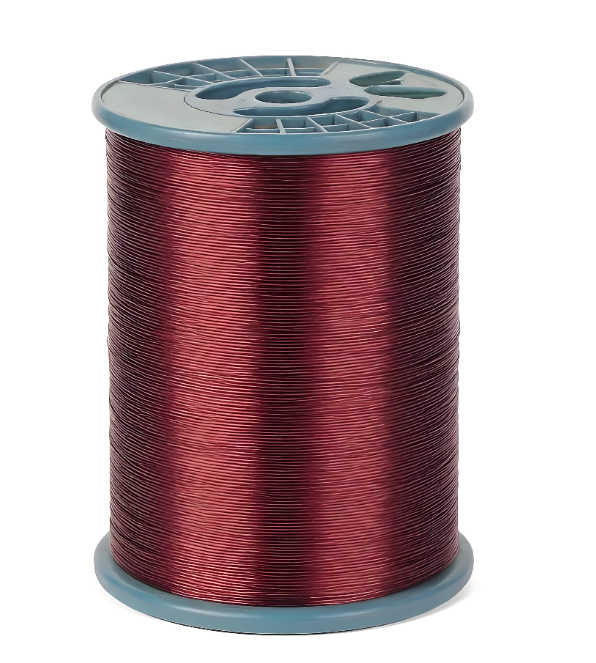
View more products about enameled copper wire+
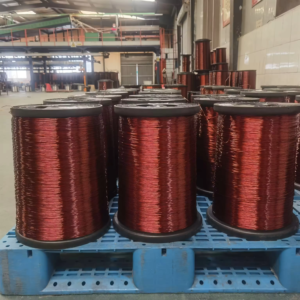
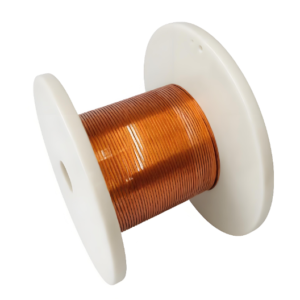
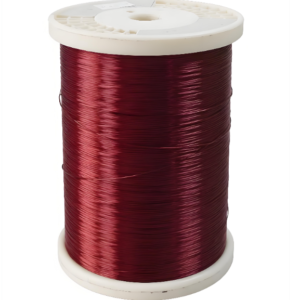
The thermal class designation is the most visible specification on any enameled wire datasheet. Class 180, also known as thermal class H, indicates a winding wire capable of continuous operation at 180°C without degradation of its insulating properties. This rating is governed by international standards including IEC 60317-22, which specifies requirements for polyester or polyesterimide enamelled round copper wire with a polyamide overcoat.
Why the Dual-Coating System Matters
The Class 180 wire widely used in motor rewinding typically features a two-layer insulation structure:
-
Base coat (polyesterimide): Provides primary dielectric strength and thermal endurance up to 200°C for short-term overload conditions.
-
Top coat (polyamide): Adds mechanical toughness, abrasion resistance, and lubricity to withstand the friction of coil insertion into stator slots.
This combination delivers performance characteristics that lower-rated wires cannot match:
-
Heat shock resistance: Withstands thermal cycling without crazing
-
Chemical resistance: Tolerant of standard varnishes and impregnating resins used in motor manufacturing
-
Abrasion resistance: Critical for automated winding processes where wire passes through multiple guide rollers
Diameter Range 0.5–2.5mm: The Workhorse Gauge
Why does this specific range dominate motor rewinding inventories? Because it covers the majority of fractional to medium-horsepower motors commonly repaired in industrial settings. A typical rewinding shop will maintain stock across this range, with 0.8mm, 1.0mm, 1.2mm, and 1.6mm being particularly high-turnover sizes.
The Copper Price Landscape in 2026
Copper is the single largest cost component in enameled wire manufacturing, accounting for roughly 60% of the finished product cost structure. Understanding recent copper market behavior helps buyers interpret price quotations they receive and anticipate near-term movements.
H1 2026: A Market of Divergence
The first half of 2026 saw a copper market defined by structural bifurcation—different segments of the economy pulling prices in different directions:
Price Support Factors
-
New energy vehicle (NEV) production continued its upward trajectory, consuming significant volumes of high-grade magnet wire for drive motors.
-
Power grid infrastructure investments, particularly in transformer upgrades and renewable energy integration, maintained steady demand.
-
AI computing infrastructure emerged as a surprising source of demand, with data center power distribution systems requiring specialized winding components.
Price Drag Factors
-
The traditional home appliance sector experienced a year-on-year order decline of over 20%, reducing demand for commodity-grade enameled wire.
-
General industrial manufacturing faced headwinds from higher borrowing costs, tempering new equipment orders.
The net result was a “wait-and-see” sentiment that emerged during the second quarter. As copper prices consolidated at relatively high levels, many buyers adopted a cautious stance, releasing orders only when inventory levels became critically low. This pattern created windows of opportunity for suppliers with flexible production capacity.
Copper Price Volatility: The New Normal
Recent trading activity on the London Metal Exchange (LME) and Shanghai Futures Exchange (SHFE) illustrates the current volatility. Prices in mid-2026 have shown sensitivity to:
-
US inflation data: Cooling CPI readings eased rate hike expectations but also signaled potential economic slowdown, creating a mixed signal for industrial commodity prices.
-
Geopolitical tensions: Ongoing uncertainties have periodically triggered risk-off trading, putting downward pressure on copper prices in short bursts.
-
Supply constraints: Refined copper inventories remain below historical averages, providing underlying support that prevents steep declines.
For buyers of Class 180 enameled wire, this environment means that price quotes are unlikely to follow a simple linear trend. Instead, they reflect a complex negotiation between rising processing costs (for specialized resins) and the volatile base metal price.
Supply-Side Differentiators: What Distinguishes Quality Wire
Not all Class 180 wire is created equal. While copper price movements affect everyone in the industry, manufacturing capabilities vary significantly among suppliers. Here are the key differentiators that technically minded buyers examine:
Raw Material Pedigree
Premium manufacturers start with oxygen-free copper (Cu-OF) of 99.97% purity or higher. This material, typically produced by continuous casting and rolling (CCR) processes, minimizes internal oxides and impurities that can cause hot spots and premature failure in high-temperature operation. Buyers increasingly request documentation confirming the cathode source and rod purity.
Enamel Application Consistency
The thickness and concentricity of the enamel coating directly affect breakdown voltage and thermal performance. Advanced manufacturing lines use:
-
Multiple-die coating heads with precision pressure control
-
Laser-based eccentricity monitoring to maintain wall thickness variation below 8%
-
In-line spark testing at up to 4 kV to detect pin-hole defects before spooling
These capabilities reduce the risk of dielectric failure during motor operation, particularly in variable-speed drives where voltage spikes are common.
Thermal and Mechanical Testing
A reputable supplier conducts routine quality verification including:
-
Mandrel wrap tests to confirm adhesion and flexibility
-
Thermal endurance evaluation per IEC 60216
-
Elongation testing to ensure ductility for winding processes
When a manufacturer provides certified test data with each shipment, it signals a commitment to process control that goes beyond minimum compliance.
The Value Proposition for Buyers
For procurement teams evaluating sources of Class 180 enameled wire, the “best price” is best understood in terms of total landed cost and risk-adjusted value, rather than a simple per-kilogram comparison.
Price Determinants
Several factors account for price variations among suppliers:
-
Copper sourcing model: Manufacturers integrated with upstream copper rod production can offer more stable pricing than those dependent on spot-market purchases.
-
Resin formulation: Class 180 wire using higher-grade polyesterimide resins commands a premium over alternatives that barely meet thermal class requirements.
-
Quality control investment: Suppliers operating fully automated testing lines absorb higher capital costs but deliver superior consistency.
What Buyers Typically Evaluate
When technical and procurement teams assess a new supplier, they commonly consider:
-
Traceability: Can the supplier connect each spool to specific production batch records and raw material certifications?
-
Lead time reliability: Does the quoted delivery date account for current production load, or is it an optimistic estimate?
-
Packaging integrity: Does the spool and packaging protect the wire from damage during transit and storage?
-
Responsiveness: How quickly does the supplier address technical inquiries or quality concerns?
These factors, while not always reflected in the initial quote, determine the real cost of ownership over a multi-year supply relationship.
Market Outlook for H2 2026
Looking ahead, several trends will shape the Class 180 enameled wire market for motor rewinding:
Continued Demand Polarization
The distinction between strong NEV/transformer demand and weak appliance-sector demand is expected to persist. Suppliers focusing on high-performance motor and transformer applications remain well-positioned, while those dependent on commodity-grade consumer products face margin compression.
Copper Price Sensitivity
The copper market remains the primary uncertainty factor. Experienced buyers monitor LME and SHFE price trends but also look for signals from:
-
Chinese government economic stimulus announcements
-
US Federal Reserve interest rate decisions
-
Mining supply disruptions in major producing regions
Quality Standards Evolution
As motors become more efficient and compact, operating temperatures and voltage stresses increase. This trend favors Class 180 wire with superior thermal and dielectric properties, potentially accelerating specification upgrades from Class 155 (F) to Class 180 (H) in new designs.

Reviews
There are no reviews yet.