
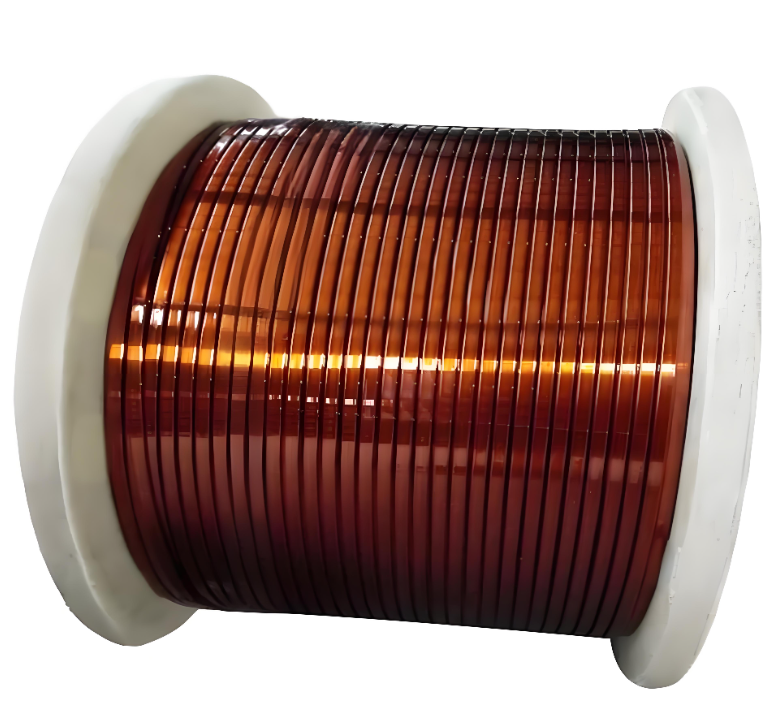
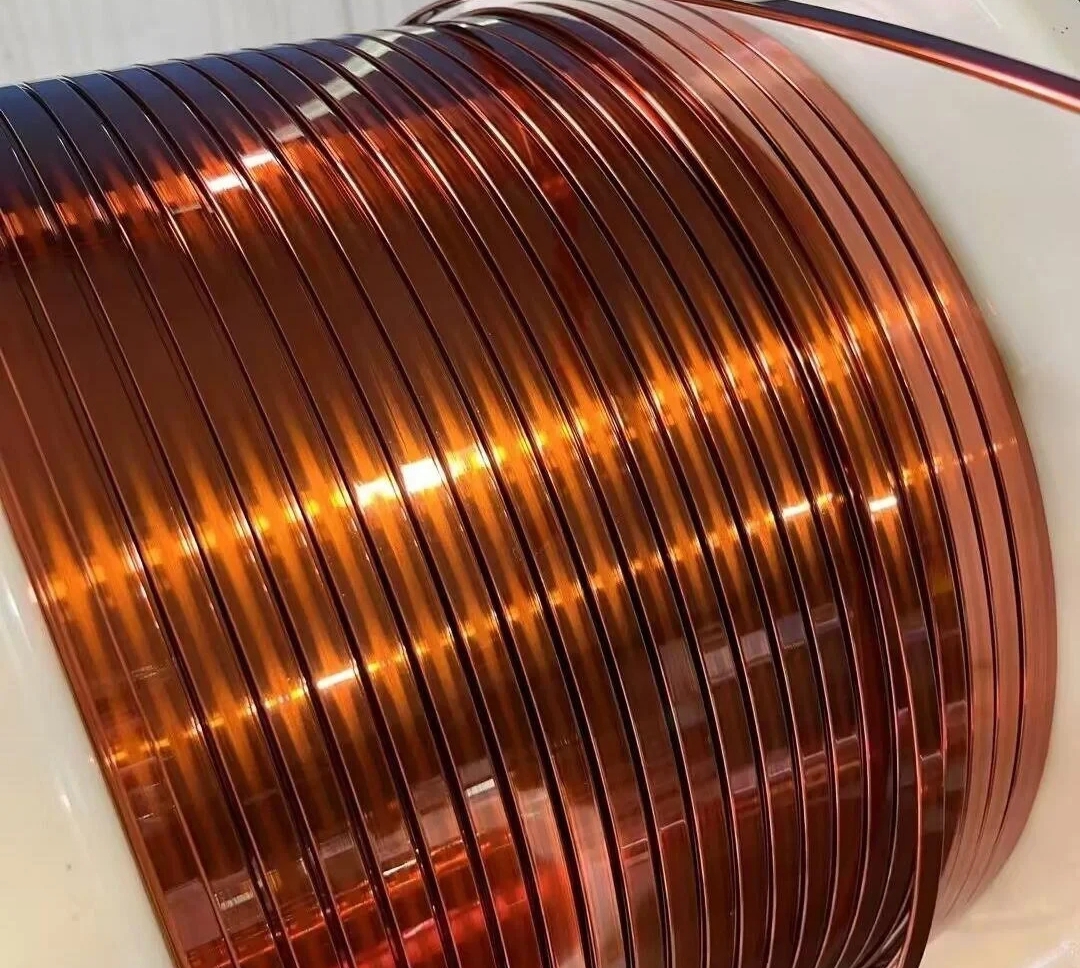
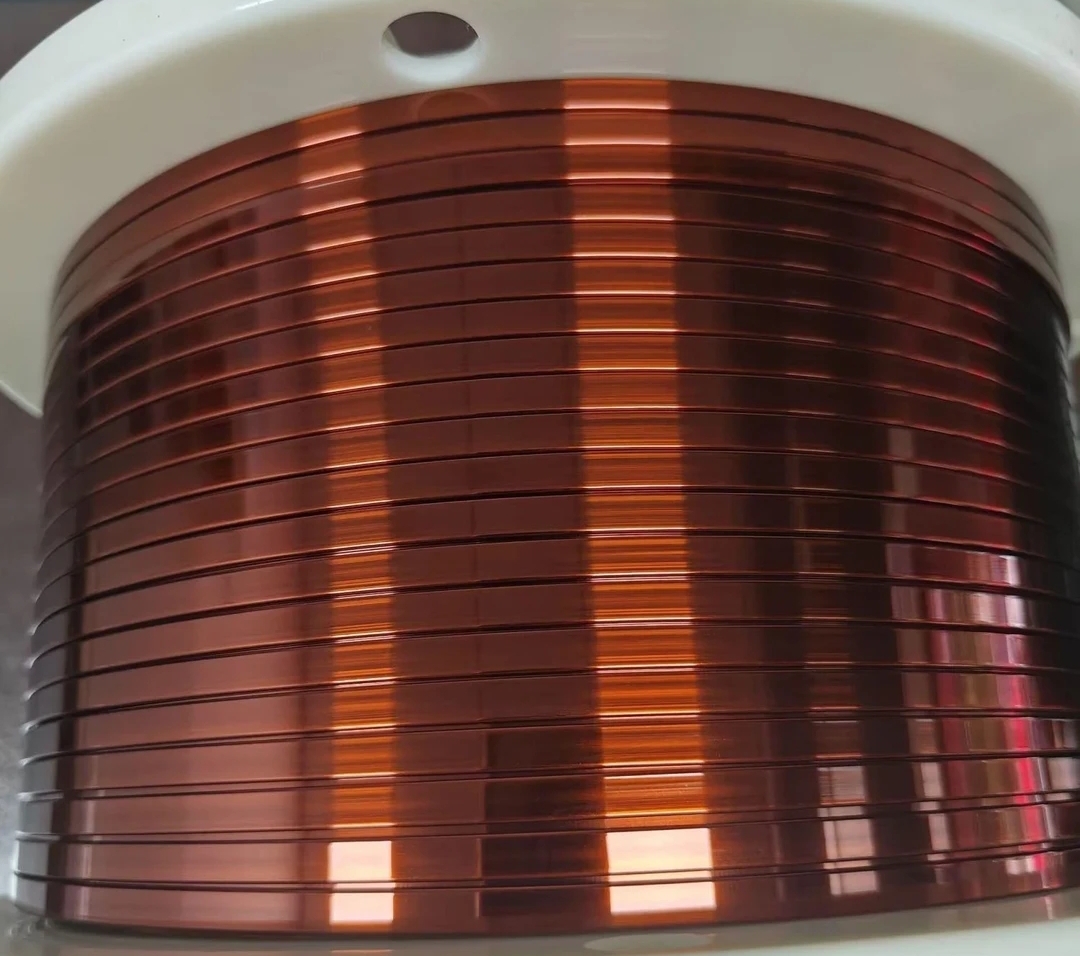
View more products about flat enameled cca wire+
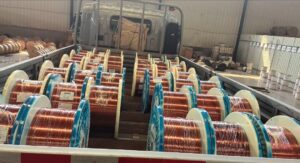
Technical Characteristics of 40% Copper Flat ECCA Wire
Material Composition and Properties
Flat ECCA wire with 40% copper content consists of an aluminum core metallurgically bonded to a copper cladding layer. The copper constitutes 40% of the total wire weight, providing a robust conductive surface while the aluminum core delivers significant weight savings. This composition yields a conductivity of approximately 62-65% IACS (International Annealed Copper Standard), which, while lower than pure copper’s 100% IACS, represents an optimal balance for many transformer applications .
The density of 40% copper ECCA wire ranges from 3.32 to 3.63 g/cm³, substantially lower than pure copper’s 8.96 g/cm³ . This density reduction translates directly into material weight savings and extended length per unit weight—ECCA wire can deliver 2.45 to 2.65 times more length than pure copper wire for the same weight . For transformer manufacturers, this means more coils per kilogram of raw material.
Flat Wire Advantages
The flat profile of this ECCA wire offers distinct advantages in transformer manufacturing. Flat conductors enable higher packing density in transformer windings, improving the coil’s fill factor and reducing the overall transformer footprint. The larger surface area-to-cross-section ratio of flat wire enhances heat dissipation, allowing transformers to operate at higher efficiencies . Advanced manufacturing processes, including laser-controlled tolerances down to ±0.005mm and controlled annealing processes, ensure consistent quality and processability .
Applications in Transformer Manufacturing
High-Frequency Transformers
High-frequency transformers, increasingly common in switch-mode power supplies and electronic devices, particularly benefit from flat ECCA wire. The reduced skin effect at high frequencies, combined with the improved heat dissipation from the flat geometry, makes this material ideal for compact, high-efficiency designs . The lighter weight also contributes to more portable electronic products without compromising electrical performance.
Standard Power Transformers
For conventional power transformers used in industrial and commercial applications, 40% copper flat ECCA wire provides reliable performance at a significantly reduced material cost. The wire’s good solderability, enhanced by the copper cladding, facilitates connection processes, while the insulation systems—available in thermal classes up to 220°C—ensure longevity in demanding operating conditions . Transformers utilizing flat ECCA wire can maintain the same current-carrying capacity as comparable copper designs while achieving substantial cost savings.
Specialty Transformer Applications
The material finds particular utility in transformers requiring specific performance characteristics. In audio and voice coil applications, the combination of conductivity and lightweight construction contributes to improved acoustic performance and reduced mechanical inertia . In automotive and aerospace transformer applications, where weight reduction is paramount, ECCA wire offers an attractive solution without sacrificing the electrical reliability essential for these critical systems .
Price Advantage Analysis
Raw Material Cost Comparison
The most compelling advantage of flat ECCA wire (40% copper) lies in its significant cost reduction relative to pure copper wire. Multiple sources confirm substantial material cost savings:
-
30% to 50% material cost reduction compared to pure copper wire
-
Approximately 2/3 the price of pure copper wire, making it significantly more affordable while maintaining adequate conductivity
-
Up to 50% cost savings for transformer applications, particularly when using flat wire configurations
These cost advantages derive from the lower price of aluminum compared to copper, as aluminum represents approximately 60% of the wire’s volume but is substantially less expensive per unit weight.
Resource Efficiency
Beyond direct cost savings, 40% copper flat ECCA wire offers exceptional resource efficiency. The length-to-weight ratio advantage means that:
-
One tonne of ECCA wire saves 53-60% of copper compared to producing an equivalent length of pure copper wire
-
1.58 tonnes of pure copper is saved for every tonne of copper-clad aluminum conductor material produced
-
The wire delivers 2.5-2.7 times the length of copper wire per unit weight, maximizing winding capacity per kilogram of material
These factors translate directly to lower raw material procurement costs, reduced inventory expenses, and improved manufacturing economics.
Manufacturing Cost Implications
The use of flat ECCA wire influences manufacturing costs beyond raw material pricing. The lighter weight facilitates easier handling during winding operations, potentially reducing labor time and equipment wear. The material’s excellent solderability—superior to pure aluminum—enables standard manufacturing processes without requiring specialized soldering techniques . The consistent quality achievable through modern manufacturing processes reduces rejection rates and rework costs, further improving overall cost efficiency.
Limitations and Considerations
While 40% copper flat ECCA wire offers compelling advantages, manufacturers should consider certain limitations. The conductivity, at approximately 65% of pure copper, means that cross-sectional areas may need adjustment to achieve the same current-carrying capacity . However, the flat wire geometry compensates somewhat by enabling improved winding configurations and heat dissipation. Manufacturers must verify that performance specifications are met for their specific transformer designs.

Reviews
There are no reviews yet.