
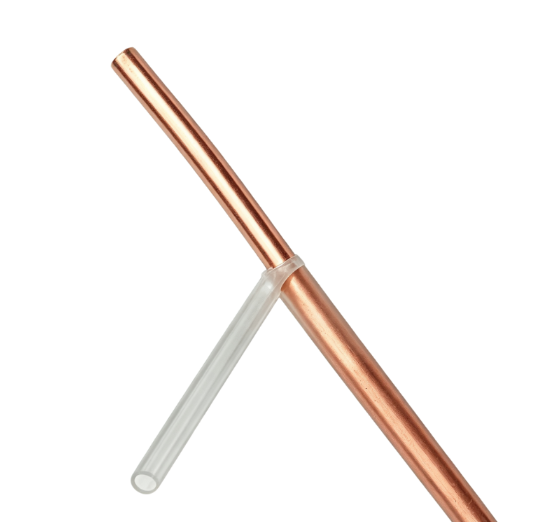
View more products about submersible pump winding wire+
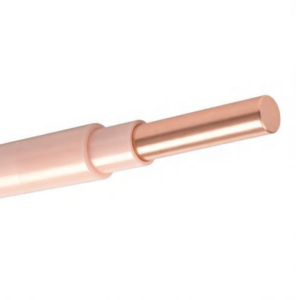
One of the most critical performance characteristics of this wire is its voltage endurance capability. Designed for use in submersible motors, the PE2+PA insulation system helps prevent partial discharge, inter-turn breakdown, and insulation failure under continuous electrical stress. The PE2 layer provides a consistent dielectric barrier across the winding, while the PA outer layer adds mechanical protection and reinforces the overall insulation structure. This dual-layer configuration is especially important in submersible pumps, where windings operate in a water-filled or oil-filled environment and are exposed to prolonged voltage, thermal stress, and moisture ingress.
In practical terms, voltage endurance is not merely a matter of initial high-voltage testing; it reflects the wire’s ability to maintain insulation integrity over thousands of operating hours. High-quality PE2+PA winding wires must resist electrical treeing, partial discharge activity, and thermal degradation under rated load conditions. When properly incorporated into stator windings, this type of double-insulated wire contributes to higher breakdown margins, reduced leakage current, and improved consistency from one production batch to another. For motor manufacturers, these properties directly translate to lower rework rates, better factory test yields, and higher end-product reliability.
Argentina represents a strategically important market for submersible pump solutions, particularly in rural water supply, agricultural irrigation, and mining-related dewatering. Many regions in Argentina depend on borehole pumps and submersible motors to extract groundwater for drinking, irrigation, and industrial use. These operating environments often involve long continuous running hours, varying water quality, mineral ion exposure, and occasional voltage fluctuations. As a result, the demand for robust winding materials that can maintain stable electrical performance under harsh field conditions has increased significantly in recent years.
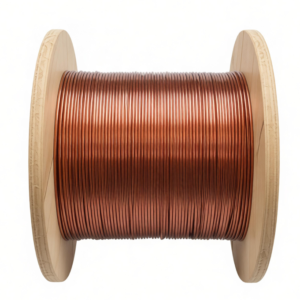
In the Argentine market, local pump manufacturers, repair workshops, and OEM suppliers are placing greater emphasis on component traceability, standardized testing, and long-term service life. The 2.8/4.0mm PE2+PA submersible winding wire supports this trend by offering a construction suitable for high-volume motor rewinding and new stator production. Its solid copper core ensures uniform current distribution and low resistance, while the PE2+PA layers provide a balanced combination of dielectric strength, flexibility, mechanical toughness, and moisture resistance.
For Argentine pump manufacturers, the choice of winding material has a direct impact on product warranty and customer satisfaction. Submersible motors that fail due to insulation breakdown often require expensive lifting, dismantling, and rewinding operations. By using PE2+PA double-insulated copper winding wire, manufacturers can improve the durability of stators and reduce the likelihood of premature field failures. This is particularly relevant in regions where maintenance access is limited and downtime costs are high.
Compliance with internationally recognized testing standards is essential for serving the Argentine market, especially for manufacturers looking to supply both domestic projects and export-oriented industries. The 2.8/4.0mm PE2+PA submersible winding wire should be evaluated according to internationally accepted winding wire and cable test specifications. The principal standard for winding wire test methods is IEC 60851, which covers electrical tests, thermal endurance, mechanical properties, and chemical resistance assessment. Additional guidance for insulated cable constructions can be found in IEC 60245, which addresses rubber and plastic insulated cables for harsh environmental conditions. These standards provide a common technical basis for quality verification, third-party inspection, and customer acceptance.
For further reference on plastic-insulated cable constructions and environmental performance, you can visit the IEC 60245 standard page here:
These international standards help Argentine manufacturers align their production and quality control procedures with global benchmarks. Instead of relying only on internal factory tests, companies can use IEC-based inspection protocols to verify dielectric strength, insulation thickness, conductor resistance, thermal aging behavior, and mechanical robustness. This approach is particularly useful when supplying pumps for agricultural projects, mining operations, and government-funded water supply programs that require documented quality assurance.
Beyond voltage endurance, the PE2+PA insulation system offers practical processing advantages in stator winding production. The PA outer layer provides good abrasion resistance during coil winding, insertion into stator slots, and final assembly. It helps protect the insulation from cuts, scratches, and mechanical stress that could otherwise create weak points for future electrical breakdown. The PE2 layer, meanwhile, acts as a stable dielectric barrier that resists moisture penetration and supports consistent insulation resistance over time.
In Argentina’s agricultural sector, submersible pumps are widely used for irrigation and rural water supply. Many of these installations operate for long hours under variable load conditions, making thermal stability and voltage endurance critical performance requirements. PE2+PA winding wires are well suited to this type of continuous-duty application because they can withstand the combined effects of voltage stress, temperature rise, and periodic exposure to humid operating environments.
Mining and industrial dewatering applications in Argentina also place heavy demands on winding materials. Mining sites often require submersible pumps to handle muddy water, slightly corrosive fluids, and high vibration conditions. Although the final selection must consider the exact chemical environment, PE2+PA winding wires are generally preferred for their balanced mechanical strength, moisture resistance, and dielectric stability. When used in properly designed motors with adequate sealing and correct varnish impregnation, these wires can support extended service intervals and reduce maintenance frequency.
One of the key advantages of the 2.8/4.0mm size range is its versatility in medium-sized submersible motor designs. These conductor sizes are often suitable for a range of pump power ratings, allowing manufacturers to rationalize their material inventory and production processes. By maintaining consistent conductor diameter and insulation thickness, suppliers can help Argentine pump factories improve process control, reduce test parameter adjustment time, and achieve more stable batch-to-batch quality.
Quality control during the manufacturing process is equally important. The wire should undergo routine checks for continuity, insulation resistance, high-voltage withstand, thickness uniformity, and mechanical elongation. These tests are typically carried out at the raw material stage, during winding, after varnish impregnation, and finally on the assembled motor. By using PE2+PA winding wire that meets IEC-based requirements, Argentine manufacturers can strengthen their quality records and support product certification procedures more effectively.
It is also important to recognize application limits. While PE2+PA insulation offers strong performance in many standard submersible pump environments, it may not be suitable for extremely aggressive chemical solutions, strong oxidizing agents, or high-temperature oil-filled motors without additional material modification. Users and engineers in Argentina should carefully evaluate the operating medium, temperature class, voltage rating, and mechanical installation conditions before final material selection. For these demanding cases, specialized insulation systems and additional factory validation tests are recommended.

Reviews
There are no reviews yet.