
View more products about submersible pump winding wire+
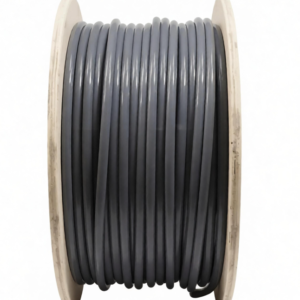
Construction of PET+BOPP Submersible Wire
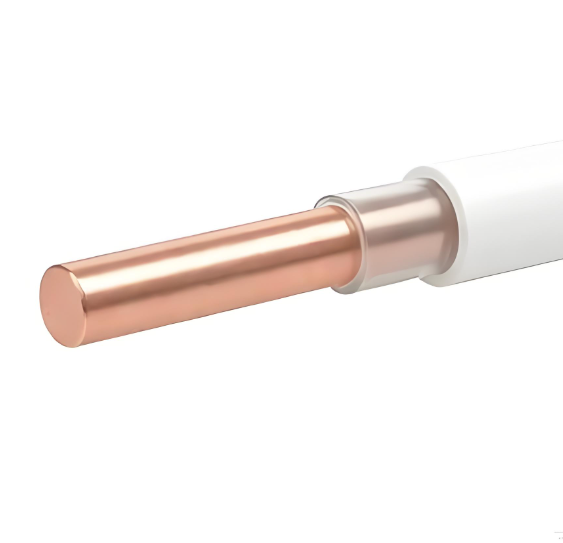
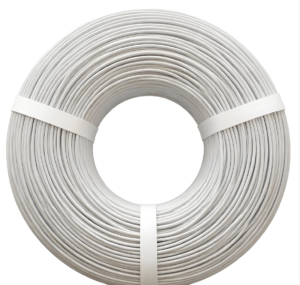
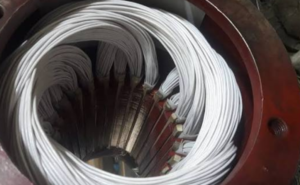
The construction of PET+BOPP submersible winding wire is fundamentally different from PE2/PA or XLPE/PA insulated wires. Rather than extruding a plastic sheath over the conductor, this wire uses a sequential film-wrapping process that builds the insulation layer by layer.
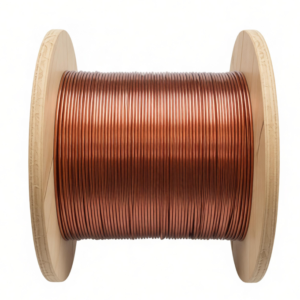
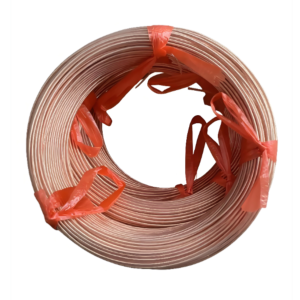
The conductor is manufactured from high-conductivity annealed copper. The annealing process is critical for submersible winding applications because it determines the wire‘s flexibility, which directly affects how easily it can be wound into stator slots and shaped during motor assembly. Proper annealing ensures that the finished wire can be wound tightly without cracking or breaking .
The insulation consists of three sequentially wrapped film layers. The first layer, applied directly over the copper conductor, is polyester film (PET). This layer serves multiple functions: it provides excellent electrical and mechanical properties, establishes a strong base for the subsequent film layers, and promotes adhesion to the conductor surface . The choice of PET as the innermost layer is deliberate—polyester film offers superior dielectric strength and thermal stability compared to polypropylene, making it well-suited for the layer closest to the conductor where electrical stress is highest.
The second layer is BOPP film in opaque white. BOPP (biaxially oriented polypropylene) is produced by stretching polypropylene film in both longitudinal and transverse directions. This biaxial stretching process aligns the polymer molecular chains along the plane of the film, dramatically improving its tensile strength, dielectric strength, and barrier properties compared to unstretched polypropylene. The opaque white BOPP layer contributes excellent opacity, gloss surface, hot-tack and heat-seal strength, mechanical properties, and barrier properties to the insulation system .
The third and outermost layer is transparent BOPP film. This final layer provides additional dielectric protection and a smooth surface finish. The transparent BOPP film also facilitates visual inspection of the underlying layers during manufacturing quality control.
After all three films are sequentially wrapped over the conductor, the assembly passes through an in-line continuous heat shrinkage furnace. This thermal treatment causes the films to seal together and shrink tightly around the conductor, forming a cohesive, void-free insulation system . The heat sealing process is essential because it bonds the overlapping film edges together, preventing water from penetrating between the layers during service.
Cost Advantages
The PET+BOPP construction offers significant cost advantages compared to extruded insulation systems. The primary advantage stems from the reduced insulation thickness achievable with film-wrapped construction.
BOPP film provides high dielectric strength at very thin gauges. This allows the overall wire diameter to be reduced compared to extruded PE2 or XLPE insulation of equivalent dielectric strength. The reduction in diameter translates directly to a higher slot fill factor in motor stators: more copper can be accommodated in the same slot volume, improving motor efficiency and power density. Motor manufacturers can use less lamination steel, smaller housings, and fewer materials overall for a given power rating.
The manufacturing process itself is also cost-efficient. Film wrapping is a continuous, high-speed operation that produces less waste than extrusion processes. The raw materials—PET film and BOPP film—are commodity products available at competitive prices. The in-line heat shrinkage furnace operates continuously with the wrapping process, minimizing additional handling and energy costs.
For motor rewinding operations, the film-wrapped construction offers practical cost benefits as well. The superior surface properties and softness of PET+BOPP wire provide excellent ease of slot filling and shaping, reducing winding process scrap and improving labor efficiency. The insulation strips cleanly from the conductor during joint preparation, simplifying termination work.
Malaysian Pump Brands and Market Context
Malaysia‘s submersible pump market is served by a mix of international brands and regional suppliers, with several companies operating manufacturing or assembly facilities within the country.
Wilo Malaysia Sdn Bhd operates an assembly plant in Seri Kembangan, Selangor, supplying the entire Southeast Asia region with Wilo pumps. The company‘s product portfolio covers centrifugal pumps including submersible models, and Wilo manufactures submersible mixers and related intelligent control systems in Malaysia . Wilo submersible pumps typically use PE or PE2 plastic-insulated winding wires, with the company noting that PE2 windings are more resilient to voltage peaks than standard PE windings .
KSB maintains a significant presence in the Malaysian market through distributors such as Pump Malaysia, offering the Amacan K and Amacan P series submersible motor pumps for wastewater treatment, industrial effluent, irrigation, and drainage applications . The Amacan K series is a wet-installed submersible motor pump designed for installation in discharge tubes, with flow capacities ranging from 140 to 7,200 m³/h .
Davey products are available in Malaysia through the company‘s local website, offering borehole submersible pumps with power ratings from 0.55 kW to 5.5 kW for domestic and agricultural water supply applications . Davey‘s submersible pump range includes models with mechanical seals designed to prevent water ingress into the motor compartment .
Pleuger submersible pumps, available through Malaysian distributors, utilize water-filled motor designs with “water-tight insulated windings” for applications including desalination, mining dewatering, flood control, and water supply. These pumps are designed for flows to 6,000 m³/h and motor sizes to 5,000 kW .
Suitable Pump Applications
The PET+BOPP submersible winding wire is suited for water-filled submersible motors across a broad range of applications. The film-wrapped construction is used for “submersible pumps motors of all sizes for domestic and industrial application” .
Domestic and agricultural submersible pumps represent a primary application. The wire‘s combination of reliable dielectric performance and cost efficiency makes it well-suited for the volume production of borehole pumps and irrigation pumps. The construction handles the electrical demands of single-phase and three-phase motors in the fractional horsepower to medium power range.
Wastewater and drainage pumps benefit from the chemical resistance of the PET and BOPP film layers. The film construction resists water absorption and provides a barrier against contaminants present in municipal and industrial wastewater. KSB Amacan series pumps used for wastewater transport, industrial effluent, and sewage treatment represent the class of applications where PET+BOPP insulated motors can be employed .
Industrial water systems including cooling water circulation, process water supply, and mining dewatering can utilize PET+BOPP insulated motors where the operating voltage and temperature fall within the wire’s specifications. The film-wrapped insulation maintains its dielectric integrity under continuous immersion and resists the abrasion that occurs during motor winding and service.

Reviews
There are no reviews yet.