
View more products about submersible pump winding wire+
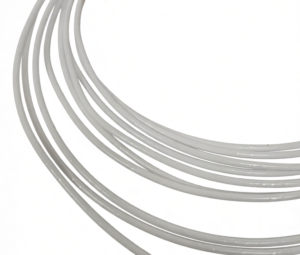
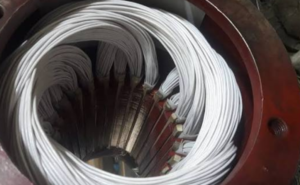
Submersible motor winding wire must perform reliably under conditions that would destroy conventional motor insulation: continuous immersion in water, elevated temperatures, and hydraulic pressure. Two distinct insulation technologies serve this market: PVC and PP (polypropylene) extruded insulation, and BOPP (biaxially oriented polypropylene) film-wrapped insulation. Each construction offers different performance characteristics and cost profiles, and understanding these differences is essential for pump manufacturers and motor repair specialists selecting the appropriate wire for specific applications. This article examines the construction of both wire types, identifies their cost advantages, and describes the pump applications for which each is suited.
Construction of PVC and PP Insulated Winding Wire
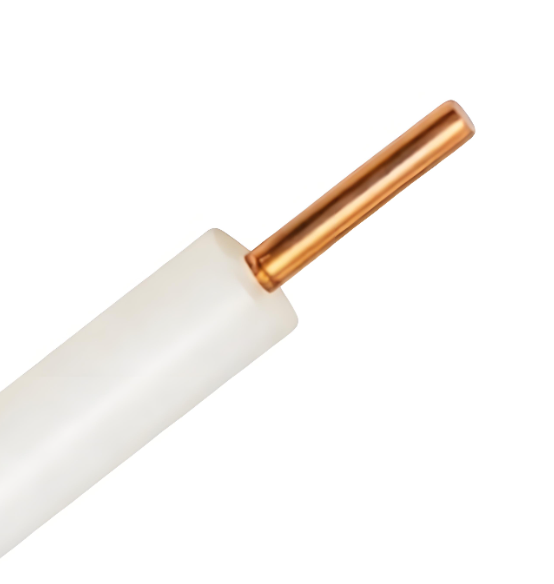
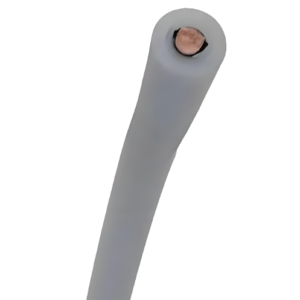
The 0.63 mm PVC insulated white submersible winding wire represents the conventional construction for low-voltage water-filled motors. The conductor is manufactured from annealed copper, with a nominal diameter of 0.63 mm and a cross-sectional area of approximately 0.31 mm² . The conductor resistance is specified as 56.87 ohms per kilometer at 20°C, and the PVC insulation thickness is 0.3 mm, yielding an outside diameter of approximately 1.23 mm . This conductor size is typically suited for motors in the 2 to 3.5 HP range .
PVC insulation offers several practical advantages. The material is inherently water-resistant and provides adequate dielectric strength for low-voltage applications. The long-term operating temperature of PVC winding wire should not exceed 70°C, making it suitable for standard submersible pump applications where water temperatures remain moderate . The insulation surface is smooth and round, without bubbles, impurities, or mechanical damage, and the insulation is tightly packed on the copper core . The minimum insulation thickness caused by eccentricity must not be less than 80% of the nominal thickness .
Modified polypropylene (PP) insulated winding wire extends the performance envelope of extruded insulation. The conductor sizes range from 0.60 mm to 3.35 mm, and the insulation is applied through an extrusion process using modified polypropylene . The average insulation thickness must not be less than 90% of the nominal value, and the wire is specified for rated AC voltage of 450/750V . The advantages of modified PP insulation include great water resistance, high temperature resistance, and good wear resistance . This construction is suitable for underwater equipment including submersible pumps and underwater operations, with applications extending to transformers and motors .
Construction of BOPP Film-Wrapped Winding Wire
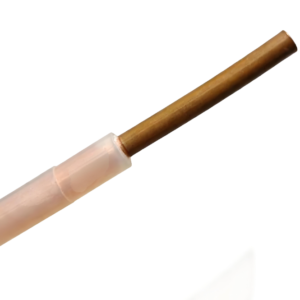
BOPP submersible winding wire employs a fundamentally different insulation approach. Rather than extruding a plastic layer over the conductor, the BOPP construction wraps multiple layers of thin polymer film around the copper conductor. The standard construction consists of three sequentially wrapped layers: polyester film adjacent to the conductor, followed by opaque white BOPP film, and finally transparent BOPP film . All three films are passed through an oven for sealing together, forming a cohesive insulation system .
The BOPP film itself is produced by co-extruding polypropylene pellets into a sheet, then stretching the sheet in both longitudinal and transverse directions . This biaxial stretching process aligns the polymer molecular chains along the plane of the film, endowing BOPP film with high insulation resistance and dielectric strength . The dielectric loss of BOPP at temperatures below 100°C is extremely low, almost independent of frequency, meaning energy loss is minimal under AC working conditions .
BOPP winding wire is manufactured in conductor sizes ranging from 0.50 mm to 2.40 mm, with overall diameters from 0.95 mm for 0.60 mm conductors to 2.40 mm for 1.90 mm conductors . The wire offers advantages including abrasion resistance, low power consumption, and tear resistance, making it an excellent choice for demanding applications requiring durable and reliable wiring . The working temperature capability extends up to 150°C for short periods, with continuous temperatures of 60°C to 105°C .
Cost Advantages
The cost advantages of both insulation types stem from different sources. For PVC and modified PP extruded wires, the primary cost benefit is the simplicity of the manufacturing process. Extrusion is a continuous, high-speed operation that requires less labor and produces less waste than film-wrapping processes. The raw materials—PVC compound and modified polypropylene pellets—are commodity materials available at competitive prices. The 0.63 mm PVC winding wire represents a particularly economical option for low-power submersible motors, where the 70°C temperature rating and 450/750V voltage rating are sufficient .
For BOPP film-wrapped wire, the cost advantage derives from the reduced insulation thickness compared to extruded constructions of equivalent dielectric strength. BOPP film provides high dielectric strength at very thin gauges, allowing the overall wire diameter to be reduced . This reduction in diameter translates to a higher slot fill factor in motor stators: more copper can be accommodated in the same slot volume, improving motor efficiency and power density. The poly wrapped construction has largely replaced traditional PVC wires because it offers less water absorption, higher temperature withstand, and lower leakage current .
The economic impact of BOPP insulation extends beyond the wire cost itself. By enabling thinner insulation and higher fill factors, BOPP wire allows motor manufacturers to reduce the overall size of submersible motors for a given power rating, saving on lamination steel, housing materials, and assembly costs. One manufacturer notes that poly wrapped wires can save up to 25% in pump cost compared to conventional alternatives . For motor rewinding operations, the superior surface properties and softness of BOPP wire provide excellent ease of slot filling and shaping, reducing winding process scrap and improving labor efficiency .
Malaysian Pump Brands and Market Context
Malaysia‘s submersible pump market is served by a mix of international brands and regional suppliers. Several brands operating in Malaysia supply submersible pumps that utilize copper winding motors with insulation systems in the PVC/PP/BOPP family.
LEO submersible sewage pumps, supplied through Malaysian distributors including Meng Fatt Machinery Services Sdn Bhd, feature copper windings with Insulation Class B and IP68 protection . The LEO 50WQ series is designed for industrial, municipal, and agricultural wastewater management, with liquid temperature ratings up to +40°C and pH values from 5 to 9 . While the specific insulation material is not detailed in the available specification, these pumps represent the class of submersible motors that utilize PVC or PP insulated winding wire.
Monoflo DC Series submersible pumps, available through Yee Fong Marine Sdn Bhd in Malaysia, feature motor insulation classes ranging from Class F for 1.5 to 3.7 kW models to Class H for 5.5 to 11.0 kW models . The DRACO pumps are designed for permanent submerged installation in wastewater treatment, industrial plants, and infrastructure applications . The higher insulation classes of the larger models indicate the use of more thermally capable insulation systems than standard PVC.
The Malaysian market follows the Malaysian Standards framework, which has adopted IEC 60034 series standards for rotating electrical machines, including MS IEC 60034-11:2007 for thermal protection. These standards establish the insulation qualification framework applicable to submersible motor windings in Malaysia.
Suitable Pump Applications
The 0.63 mm PVC and PP insulated winding wire is suited for specific pump applications where its performance characteristics align with operating conditions. The primary application is domestic and light agricultural submersible pumps in the 2 to 3.5 HP range, where the 70°C temperature rating and moderate voltage requirements are adequate . These pumps typically operate in wells with water temperatures that remain below 40°C and where the electrical load does not generate excessive winding temperatures.
Wastewater and sewage pumps represent another suitable application. The Monoflo DRACO and LEO WQ series pumps are designed for drainage of wastewater containing fibrous additives, sewage treatment, and industrial effluent . For these applications, the chemical resistance of PVC and PP insulation provides adequate protection against the constituents of municipal and industrial wastewater, while the moderate temperature ratings suit the typical operating conditions.
The BOPP film-wrapped wire, with its higher temperature capability and superior dielectric properties, is suited for more demanding applications. Deep well pumps requiring reliable long-term operation benefit from the reduced leakage current and higher dielectric strength of BOPP insulation . Variable frequency drive applications particularly favor BOPP wire because the film construction resists the corona discharge that can degrade extruded insulation under PWM voltage waveforms. The BOPP wire is also used for power transformers and motors where its low dielectric loss contributes to operating efficiency.

Reviews
There are no reviews yet.