
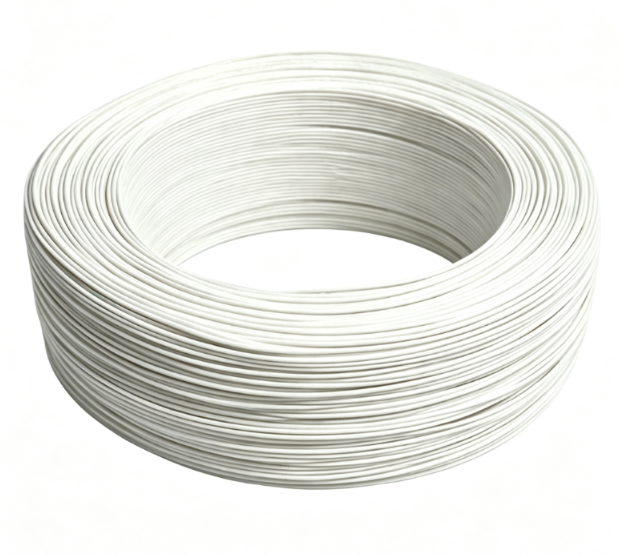
View more products about submersible pump winding wire+
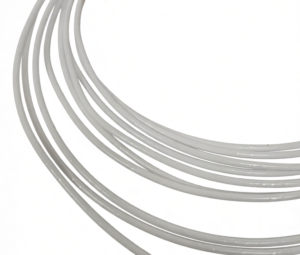
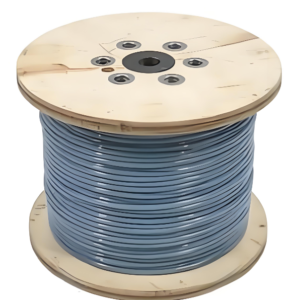
Submersible electric motors operate under water or other fluids, and the winding wire must utilize insulation that is completely impervious to liquids. The PA (polyamide/nylon) insulated copper submersible winding wire, with conductor diameters ranging from 0.5 mm to 3.0 mm, is specifically engineered to meet the demands of water-filled submersible motors. This wire size range covers the majority of small to medium submersible pump motors used in agricultural irrigation, domestic water supply, and light industrial applications. Understanding which pumps this wire suits, how the winding process should be designed, and what authoritative research says about its performance is essential for manufacturers and motor designers.
Insulation Construction and Water Resistance
The PA insulation system consists of an inner polyethylene (PE or PE2) layer for primary dielectric function and an outer polyamide (PA) sheath for mechanical protection and surface finish. For high-voltage applications above 3 kV, a semiconducting layer (HL) may be added between the copper conductor and the PE2 insulation.
The water resistance of this construction has been verified through rigorous testing. A study published through the U.S. Department of Energy‘s OSTI database analyzed ten years of test data from 560 series-produced water-filled submersible motors, concluding that the insulation resistance of stators wound with PEVVP and PVDP type conductors consistently satisfied standard requirements. This long-term field data provides strong evidence for the reliability of PE/PA type insulation in submerged applications.
Patent research on water-tight submersible motor windings demonstrates the superior dielectric performance of the cross-linked polyethylene plus polyamide construction. In dielectric breakdown voltage tests conducted after immersion in water at 55°C and 75°C for periods ranging from 0.5 to 48 hours, the PE2/PA wire consistently showed the highest breakdown voltage at every measurement point compared to alternative insulation constructions. Furthermore, when formed into test coils and immersed in a 50% aqueous propylene glycol solution for two months, coils wound with PE2/PA insulated wire showed no dielectric breakdown even at 10,000 volts, while comparative constructions failed.
Winding Process Design for Submersible Motors
Designing the winding process for submersible motors using 0.5-3.0mm PA insulated wire requires careful attention to several critical factors. Research published in IEEE Xplore on manufacturing techniques for electric motor coils emphasizes that wire tension during winding is a decisive parameter—improper tension leads to insulation damage, reduced fill factor, and compromised motor reliability.
The flyer winding method can apply higher stresses on the wire, especially when a wound rotor or interior stator requires a relatively low number of turns with thick wires. For submersible motors with the 0.5-3.0 mm wire range, this concern is particularly relevant at the larger end of the diameter spectrum. The needle winding technique, by comparison, might lead to a slower but more reliable winding process and can enable a higher fill factor with better utilization of slot space.
Academic research on tension control in automatic stator winding machines further highlights that if wire tension is not properly controlled, it becomes difficult to achieve tidy winding, and the slot fill factor will be unsatisfactory. Without proper tension control, the wire may be stretched during winding, increasing wire resistance. The recommended approach is active tension control using a servomotor rather than passive devices such as dancer arms or hysteresis brakes, which cannot respond quickly enough at higher winding speeds.
For the PA insulated wire specifically, the outer polyamide sheath provides surface protection during winding, allowing the wire to slide more easily through winding equipment and reducing the risk of insulation damage. This is particularly important for the smaller diameters (0.5-1.0 mm) where the insulation wall is thinner and more vulnerable to abrasion.
Factory Testing and Quality Verification
Finished PA insulated submersible winding wire undergoes comprehensive testing before shipment. The relevant Indian Standard IS 8783 (Part 3) specifies methods of tests for winding wires for submersible motors, covering the procedures for verifying electrical, mechanical, and thermal properties. Key tests include dielectric breakdown voltage measurement, insulation resistance testing, and dimensional inspection of conductor diameter and insulation thickness.
For submersible applications, water immersion testing is particularly critical. The finished wire is immersed in water at elevated temperature and then subjected to dielectric strength testing to confirm that water exposure has not degraded the insulation system. Patent data shows that PE2/PA insulated wires maintain their dielectric integrity even after prolonged immersion, with breakdown voltages remaining substantially higher than alternative constructions.
Technical Standards
The manufacture of PA insulated copper submersible winding wire is governed by national and international standards. The Indian Standard IS 8783 provides comprehensive specifications for winding wires for submersible motors, with Part 3 (2026 revision) covering methods of tests and Part 4 Section 2 addressing cross-linked polyethylene insulated and polyamide jacketed wires. For international reference, the German manufacturer NSW provides technical documentation on PE2/PA winding wires, specifying conductor diameters from 0.6 to 4.6 mm and insulation wall thicknesses from 0.3 to 3.5 mm depending on voltage rating.
Conclusion
The 0.5mm-3.0mm PA insulated copper submersible winding wire represents a carefully engineered solution for wet-wound submersible motors. Its suitability spans domestic deep well pumps, agricultural irrigation systems, and light industrial applications. The winding process requires active tension control to achieve high fill factors without damaging the insulation. Authoritative research, including ten-year field data from 560 motors and dielectric testing published through U.S. Department of Energy and patent literature, confirms the reliability of PE/PA insulation in submerged environments. For manufacturers of submersible pumps, selecting the correct wire size and implementing proper winding techniques are essential steps toward producing motors that deliver reliable, long-term service.

Reviews
There are no reviews yet.