
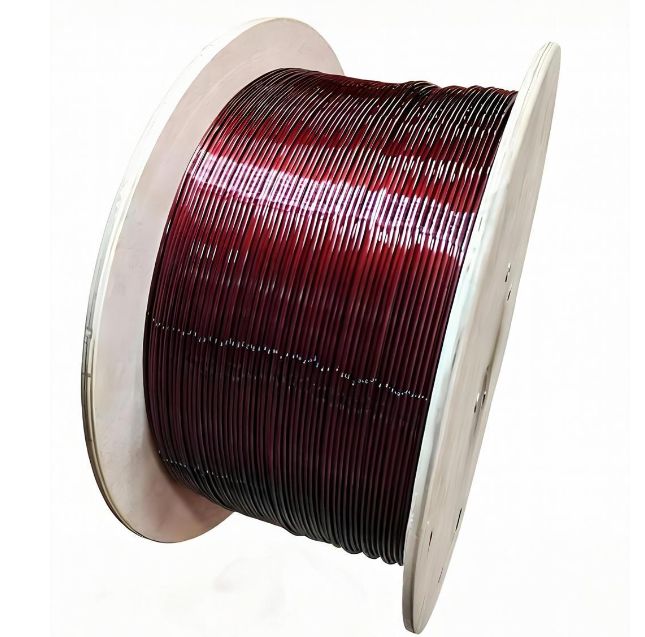
View more products about enameled copper wire+
The Dual-Coating Insulation System
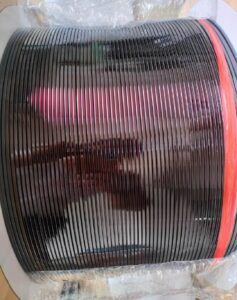
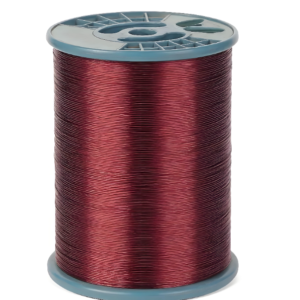
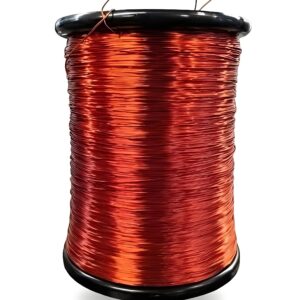
The defining characteristic of Class 200 enameled copper wire is its dual-layer composite insulation structure. This construction is not a simple single-coat application but a sophisticated two-coat system engineered for synergistic performance.
Base Coat: Polyester or Polyesterimide
The copper conductor receives an initial coating of either polyester or polyesterimide resin . These base materials provide:
-
Primary dielectric strength to prevent electrical leakage and short circuits
-
Thermal stability suitable for temperatures up to 180°C for polyesterimide variants
-
Flexibility and adhesion essential for subsequent winding operations
Polyesterimide, in particular, offers enhanced thermal properties over standard polyester, making it the preferred base coat for applications requiring sustained high-temperature operation .
Top Coat: Polyamide-Imide
Over the base coat, a further layer of polyamide-imide (PAI) enamel is applied. This high-performance polymer is where the Class 200 designation truly earns its distinction . The polyamide-imide overcoat provides:
-
Superior thermal stability, enabling operation at 200°C and withstanding transient temperatures up to 220°C or higher
-
Exceptional abrasion resistance, protecting the insulation during winding, insertion, and mechanical handling
-
Outstanding chemical resistance against solvents, refrigerants, transformer oils, impregnating varnishes, and corrosive agents
-
High dielectric strength, preventing electrical breakdown even under voltage stress
This combination of polyesterimide base plus polyamide-imide topcoat is commonly designated as Q(ZY/XY) in Chinese classification systems .
Manufacturing Process: Precision from Rod to Spool
The production of 5.0mm Class 200 enameled copper wire demands rigorous process control at every stage.
Conductor Preparation
The starting material is oxygen-free copper (Cu-OF) with a minimum purity of 99.97% and electrical conductivity of at least 58.5 MS/m (approximately 101% IACS) . This high-purity copper minimizes resistive losses and thermal hot spots during operation.
For round wire production, the copper rod is drawn through a series of dies to achieve the precise 5.0mm diameter. Surface quality is critical—any scratches or imperfections in the bare copper can compromise the subsequent enamel application and create points of electrical weakness .
Enamel Application: The Coating Process
The dual-coat insulation is applied through a carefully controlled sequence:
-
First Coat Application: The polyester or polyesterimide base coat is applied using specialized die-coating or felt-coating methods. For larger diameters like 5.0mm, multiple passes may be required to build the specified insulation thickness.
-
Curing: Each coat is thermally cured at high temperatures to cross-link the resin and form a durable, continuous film.
-
Second Coat Application: The polyamide-imide top coat is applied over the cured base layer.
-
Final Curing: A second thermal curing cycle ensures complete polymerization of the polyamide-imide layer.
For flat wire variants—which also fall under the Class 200 category and can have thicknesses up to 5.0mm—advanced processes such as continuous extrusion followed by polishing and steam-protected annealing are employed to maintain surface finish and conductor ductility . Mold coating methods using high-viscosity enamels and self-centering dies help achieve excellent coating concentricity, ensuring uniform insulation thickness around the conductor .
Special Properties: Why Class 200 Stands Apart
The dual-coat system delivers a set of performance characteristics that make Class 200 wire suitable for the most demanding electrical equipment.
1. Thermal Endurance and Heat Shock Resistance
The wire is capable of withstanding heat shock tests at 220°C without cracking or delamination of the insulation . This thermal robustness is critical for applications subject to frequent temperature cycling or occasional overload conditions.
2. Cut-Through Resistance
A key performance metric for Class 200 wire is its cut-through resistance—the ability to resist penetration by sharp edges or adjacent wires under pressure at elevated temperatures. The polyamide-imide topcoat provides excellent resistance to this mode of failure, with cut-through temperatures typically exceeding 320°C .
3. Chemical and Refrigerant Resistance
The polyamide-imide layer is noted for its resistance to a wide spectrum of chemicals, including:
-
Commercial refrigerants (R-22, R-134a)
-
Transformer oils and hydraulic fluids
-
Solvents (toluene, ethanol, acetone)
-
Impregnating varnishes and resins
-
Mild acids and alkalis
This broad chemical compatibility is essential for sealed motor and transformer applications where the wire is immersed in oils or refrigerants.
4. Abrasion Resistance and Windability
The mechanically tough polyamide-imide overcoat ensures that the wire withstands the stresses of automated winding processes, coil insertion, and handling without insulation damage . This “windability” is particularly valued in high-volume motor manufacturing.
5. Dielectric Strength and Partial Discharge Resistance
Class 200 wire is often specified for inverter-duty motors where the insulation must withstand voltage spikes and partial discharge activity. Products meeting NEMA MW 73-C and IEC 60317-13 demonstrate improved voltage endurance under both sinusoidal and inverter-shaped waveforms . The composite insulation system exhibits enhanced resistance to corona discharge, a common failure mechanism in variable-frequency drive applications .
Primary Applications of 5.0mm Class 200 Wire
The combination of large diameter (5.0mm) and high thermal class positions this wire for use in heavy-duty power equipment where current-carrying capacity, temperature endurance, and mechanical strength are paramount.
Traction Motors for Railways and Electric Vehicles
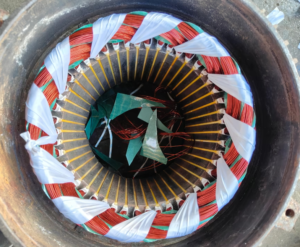
Railway traction motors and electric vehicle drive motors operate under severe thermal and mechanical conditions. The 200°C rating provides a safety margin in these high-stress environments, while the abrasion-resistant coating withstands the vibration and mechanical shocks inherent in traction applications .
Large Generators
Turbo generators, hydro generators, and wind turbine generators rely on Class 200 insulation to maintain performance under continuous high-temperature operation. The thermal stability of the polyamide-imide topcoat ensures long service life even with significant copper losses .
Power Transformers and Reactors
Dry-type transformers rated through Class 200 benefit from the wire’s thermal endurance and resistance to thermal degradation. The chemical resistance also ensures compatibility with the impregnating varnishes and cooling media used in transformer construction .
Hermetic Motors and Compressors
Sealed refrigeration and air-conditioning compressors require wire that can withstand both high temperatures and chemical attack from refrigerants. The refrigerant resistance of the polyamide-imide topcoat makes Class 200 wire a preferred choice in this segment .
Inverter-Duty Motors
Motors powered by variable-frequency drives (VFDs) are subject to voltage spikes and partial discharges that can rapidly degrade standard insulation. Class 200 wires meeting NEMA MW 73-C are specifically designed for these applications, offering extended service life under inverter stress

Reviews
There are no reviews yet.