
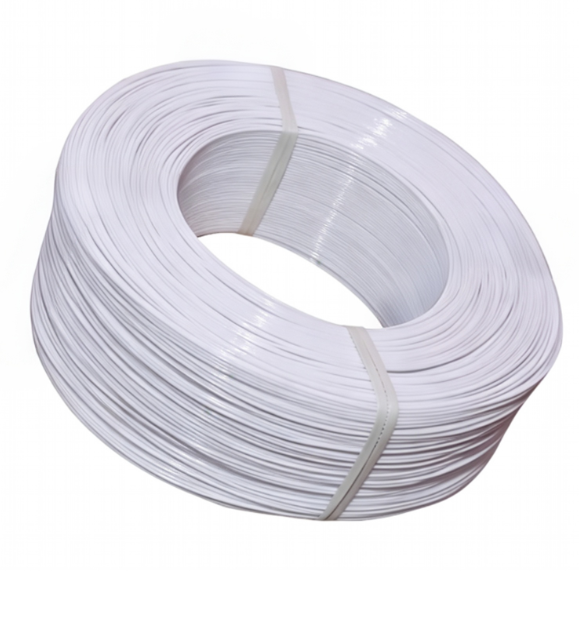
View more products about submersible pump winding wire+
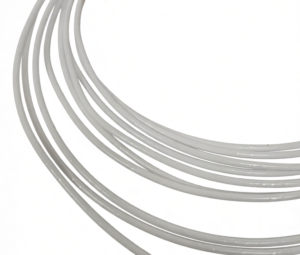
Construction of PP Submersible Winding Wire
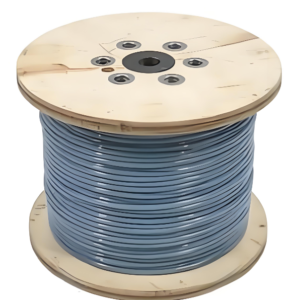
PP submersible winding wire employs a dual-layer insulation system consisting of an inner layer of polyester and an outer layer of polypropylene. The polyester layer serves as the primary electrical insulation, providing the dielectric barrier between the copper conductor and the surrounding environment. The polypropylene outer layer enhances mechanical strength and provides resistance to water, abrasion, and chemicals .
The conductor is manufactured from high-conductivity annealed copper, available in both solid and stranded configurations. The IS 8783 standard specifies requirements for both solid round and stranded copper conductors with polyester and polypropylene insulation . The insulation is applied so that it fits closely on the conductor and can be removed without damage to the conductor itself. The colour of the insulation is natural.
The operating temperature capability of PP-insulated winding wire is defined by the combination of ambient temperature and temperature rise due to load, with the conductor temperature not exceeding 105°C . This thermal rating positions PP insulation between standard PVC and higher-temperature PE2 constructions. The high voltage or water immersion test requires that the wire withstand an AC voltage of 3 kV at 50 Hz for one minute after immersion in water for a minimum of 12 hours .
The mechanical properties of PP insulation are notable for their resistance to abrasion and cut-through, which is particularly important during the winding process. The polypropylene layer adds significantly to the tensile strength of the finished wire, supporting the conductor wherever excessive stretching occurs during winding . The multiple-layer construction ensures high dielectric quality with the insulation applied concentrically around the conductor.
International Pump Brands Using PP Winding Wire
Several established international submersible pump manufacturers have adopted PP-based insulation systems for specific product lines and applications.
Hitachi Industrial Equipment Systems is among the most prominent users of PP insulation for submersible motors. The company’s Water Tight Insulated-Wire Type submersible motors employ polypropylene insulation as the primary insulating material, with a nylon sheath applied over the polypropylene layer for mechanical protection . Hitachi uses a specially developed modified polypropylene that offers what the company describes as “very stable waterproof characteristics.” The company states that its unique insulation structure is the result of extensive development and has proven to be of far superior quality, resulting in long insulation life under severe operating conditions .
NEMUTLU Pompa (Turkey) offers rewindable 6-inch submersible motors that are available with PP winding wire as one of three insulation options, alongside PVC and PE2+PA. The company specifies these motors for maximum ambient water temperature of 30°C as standard, with 50°C and 70°C available as options . The availability of PP winding as a standard option indicates its acceptance in the European submersible pump market.
Russian manufacturers produce PP-insulated winding wire under the designation ПП-В-100 (PP-V-100), governed by technical specification TU 16.K71-024-88. This wire is designed for submersible water-filled motor windings with a working temperature rating of 100°C and a working voltage of 660 V. The construction features a copper conductor with dual-layer insulation of high-density polyethylene and a propylene-ethylene block copolymer .
Suitable Pump Applications
PP winding wire is suitable for water-filled submersible motors operating under conditions that fall within its thermal and electrical capabilities. The IS 8783 standard defines the suitability of this insulation class for conductor temperatures not exceeding 105°C .
Domestic and small-scale water supply pumps represent a primary application for PP-insulated motors. The 30°C standard water temperature rating covers the majority of shallow and medium-depth well applications where water temperatures remain moderate. For applications requiring higher water temperatures, PP-insulated motors can be specified with 50°C or 70°C ratings .
Agricultural irrigation pumps in moderate climates benefit from the cost-effective performance of PP insulation. The wire‘s good mechanical strength and abrasion resistance handle the winding stresses of volume production, while its electrical properties meet the requirements for standard voltage irrigation motors.
Industrial and municipal water systems that operate at lower voltages and moderate temperatures can utilize PP-insulated motors where the application conditions align with the 105°C conductor temperature limit and the 660 V working voltage characteristic of this insulation class .
The water immersion test requirement of withstanding 3 kV for one minute after 12 hours of immersion confirms the wire’s suitability for continuous submersion in water with pH values typical of natural groundwater sources .
Motor Rewinding Process for PP-Insulated Submersible Motors
The rewinding of submersible motor stators, regardless of insulation type, follows a systematic procedure that requires careful attention to cleanliness, conductor protection, and sealing integrity .
Preparation and disassembly begins with marking the front and rear end caps and the frame joints to ensure correct reassembly. This marking prevents assembly errors that could cause rotor misalignment. During winding removal, the iron core must be protected from damage—silicon steel sheets should not be warped, shifted, or burred at slot edges. The recommended method is to cut the coil ends with diagonal pliers on one side, then extract the coil from the other side with pliers .
Coil winding and insertion requires a properly sized winding form to ensure that coil ends maintain adequate clearance and that coils fit correctly into the slots. The “three-plane method” is used for coil insertion: one phase is wound completely before the next, creating a three-layer end configuration. Critical precautions include positioning the first two “hanging” coils correctly to prevent scraping of the stator core during insertion of subsequent coils, minimizing the use of slot liners to avoid insulation damage, ensuring phase insulation paper is properly positioned, and for water-filled motors, avoiding excessive compaction of coils in slots so that water can flow freely for winding cooling .
Joint insulation requires careful preparation. The sheath and insulation are stripped from the joint area, and the copper surface is cleaned of enamel and oxidation. The conductors are twisted and soldered, then sharp edges, burrs, and residual flux are removed. The joint is wrapped with two layers of polyethylene tape in half-overlap fashion, followed by six layers of butyl self-adhesive tape stretched to approximately twice its length to ensure a tight, gap-free seal, and finally two layers of polyethylene or polyester adhesive tape for mechanical protection .
Reassembly and sealing requires cleanliness and precision. The bottom limit screw is carefully adjusted so the rotor turns freely, and the lock nut is tightened. The end caps are installed in their original positions, taking care not to damage the rubber sealing rings in the seal box. For integral seal boxes, the component should only be pushed in gently—never struck with a hammer. Proper sealing of cable entries and terminal connections is essential to prevent water ingress that would cause short circuits

Reviews
There are no reviews yet.