
View more products about paper covered winding wires+
Scope and Standard Evolution
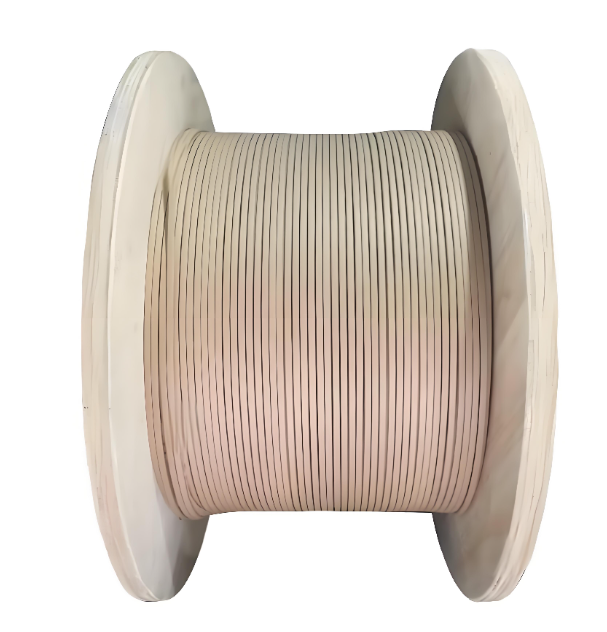
IEC 60317-27 has undergone significant evolution to keep pace with advancing transformer technology. The current edition, IEC 60317-27-3:2019+AMD1:2024 CSV, published in June 2024, represents the most up-to-date specification for paper tape covered rectangular copper winding wire. This version supersedes earlier editions, including the 2013 edition which had technical revisions including modifications to dimension increase specifications and the addition of a pin hole test requirement.
The standard is part of a comprehensive series dealing with insulated wires for electrical equipment windings. It is intended to be read in conjunction with IEC 60317-0-2, which provides general requirements for winding wires. This layered approach to standardization ensures consistency across different wire types while allowing for specific requirements tailored to each insulation system.
Conductor Dimensions and Specifications
Dimensional Range
IEC 60317-27-3 specifies precise dimensional parameters for the rectangular copper conductor. According to the standard, the nominal conductor dimensions range from a minimum width of 2.0 mm to a maximum of 31.5 mm, with thickness ranging from a minimum of 0.80 mm to a maximum of 10.0 mm. These dimensions represent the bare copper conductor before the application of paper tape insulation.
Earlier versions of the standard, such as IEC 60317-27:2013, specified a narrower range of width up to 16.0 mm and thickness up to 5.60 mm. The expanded dimensional range in the latest edition reflects the industry’s need for larger conductors to handle higher current ratings in modern transformers.
Conductor Materials
The copper conductor is manufactured from high-purity electrical grade copper, typically with a minimum conductivity of 100% IACS (International Annealed Copper Standard). The rectangular cross-section shape offers superior space utilization within the transformer winding window compared to round conductors, allowing more copper to be packed into a given area and improving the overall efficiency of the transformer.
Paper Insulation Materials
Paper Specifications
The paper tapes used for covering the conductor are restricted to those specified in IEC 60554-1 and IEC 60554-3-5. These documents define the electrical, mechanical, and physical properties required for electrical insulating papers. The paper thickness range covered by the standard is 25 μm to 125 μm inclusive.
Insulation Configuration
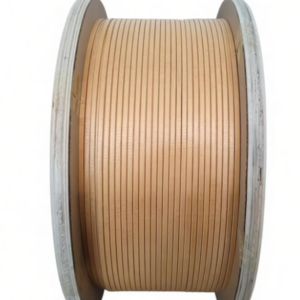
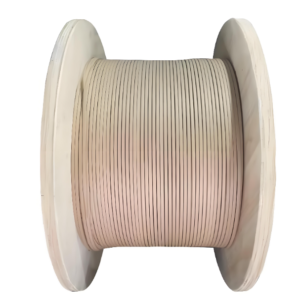
The standard requires the covering to consist of two or more layers of paper tape applied in a spiral wrapping process. In earlier editions, the specification required that the layers be applied “all in the same direction,” which is a detail maintained in the current editions for the core specification. The number of layers applied directly influences the dielectric strength of the finished wire, with more layers providing higher voltage withstand capability.
Paper Types
While kraft paper remains the most common choice due to its excellent dielectric properties and compatibility with transformer oil, manufacturers may offer alternative paper types for specific applications. These can include high-voltage cable paper, telephone paper, and premium options like NOMEX paper for enhanced thermal stability. The selection of paper type influences both the dielectric performance and the thermal capabilities of the winding wire.
Manufacturing Process
Conductor Preparation
The manufacturing process begins with high-quality copper rods that undergo a series of forming operations to achieve the required rectangular cross-section. The process involves extrusion and drawing through precisely dimensioned dies to achieve the desired width and thickness dimensions. Following the mechanical forming, the conductor undergoes annealing to achieve the required mechanical properties and electrical conductivity.
Surface Cleaning
Thorough cleaning of the copper conductor surface is essential for ensuring proper adhesion of the paper insulation and preventing contamination of the transformer oil during service. Ultrasonic cleaning systems using pure water are commonly employed to remove surface contaminants, oxides, and processing residues.
Paper Taping Process
The paper covering is applied in a spiral wrapping process where the paper tape is wound around the copper conductor with precise tension control and overlap. The winding process demands careful control of several parameters, including winding tension, paper overlap, and tape feed rate. These factors collectively determine the uniformity and density of the paper covering, which directly affects the dielectric properties and the ability of the wire to maintain consistent insulation thickness throughout its length.
Layer Configuration Options
Manufacturers can provide various layer configurations depending on customer requirements and voltage rating specifications. Common configurations include two to four layers of paper tape, with each layer typically consisting of one or multiple paper strips. The exact configuration must ensure the final insulation thickness meets the specified requirements.
Quality Assurance and Testing
Standard Tests
IEC 60317-27 specifies a comprehensive set of tests to verify the quality and performance of paper tape covered winding wire. These include elongation testing, resistance to abrasion, breakdown voltage testing, continuity of insulation assessment, and temperature index determination. The standard also includes a pin hole test, which was added in the 2013 revision to detect microscopic defects in the paper covering.
Dimensional Verification
Strict dimensional tolerances are maintained throughout the manufacturing process. The increase in dimensions due to the paper tape covering is carefully controlled to ensure consistency. The standard provides specific requirements for the maximum and minimum dimensions of the finished wire to ensure adequate dielectric clearance in transformer windings.
Visual Inspection
Appearance requirements are specified to ensure the wire is free from defects that could compromise its performance. This includes checking for proper paper coverage, absence of tears or creases, and consistent paper layer application.
Applications
Paper tape covered rectangular copper winding wire finds its primary application in oil-immersed transformers. The synergy between the paper insulation and the transformer oil environment is fundamental to the wire’s performance. The oil penetrates the paper layers during impregnation, providing additional dielectric strength and carrying away heat generated during transformer operation.
The paper-oil insulation system is one of the most reliable and widely used technologies in power transformers worldwide. This wire type is suitable for both distribution transformers and large power transformers, with the specific conductor dimensions and insulation configuration selected based on the transformer’s voltage and current ratings.
Advantages of Rectangular Conductors
The rectangular shape of the copper conductor offers several advantages over round conductors in transformer applications. The flat configuration provides better space utilization in the winding window, reducing the overall size of the transformer core and tank. Additionally, rectangular conductors offer lower AC resistance due to reduced skin effect and proximity effect, improving the efficiency of the transformer at power frequencies.

Reviews
There are no reviews yet.