
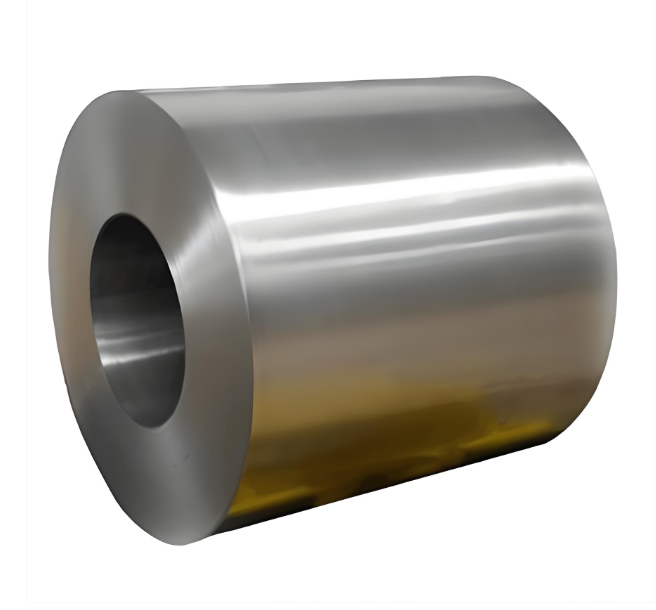
View more products about aluminium strip+
Standard Dimensions
The dimensional specifications of transformer aluminium foil are among its most critical parameters, directly influencing winding design, insulation coordination, and overall transformer performance.
Thickness Range
Transformer aluminium foil is typically manufactured in thicknesses ranging from 0.2mm to 3.0mm, with some suppliers offering extended ranges from 0.16mm up to 3.5mm. The selection of thickness depends on the transformer’s voltage rating, current-carrying requirements, and thermal management considerations.
For dry-type transformers such as SCB series, thinner foils in the 0.5mm to 0.8mm range are commonly employed, while oil-immersed distribution transformers typically use foils from 0.8mm to 1.5mm. For higher-voltage applications such as 35kV reactors, thicker foils from 1.0mm to 2.0mm are preferred to handle larger currents and provide adequate mechanical strength.
Thickness tolerances are strictly controlled to ensure consistent performance. Typical tolerances range from ±0.01mm for thinner gauges (0.2-0.4mm) to ±0.03mm for thicker gauges (1.8-3.0mm), with precision grades achieving ±0.005mm in some cases.
Width Range
The width of transformer aluminium foil varies considerably to accommodate different transformer sizes and winding configurations. Standard widths range from 20mm to 1600mm, with some manufacturers offering widths up to 1650mm or 1700mm. Narrower foils (20-200mm) are used for smaller transformers and reactors, while wider foils (up to 1600mm) serve large power transformers where the winding turn spans the full core width.
Width tolerances depend on the dimension: for widths below 100mm, tolerance is typically ±0.1mm; for 100-200mm, ±0.2mm; and for widths above 500mm, tolerances may reach ±1-2mm.
Edge Quality
Edge quality is a defining characteristic of transformer aluminium foil. The foil must have smooth, substantially burr-free edges to prevent insulation damage during winding and to avoid electrical stress concentrations. Burr height is controlled to 0.01-0.03mm depending on foil thickness, with collapsed side height maintained at 0.05-0.1mm. Many suppliers offer rounded or chamfered edges (round-edge aluminium strip) specifically for transformer applications.
Material Grades and Alloy Composition
Transformer aluminium foil is manufactured from a select group of high-purity aluminium alloys. The most commonly used grades include:
-
1060: Minimum purity ≥99.60%, the most widely used grade for distribution transformers and dry-type units
-
1050: Minimum purity ≥99.50%, suitable for general-purpose transformers and reactors
-
1070: Minimum purity ≥99.70%, preferred for high-end dry-type transformers and high-current reactors
-
1350: An electrical-grade alloy meeting the minimum industry requirements for strip conductors
All grades are supplied in the fully annealed O-temper condition, which provides optimal ductility for winding operations.
Key Performance Characteristics
Electrical Conductivity and Resistivity
The electrical properties of transformer aluminium foil directly affect transformer losses and efficiency. The material achieves a conductivity of at least 61% IACS (International Annealed Copper Standard), with premium grades reaching 62% or higher. The corresponding maximum resistivity at 20°C is specified at ≤0.02825 Ω·mm²/m, with some suppliers offering tighter limits of ≤0.027548 Ω·mm²/m.
Mechanical Properties
In the fully annealed condition, transformer aluminium foil exhibits the following mechanical characteristics:
-
Tensile strength: 60-95 MPa
-
Elongation: ≥20% to >25%
-
Density at 20°C: 2.703 kg/dm³ (approximately one-third that of copper)
The high elongation value ensures that the foil can be bent and formed around the transformer core without cracking or work hardening excessively during winding.
Surface Quality and Cleanliness
Surface quality is critical for transformer aluminium foil, particularly for dry-type and cast-resin transformers where clean surfaces are essential for proper insulation adhesion. Surface residual oil is controlled to ≤15 mg/m², with precision cast-resin applications requiring ≤10 mg/m². The foil surface must be free from scratches, oil trails, and visible defects.
Application-Specific Considerations
The choice of foil dimensions and grade varies across transformer types:
-
10kV Oil-immersed Distribution Transformers: 0.8-1.5mm thick 1060 foil achieves cost reductions of 55-60% and weight savings of 18-22% compared to copper, while meeting GB 20052 Level 2 energy efficiency standards.
-
SCB Dry-type Transformers: 0.5-0.8mm thick 1050 foil with residual oil ≤10 mg/m² ensures partial discharge levels ≤5pC, noise levels ≤45dB, and achieves Level 1 energy efficiency with 50% cost savings.
-
35kV Reactors: 1.0-2.0mm thick 1070 foil with burr height ≤0.03mm maintains temperature rise ≤75K and inductance deviation ≤±3%.
Packaging and Delivery
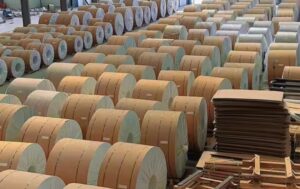
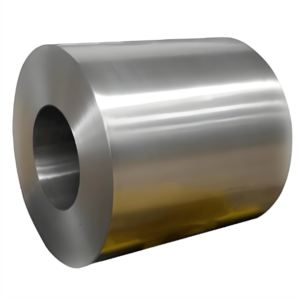
Transformer aluminium foil is typically supplied on paper cores with internal diameters of 300mm or 500mm, in coil weights ranging from 5-8 tonnes. Packaging options include eye-to-wall and eye-to-sky orientations, with wooden pallets and wooden cases for export shipment

Reviews
There are no reviews yet.