
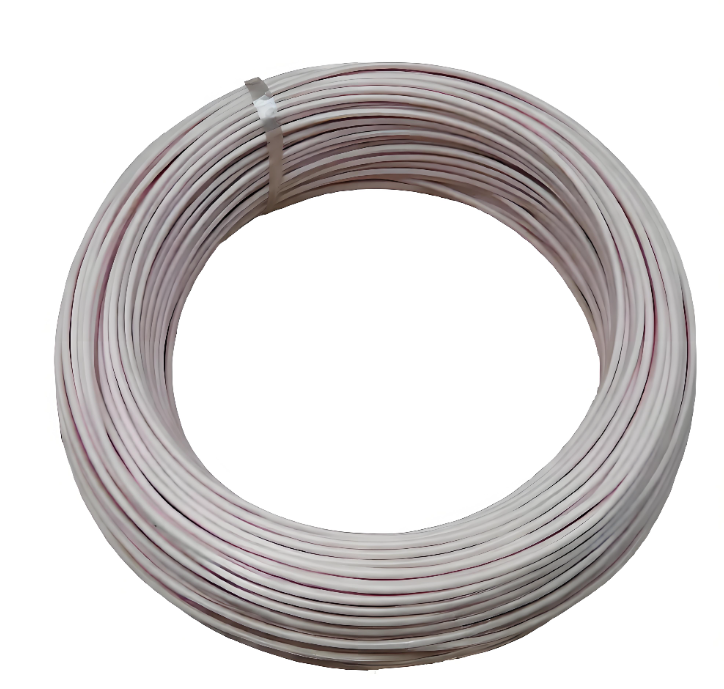
View more products about submersible pump winding wire+
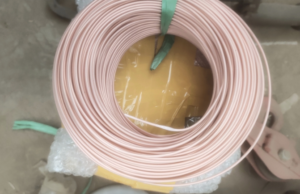
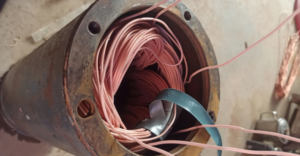
Composition: Layered Defense Against Corrosion
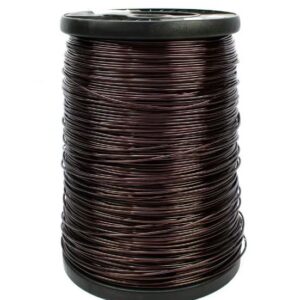
The wire’s anti-corrosion capability arises from the sequence and properties of its layers, not from any single additive or coating. The conductor is bare copper, but not ordinary copper. Electrolytic-tough-pitch grade is specified, with oxygen content controlled to minimize the formation of cuprous oxide at grain boundaries—a defect that becomes an initiation site for corrosion under electrical stress and moisture exposure. The copper surface is cleaned immediately before extrusion to remove drawing lubricants and oxide films, because any residue creates a microscopic gap where water can collect and electrochemical attack can begin.
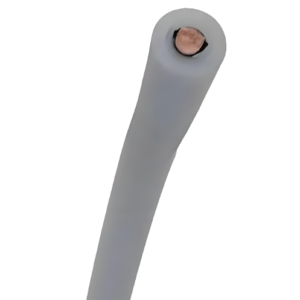
The first polymer layer is cross-linked polyethylene. Its role in corrosion resistance is often understated. PE2 is not merely an electrical insulator; it is a barrier. The cross-linking process, whether by electron beam or chemical agent, creates a dense three-dimensional molecular network that resists the permeation of water molecules and dissolved ions. Uncured polyethylene allows slow moisture diffusion through its amorphous regions; cross-linking reduces the free volume and disrupts the pathways that water molecules would otherwise follow. The dielectric strength of 70 kV/mm and specific insulation resistance of 10^16 Ω·cm are measured properties, but the practical corrosion benefit is the suppression of electrochemical reactions at the copper surface that would otherwise occur if moisture reached the conductor.
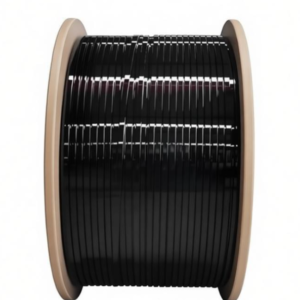
The polyamide outer sheath addresses a different corrosion mechanism. In a water-filled motor, the winding is not static. Thermal cycling causes expansion and contraction; electromagnetic forces produce slight movement; vibration from the pump end transmits through the motor frame. These mechanical stresses can create microcracks in the PE2 layer if it is unprotected. The polyamide sheath absorbs and distributes these stresses, maintaining the PE2 barrier intact. Polyamide also resists the hydrolytic degradation that some polymers experience in warm water, maintaining its mechanical properties even after prolonged immersion. The sheath thickness of 0.1 mm to 0.3 mm is sufficient for this mechanical function without adding unnecessary bulk to the wire profile.
For applications where the water chemistry is particularly aggressive—high chloride content, low pH, or elevated dissolved oxygen—the wire may be specified with additional measures. Some manufacturers apply a thin semiconducting layer between the copper and PE2 to equalize the electric field, reducing the localized electrochemical activity that concentrated field gradients can promote. Others use specially formulated polyethylene compounds with reduced permeability or enhanced adhesion to the copper surface, eliminating the microscopic gaps where crevice corrosion can initiate.
Market Share in Taiwan
Precise market share data for PE2+PA winding wire in Taiwan is not publicly available, as the wire is sold business-to-business and production statistics are not segmented by insulation type. What is evident is that the wire is produced domestically by established manufacturers and used across the island’s submersible motor industry.
Pacific Electric Wire & Cable (PEWC), Taiwan’s first manufacturer of submersible motor winding wire, has produced these products for over three decades and lists “PE+NYLON” and “XLPE” insulation among its offerings for submersible motor coils. Chung Kuang Electric Wire & Cable in Taichung produces PE-NY compound insulated wire rated at 75°C and 450/750 V, with RoHS compliance and CE certification. These domestic suppliers ensure that Taiwanese motor manufacturers and rewinders can source PE2+PA wire without import delays or currency exposure.
The wire’s market position in Taiwan reflects the technical requirements of the applications. Submersible motors used in agricultural irrigation, municipal water supply, and industrial wastewater pumping operate in conditions where water temperature can exceed 30°C and where the consequences of motor failure—crop loss, service interruption, repair costs—justify the premium over PVC-insulated wire. PE2+PA wire occupies the performance tier that matches these requirements. It is not the cheapest option, but it is the option that delivers the reliability that the application demands.
Jing Qin Electric Machinery: Application Analysis
Jing Qin Electric Machinery Co., Ltd. (井親電機股份有限公司) is a specialized manufacturer of submersible pumps and sewage pumps based in Zhubei City, Hsinchu County . The company’s business scope encompasses the design, manufacture, processing, installation, and sale of motors, submersible motors, and submersible pumps, along with various horizontal and vertical-axis pumps . Its registered capital of NT$5,000,000 reflects a focused operation rather than a large-scale industrial conglomerate, but its project record tells a different story about its technical capabilities .
Jing Qin has been awarded multiple public procurement contracts for large-scale pumping equipment. In 2026, the company won a contract for a 1200HP vertical-axis electric pump at the Dingshanjiao booster station, with a awarded value of NT$13,809,500 . A separate 2026 contract covered a 600HP vertical-axis pump for the Danan plant三期 Guishan system, awarded at NT$6,276,500 . Earlier contracts included 600HP, 500HP, and 300HP vertical-axis pumps totaling over NT$24 million , and submersible pumps for the Shoufeng, Guoqing, and Shangzhi water treatment plants . These are not residential-grade installations. They are municipal and industrial water infrastructure projects where downtime carries significant consequences and where the specification of motor insulation is a matter of engineering judgment, not price shopping.
Jing Qin’s product description explicitly identifies “submersible pumps” and “sewage pumps” as its core offerings . Sewage pump applications are particularly demanding for winding insulation. The pumped fluid may contain dissolved sulfides, organic acids, and chloride ions that accelerate corrosion. Water temperature can rise during sustained operation. The motor may operate at variable speeds under float switch or level control, imposing additional electrical stress on the winding. PE2+PA wire’s combination of thermal stability up to 50°C water temperature, dielectric strength, and moisture barrier properties aligns with these requirements.
The company’s engagement with large vertical-axis pumps—equipment that operates at high power ratings and continuous duty—further supports the inference that its motor manufacturing incorporates insulation systems suitable for demanding service. While Jing Qin does not publish detailed insulation specifications for its motors, the performance requirements of its product categories and project portfolio establish the technical context in which PE2+PA wire represents the appropriate engineering choice. A manufacturer competing for municipal contracts and industrial installations cannot rely on insulation systems that fail prematurely; the reputational and financial consequences are too great.

Reviews
There are no reviews yet.