
View more products about submersible pump winding wire+
Introduction to Zhengzhou Tasuu Winding Wire Industry Co., Ltd.
Zhengzhou Tasuu Winding Wire Industry Co., Ltd. is a specialized manufacturer of winding wires based in Zhengzhou, Henan Province, China. The company focuses on the research, development, production, and distribution of high-quality magnet wires and winding wires for demanding applications. With a strong commitment to quality and customer satisfaction, Zhengzhou Tasuu has established a reliable export network, serving clients in Saudi Arabia, Bahrain, Zimbabwe, and other international markets. The company offers comprehensive customization services, allowing customers to specify wire diameters, insulation thicknesses, and performance parameters to meet their unique submersible motor requirements.
Key Characteristics of PE2-PA Winding Wire
Superior Electrical Insulation
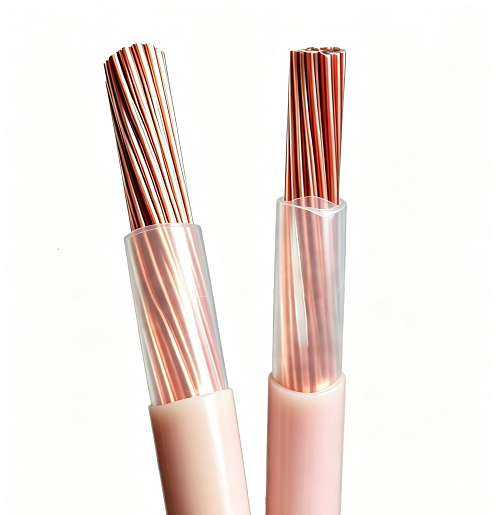
The cross-linked polyethylene (PE2) inner layer provides excellent electrical protection. The cross-linking process significantly enhances the polyethylene‘s thermal resistance, allowing the wire to withstand operating temperatures up to 50°C without degradation. The specific insulation resistance and dielectric breakdown strength of PE2-PA wire are notably high, with a dielectric breakdown strength of 70 kV/mm at 50 Hz, ensuring safe operation even under voltage fluctuations.
Excellent Mechanical Protection
The polyamide (PA) outer sheath serves a critical mechanical function. It protects the wire during the winding process and in operation, offering resistance to abrasion and mechanical stress. This outer layer also contributes to the wire’s smooth surface finish and ease of winding, which is essential for efficient motor production.
High Resistance to Voltage Fluctuations
Submersible motors often operate in environments where voltage stability cannot be guaranteed. PE2-PA winding wire is designed with high resistance against voltage fluctuations, providing a greater safety factor compared to standard motor windings.
Thermal Performance
The PE2-PA insulation system enables reliable operation at elevated temperatures. Cross-linking of the polyethylene is the key mechanism that achieves this increased heat resistance. The wire also maintains its mechanical properties after aging, with tensile strength and elongation remaining stable even after prolonged exposure to 80°C.
Durability and Long Motor Life
By providing robust electrical and mechanical protection, PE2-PA winding wire significantly extends the service life of submersible motors. Its trouble-free operation reduces maintenance requirements and downtime, making it a cost-effective choice for pump manufacturers and end users.
Customization Capabilities
Zhengzhou Tasuu offers comprehensive customization options for PE2-PA winding wire. Wire diameters can be produced within the range of 0.8 mm to 3.4 mm, and insulation thickness can be adjusted to meet specific voltage and temperature requirements. This flexibility ensures that customers receive wire precisely tailored to their submersible motor designs.
Manufacturing Process of PE2-PA Winding Wire
The production of PE2-PA winding wire involves a series of precise manufacturing steps that ensure consistent quality and performance. Zhengzhou Tasuu employs rigorous process controls at every stage, from raw material inspection to final product testing.
1. Wire Drawing
The process begins with high-purity copper rod, typically with a purity of 99.95% or higher. The copper rod undergoes multiple drawing passes through precision dies to reduce its diameter to the desired size. This multi-stage drawing process gradually reduces the wire diameter while maintaining the conductor‘s integrity. During drawing, the wire is cleaned using deionized water to remove any oil, dirt, or particles that could interfere with insulation adhesion.
2. Annealing
After drawing, the copper wire is annealed to restore its softness and flexibility, which are lost during the work-hardening that occurs during drawing. The annealing process involves heating the wire in an oxygen-free environment to temperatures typically ranging from 460°C to 700°C, depending on the wire diameter and desired properties. The wire is then cooled in a controlled manner to prevent oxidation and achieve the desired crystalline structure. Proper annealing is crucial for ensuring that the finished wire can be wound tightly without cracking or breaking.
3. Conductor Cleaning and Surface Preparation
Following annealing, the copper conductor undergoes thorough cleaning to remove any residual oils or oxides. This step is essential for ensuring proper adhesion of the insulation materials. The wire may be passed through cleaning baths and dried before proceeding to the insulation application stage.
4. Insulation Application: PE2 (Cross-linked Polyethylene)
The first insulation layer is applied using a cross-linkable polyethylene compound. The application process involves either extrusion or a coating technique, depending on the wire construction and manufacturer‘s equipment. The polyethylene is applied to the desired thickness, and then the wire passes through a cross-linking stage. Cross-linking is typically achieved through irradiation or a chemical process, which creates molecular bonds between the polymer chains. This cross-linking dramatically improves the polyethylene’s thermal stability and resistance to deformation at elevated temperatures.
5. Insulation Application: PA (Polyamide) Sheath
After the PE2 layer has been applied and cross-linked, a polyamide (nylon) outer sheath is applied. This is typically done through an extrusion process where molten polyamide is applied over the PE2-insulated conductor. The PA layer is carefully controlled to achieve the desired thickness, which typically ranges from 0.1 mm to 0.2 mm depending on the overall wire diameter. The polyamide provides mechanical protection, abrasion resistance, and contributes to the wire‘s smooth surface finish.
6. Quality Control and Testing
Throughout the manufacturing process, the wire undergoes continuous quality monitoring. In-line measurement devices check the conductor diameter, insulation thickness, and overall wire diameter. After production, samples are tested for critical performance parameters including tensile strength, elongation, dielectric breakdown strength, and insulation resistance. These tests ensure that the wire meets the stringent requirements of submersible motor applications.
7. Winding and Packaging
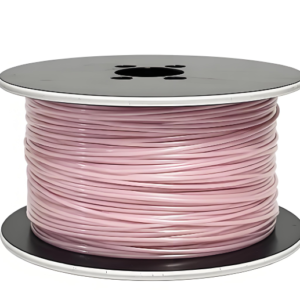
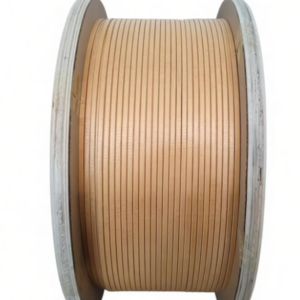
The finished PE2-PA winding wire is spooled onto reels or coils according to customer specifications. The packaging is designed to protect the wire during transport and storage, preventing mechanical damage or contamination. Zhengzhou Tasuu offers various packaging options to accommodate different customer handling and storage requirements.
Applications and Market Presence
PE2-PA winding wire is primarily used in submersible pump motors for water wells, agricultural irrigation, municipal water supply, and industrial applications. The wire’s ability to operate reliably at 50°C water temperature and its resistance to voltage fluctuations make it particularly suitable for deep well installations where motors face challenging conditions.
Zhengzhou Tasuu‘s PE2-PA winding wire has been supplied to customers in Saudi Arabia, Bahrain, Zimbabwe, and other markets, where it has demonstrated reliable performance in some of the most demanding submersible pump installations. The company’s commitment to customization allows customers to order wire with specific diameters, insulation thicknesses, and performance characteristics to match their exact motor designs.

Reviews
There are no reviews yet.