
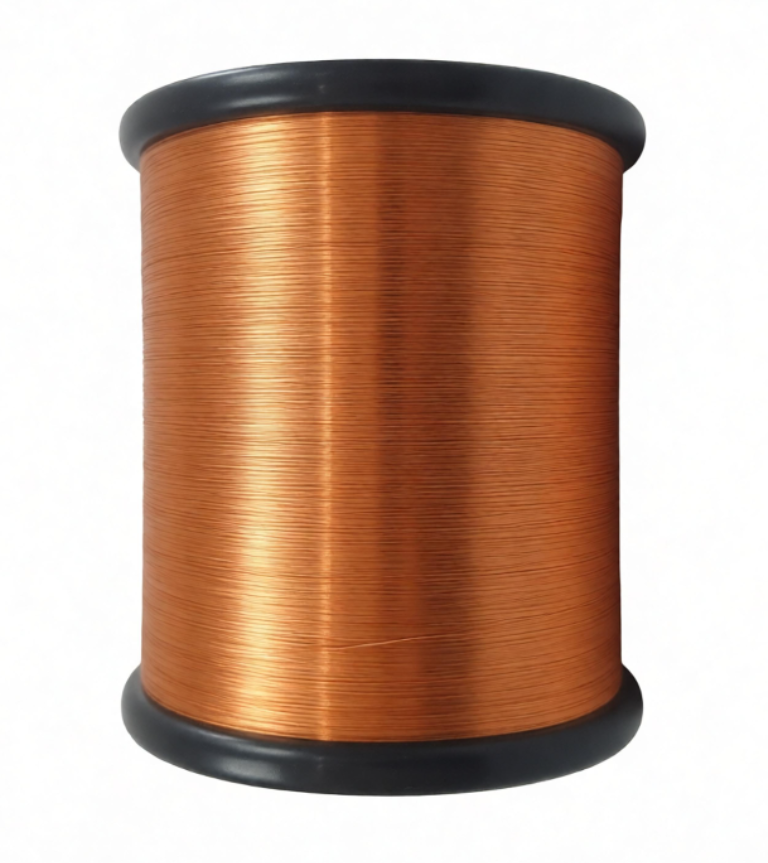
View more products about enameled aluminium wire+
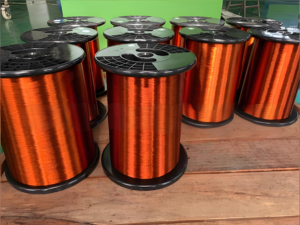
Manufacturing Process
1. Raw Material Selection and Drawing
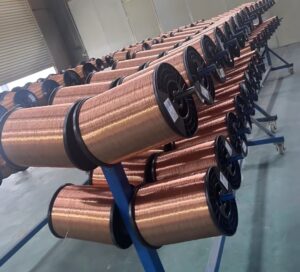
The manufacturing journey begins with high-purity electrical-grade aluminum rod, typically 99.6% purity or higher . At Zhengzhou Tasuu, the raw material is sourced from the abundant local aluminum industry, providing a significant cost and quality advantage. The aluminum rod is fed into high-speed continuous drawing machines equipped with nanocrystalline diamond composite coating wire drawing dies, which progressively reduce the diameter to the target 0.12-0.17mm range . This multi-stage drawing process is synchronized with the subsequent enameling speed to maintain consistent production flow.
2. Annealing
Following the drawing process, the bare aluminum wire undergoes continuous annealing in a specialized furnace. This critical step removes internal stresses induced during drawing, allowing the molecular lattice to rearrange, thereby enhancing the wire’s flexibility and electrical conductivity . For fine-gauge wire, precise temperature control during annealing is essential to achieve the optimal balance between mechanical softness and tensile strength, ensuring the wire can withstand the rigors of subsequent winding operations without breakage.
3. Surface Cleaning
Before any insulation can be applied, the annealed wire must be thoroughly cleaned to remove oils, oxides, and particulate contaminants. At Zhengzhou Tasuu, advanced cleaning methods are employed, typically using deionized water combined with ultrasonic cleaning technology operating at frequencies around 2500Hz . Some processes utilize solvent mixtures of xylene and naphtha under negative pressure to ensure a pristine conductor surface . This cleaning step is particularly critical for fine wire, as even microscopic contaminants can compromise enamel adhesion and create pinhole defects that reduce breakdown voltage.
4. Enamel Application (Coating)
The application of the Class 155 modified polyester insulation is the most technically demanding phase of production. The wire passes through an enamel application die—typically made of ruby or sintered carbide—which precisely meters the liquid enamel onto the conductor surface . For Class 155 insulation, the enamel formulation is a modified polyester resin (often denoted as PEW or PEW(M)), which is specifically engineered to provide thermal stability up to 155°C while maintaining excellent solvent resistance and thermal shock resistance .
Due to the fine diameter of 0.12-0.17mm, the wire typically requires 25 to 33 passes through successive coating and baking cycles to build the required insulation thickness without creating eccentricity or uneven coating . Each pass applies a thin layer of enamel, which is immediately baked to evaporate solvents and initiate polymerization before the next layer is applied.
5. Polymerization (Baking)
After each enamel application, the coated wire enters a vertical or horizontal baking oven where temperatures reach 600-700°C . Despite the high oven temperature, the enamel itself reaches polymerization temperatures of approximately 250-300°C due to the high speed of the wire passing through the oven . The solvent evaporates, and the resin cross-links to form a tough, continuous insulating film. For fine wire like 0.12-0.17mm, the entire solvent evaporation and polymerization sequence occurs in less than one second in modern high-speed ovens .
6. Cooling
After exiting the baking zone, the wire must be rapidly cooled to below 100°C before it can be wound onto spools . High-capacity fans direct cold air across the wire, ensuring efficient heat dissipation without thermal shock that could cause the enamel film to crack or delaminate.
7. Lubricant Application and Spooling
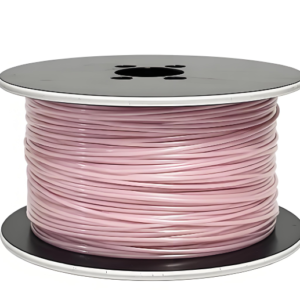
The final manufacturing step involves applying a thin external lubricant layer to the wire surface. This lubricant, often a wax or mineral oil-based compound, is crucial for end-users as it ensures smooth handling during coil winding operations, reducing friction and preventing insulation damage . The finished wire is then precisely wound onto standard spools—typically PT-10 (3-4 kg), PT-15 (5-6 kg), or PT-25 (11-12 kg) depending on customer requirements—and prepared for quality inspection and packaging
Applications
The 0.12-0.17mm diameter Class 155 enameled aluminum wire is specifically designed for fine-wire applications where space constraints and thermal management are critical. Its primary applications include:
Small Transformers and Inductors: Used extensively in electronic transformers, high-frequency transformers, and inductor coils for power supplies, where compact winding requires fine-gauge wire capable of withstanding operating temperatures up to 155°C .
Relays and Solenoids: The wire’s excellent flexibility and thermal stability make it ideal for relay coils and solenoid actuators in automotive and industrial control systems .
Small Motors and Household Appliances: Class 155 wire is widely employed in fan motors, blowers, pumps, and washing machine motors, as well as air-conditioner compressors and anti-explosion motors .
Automotive Electronics: The wire is specified for ignition coils, sensors, and other automotive electromagnetic components that operate in high-ambient-temperature engine compartments .
Instrumentation and Voice Coils: Fine-gauge Class 155 wire is used in precision instruments, clock coils, watch coils, magnetic heads, and CD-ROM deflection coils where dimensional accuracy and thermal reliability are essential .

Reviews
There are no reviews yet.