
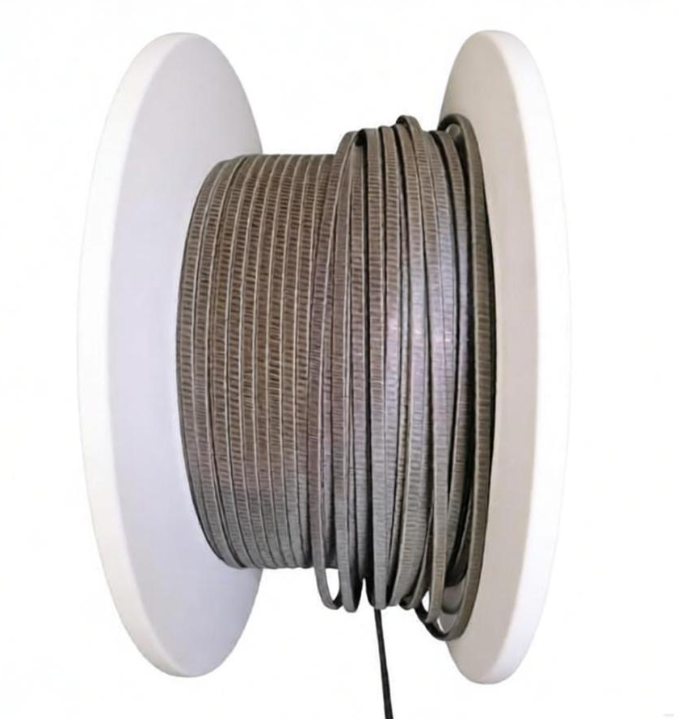
View more products about fiberglass covered winding wires+
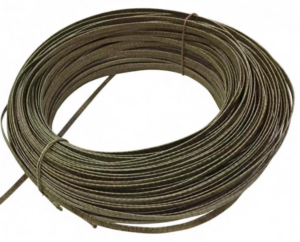
4mm × 7.1mm Conductor Specifications
The 4mm × 7.1mm conductor provides substantial copper cross-section for high-current transformer windings. The thickness of 4.0mm falls within the upper range of standard flat conductor dimensions, while the 7.1mm width offers efficient packing within the winding window. This conductor is typically specified for transformer primary windings or for sections where current density must be minimized to reduce I²R losses.
The ratio of width to thickness (7.1:4.0 = 1.775:1) is well within the IEC-recommended range of 1.4:1 to 8:1 for rectangular copper winding wire, ensuring proper manufacturing characteristics and consistent insulation coverage . This ratio also contributes to favorable electromagnetic characteristics, minimizing eddy current losses that can occur in thicker conductors.
2.8mm × 7.8mm Conductor Specifications
The 2.8mm × 7.8mm profile offers a thinner conductor with a width-to-thickness ratio of 2.78:1, providing flexibility for winding operations while maintaining adequate cross-section for transformer duty. This size is often selected for secondary windings where voltage ratings are lower but mechanical flexibility during winding is advantageous.
Both conductor sizes are manufactured from high-purity oxygen-free copper, ensuring electrical conductivity that meets or exceeds 100% IACS. The copper is annealed to achieve the flexibility required for transformer winding operations while maintaining the mechanical strength necessary for long-term service.
Enameled Base Coating
Before the application of glass fiber covering, the rectangular conductor receives an enamel coating applied through multiple passes through coating dies and curing ovens. The enamel system typically consists of polyester or polyester-imide base materials, providing a dielectric foundation with temperature ratings up to 180°C (Class H) .
When the conductor is first enameled, the resulting product qualifies as “reinforced insulation.” This dual-layer construction—enamel plus glass fiber—is particularly valuable for transformer windings operating at higher voltages and in demanding service environments. As industry literature notes, this type of winding wire is applicable to the windings of motor electrical products with high working voltage and high reliability requirements .
Glass Fiber Overwrap
Following the enamel application, the conductor receives one or two layers of non-alkali glass fiber yarn applied in a spiral wrapping process. For two-layer construction, the layers are wound in opposite directions, ensuring complete coverage and enhanced mechanical strength . The glass fiber used is typically E-grade continuous filament yarn, providing excellent electrical insulation properties combined with high mechanical strength.
The glass fiber covering is then impregnated with insulating varnish appropriate to the required thermal class. The varnish penetrates the glass fiber layer, filling voids and bonding the fibers to each other and to the enamel coating. This impregnation step is critical for achieving the specified dielectric strength and mechanical integrity of the finished product .
Thermal and Electrical Performance
Temperature Classes
Fiberglass insulated enameled copper wire is available in multiple thermal classes to suit different transformer operating conditions:
-
Class F (155°C): Polyester-based enamel and varnish systems, suitable for standard transformer applications
-
Class H (180°C): Polyester-imide systems providing enhanced thermal stability
-
Class C (200°C): Silicone resin systems for the most demanding high-temperature environments
The impregnating varnish selection determines the final thermal rating of the wire. For oil-immersed transformers, the insulation system must withstand continuous exposure to transformer oil while maintaining dielectric integrity at elevated temperatures. The glass fiber component, being inherently inorganic, provides dimensional stability even under thermal cycling conditions.
Breakdown Voltage
The breakdown voltage of fiberglass insulated enameled flat copper wire is determined by both the enamel coating and the glass fiber covering. For film-wrapped constructions with glass fiber overwrap and a nominal insulation thickness of 0.20mm, the breakdown voltage is not less than 2,500V .
The enamel layer provides the primary dielectric barrier, while the glass fiber covering contributes additional dielectric protection and mechanical reinforcement. The combination of enamel and glass fiber results in a product with voltage breakdown resistance exceeding that of simple enameled or glass-fiber-only constructions, making it particularly suitable for transformer applications where system voltages require robust dielectric protection .
Transformer Applications
Oil-Immersed Transformers
Fiberglass insulated enameled flat copper wire is widely specified for oil-immersed transformer windings. The glass fiber insulation, when bonded with insulating varnish, offers resistance to oil and moisture while maintaining dielectric integrity. Applications include distribution transformers, power transformers, and specialized transformers for industrial installations. The flat conductor profile enables efficient winding configurations, optimizing transformer performance within the available core window.
Dry-Type Transformers
Dry-type transformers, which rely on air rather than liquid for cooling and insulation, benefit from the thermal stability and fire-resistant characteristics of glass fiber insulation. The inorganic nature of glass fiber provides inherent fire resistance, an important safety consideration for dry-type transformers installed in buildings and other fire-sensitive locations .
Reactors and Specialized Transformers
Both conductor sizes find application in reactor windings, UPS transformers, and power reactors. The 4mm × 7.1mm size is particularly suited to higher-current sections, while the 2.8mm × 7.8mm size offers flexibility for more complex winding configurations .
The Ukrainian Transformer Market Context
Surge in Transformer Imports
The Ukrainian transformer market has experienced extraordinary growth in demand over the past two years. Between January and October 2025, Ukraine imported transformers, inductors, and chokes valued at $875.8 million, representing a 95.3% increase compared to the same period in 2024 . China has become the dominant supplier, with imports from China reaching $738.3 million—representing 84.3% of total transformer imports—compared to $299 million in the previous year .
This dramatic increase in transformer imports reflects both the urgent need to replace damaged equipment and the modernization of Ukraine’s power infrastructure. The systematic targeting of Ukraine’s energy infrastructure since February 2022 has caused unprecedented damage, with nearly two-thirds of the country’s dispatchable power generation capacity occupied, damaged, or destroyed .
Transformer Shortage and Immediate Needs
Ukrainian energy sector officials have stated that the country urgently needs equipment worth at least $1 billion, with new transformers, mobile substations, and power grid equipment being the highest priorities . Available reserves have been depleted, and power outages lasting several hours occur daily across all regions . The supply deficit could reach as much as 6 GW during peak winter demand, resulting in longer and more widespread power cuts .
Key components required include:
-
New transformers for substations and grid connections
-
Mobile substations for rapid deployment
-
Power grid equipment for transmission and distribution
-
Generator systems and reserve equipment
Reconstruction and Modernization
The European Bank for Reconstruction and Development has provided €90 million to strengthen Ukraine’s energy system and build strategic reserves of critical equipment . This funding will finance the reconstruction of three major 330 kV substations and the construction of a new substation in western Ukraine .
The power sector reconstruction represents an opportunity to modernize Ukraine’s energy system. The International Energy Agency has noted that distributed energy resources—including solar PV, wind, batteries, and small modular gas turbines—can support Ukraine’s immediate needs while advancing longer-term modernization. A more diverse DER deployment would require upfront investment of $15.5–23 billion but represents the most cost-effective solution over time when ongoing fuel costs are factored in .
Supply Chain and Investment Implications
The disruption of supply chains due to the ongoing conflict has created opportunities for suppliers of transformer components and winding wires. With China currently supplying 84.3% of Ukraine’s transformer imports and the urgent need for equipment replacement, manufacturers of fiberglass insulated enameled winding wires are well-positioned to participate in the reconstruction effort .
The Ukrainian government is supporting investment in the energy sector through renewable energy auctions ($1.1 billion planned in 2025), state support programs covering up to 30% of project costs, and a policy framework encouraging domestic manufacturing and reducing reliance on imported equipment

Reviews
There are no reviews yet.