
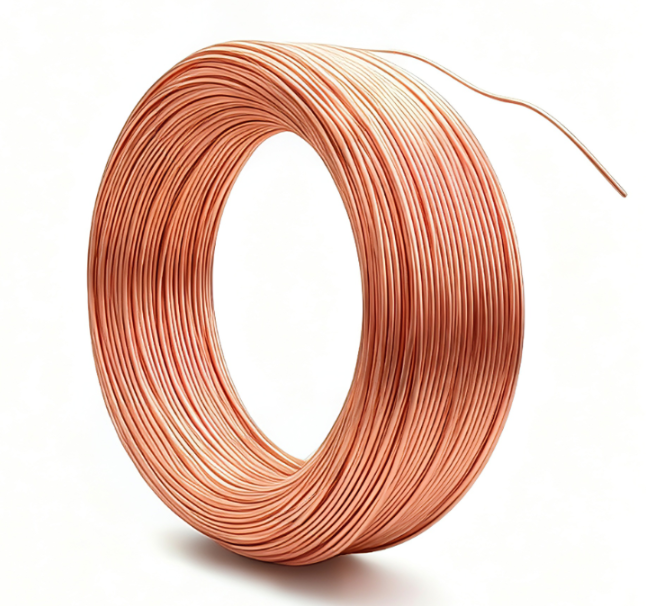
View more products about submersible pump winding wire+
1. Winding Wire Test Methods – General Framework
1.1 IEC 60851-1: General Notes and Definitions
The foundational standard for winding wire testing is IEC 60851-1. This document establishes the general notes, atmospheric conditions for testing, and definitions applicable to all parts of the IEC 60851 series. It specifies that tests should be conducted under controlled temperature and humidity conditions, and provides the framework for interpreting results across the subsequent parts. For a PE2+PA wire, compliance with IEC 60851-1 means the manufacturer has established a documented testing protocol consistent with international winding wire practice.
1.2 IEC 60851-3: Mechanical Properties
IEC 60851-3 specifies mechanical test methods including elongation, springiness, flexibility and adherence, and resistance to abrasion. These tests are directly relevant to the PE2+PA wire’s performance during winding insertion. The flexibility and adherence test evaluates whether the insulation remains bonded to the conductor when the wire is bent—a critical property because the polyamide sheath must not delaminate from the PE2 layer during coil formation. Abrasion resistance testing quantifies the wire’s ability to withstand the mechanical contact that occurs during insertion through slot liners.
1.3 IEC 60851-5: Electrical Properties
IEC 60851-5 covers electrical test methods including electrical resistance, breakdown voltage, continuity of insulation, dielectric dissipation factor, and pin hole detection. For PE2+PA wire, the breakdown voltage test verifies the dielectric strength of the combined PE2/PA insulation system. The continuity of insulation test detects any discontinuities in the polymer layers that could provide a pathway for moisture ingress. The pin hole test is particularly relevant for thin insulation walls, where even microscopic voids can initiate failure under electrical stress in submerged service.
2. Insulation Material Testing – Mechanical Properties
2.1 IEC 60811-501: Mechanical Properties of Insulating Compounds
IEC 60811-501 provides the procedure for determining mechanical properties of insulating and sheathing compounds, applicable to both cross-linked and thermoplastic materials. For PE2 insulation, this standard governs the tensile strength and elongation at break measurements. The typical requirements for PE2+PA wire are tensile strength of at least 10 N/mm² and elongation of at least 100% at 23°C, measured according to IEC 60811-1-1. These values must be maintained after accelerated aging at 80°C for seven days, which simulates the thermal conditions the insulation will experience over years of submersible motor operation.
2.2 IEC 60811-4-1: Polyethylene-Specific Tests
IEC 60811-4-1 specifies test methods specific to polyethylene and polypropylene compounds, including resistance to environmental stress cracking and measurement of melt flow index. The environmental stress cracking test is particularly relevant to submersible applications, where the combination of mechanical stress and water exposure can cause premature failure of polyethylene insulation. While this standard was originally published in 1985, it remains the reference for evaluating the long-term durability of polyethylene compounds in wet environments.
3. Insulation Resistance and Dielectric Properties
3.1 IEC 60093: Specific Insulation Resistance
IEC 60093 provides the method for measuring volume and surface resistivity of solid insulating materials. For PE2+PA winding wire, the specific insulation resistance requirement is 10¹⁶ Ω·cm at 20°C, measured according to this standard. This exceptionally high resistance value ensures minimal leakage current even under continuous immersion. A “lowest price” wire that fails to meet this threshold would exhibit degraded insulation performance, potentially leading to ground faults and motor failure.
3.2 Dielectric Breakdown Strength
The dielectric breakdown strength of PE2 insulation is typically specified at 70 kV/mm at 20°C and 50 Hz, measured according to DIN VDE 0303-21. While this is a German standard rather than IEC, it is widely referenced in PE2+PA wire specifications. The high breakdown strength provides the electrical margin necessary for reliable operation, including with variable frequency drives that impose voltage spikes above the nominal supply voltage.
3.3 Dielectric Constant
The relative dielectric constant of PE2 is specified as 2.3 at 20°C and 800 Hz, measured according to DIN 53483. This parameter affects the capacitance of the winding and the distribution of electric stress within the insulation. A consistent dielectric constant across production batches is essential for predictable motor performance.
4. Cross-Linking and Material Consistency
4.1 Cross-Linking Verification
The “PE2” designation requires verification that the polyethylene has been cross-linked rather than remaining thermoplastic. While IEC does not publish a single standard specifically for cross-linking verification of winding wire, the mechanical property tests in IEC 60811-501 provide indirect evidence: cross-linked polyethylene maintains its tensile strength and elongation after thermal aging, whereas thermoplastic polyethylene would soften and flow. The aging test at 80°C for seven days, with retention of at least 10 N/mm² tensile strength, serves as a practical verification that cross-linking has occurred.
4.2 Thermal Rating Basis
The thermal rating of PE2+PA wire—50°C operating water temperature and 90°C maximum conductor temperature—derives from the material properties of cross-linked polyethylene rather than from a specific IEC standard for submersible motors. The basis is the insulation’s demonstrated ability to maintain dielectric and mechanical properties at these temperatures, as verified through the aging tests specified in IEC 60811-501 and the electrical tests in IEC 60851-5.
5. Practical Implications of Standards Compliance
5.1 What “Lowest Price” Must Not Compromise
A PE2+PA wire offered at the lowest price must still demonstrate compliance with the core IEC requirements. The conductor resistance must fall within tolerance. The insulation must achieve the specified dielectric breakdown strength. The mechanical properties must survive thermal aging. If any of these fundamental requirements are not met, the wire cannot be considered a legitimate PE2+PA product regardless of price. The standards framework exists precisely to provide objective criteria for this evaluation.
5.2 Verification Methods
Purchasers can request test certificates referencing the applicable IEC standards. For critical applications, independent laboratory verification of dielectric breakdown strength, insulation resistance, and mechanical properties after aging provides assurance that the wire meets the technical specification. The cost of such verification is trivial compared to the cost of a submersible motor failure caused by substandard insulation.

Reviews
There are no reviews yet.