
View more products about submersible pump winding wire+
Construction of BOPP Submersible Winding Wire
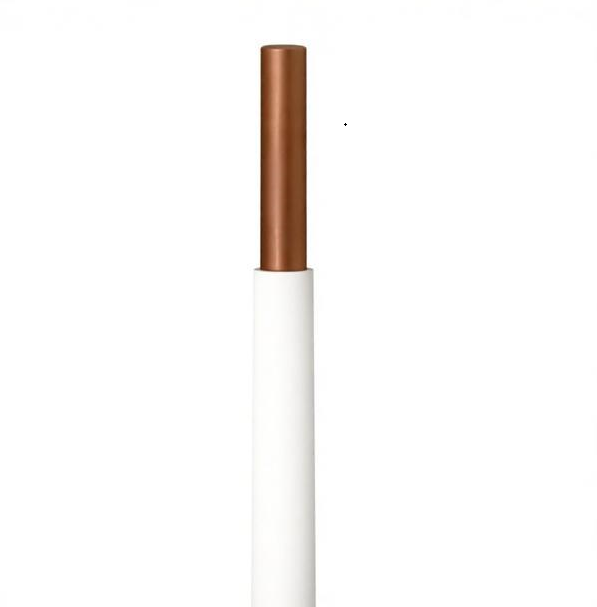
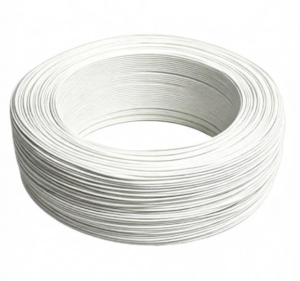
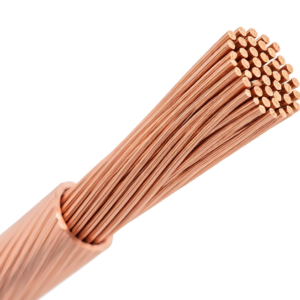
The BOPP submersible winding wire employs a triple-wrapped insulation system. The copper conductor, manufactured from bright annealed copper with a purity of 99.97% or higher, is wrapped with thin polyester film and biaxially oriented polypropylene (BOPP) films. The modern manufacturing process uses sophisticated wrapping heads and an inline continuous heat shrinkage furnace to achieve uniform coverage and bonding of the film layers.
BOPP film derives its exceptional properties from the biaxial stretching process. Polypropylene pellets are co-extruded into a sheet and then stretched in both longitudinal and transverse directions. This process aligns the polymer molecular chains along the plane of the film, endowing BOPP film with high insulation resistance, high dielectric strength, and extremely low dielectric loss. At temperatures below 100°C, the dielectric loss of BOPP is only one ten-thousandth of the level observed in conventional insulation materials, and it remains almost independent of frequency. This means energy loss is minimal under AC working conditions, and winding efficiency can be greatly improved.
The BOPP film itself has hydrophobic properties, meaning it is not easily penetrated by water. This characteristic enables the material to meet the requirements of IP68 level long-term underwater work. The film also demonstrates excellent resistance to acids, alkalis, and salts, making it suitable for industrial drainage environments containing sewage, seawater, or corrosive substances. The biaxial stretching process significantly increases the tensile strength and tear resistance of the film compared to ordinary plastic film, enabling it to maintain the integrity of the insulation layer under the bending, compression, and vibration stresses of motor winding.
The triple-wrapped construction typically consists of a layer of polyester film adjacent to the conductor, followed by layers of BOPP film. The polyester layer provides adhesion and structural fit with the copper conductor, compensating for potential bonding deficiencies of BOPP film when used alone. Manufacturers describe these wires as having very thin insulation thickness while providing high dielectric strength, low leakage current, tear resistance, abrasion resistance, and the ability to withstand operating temperatures up to 150°C.
A particularly significant advantage of BOPP insulation is its corona resistance. With the increasing adoption of variable frequency drives in submersible pumps, the PWM pulse voltage output by the converter generates high-frequency spikes that form overvoltage and corona discharge at the motor winding end. Traditional polyolefin insulation materials have poor corona resistance and are prone to partial discharge erosion under long-term pulse voltage, leading to premature insulation failure. BOPP film, however, has extremely low dielectric loss and high corona initiation voltage resistance. In practical engineering tests, a variable frequency water supply equipment was replaced with modified polypropylene insulated water-resistant winding wire. After 20,000 hours of accelerated aging testing, there were no signs of electrical corrosion on the winding insulation. A comparative prototype using ordinary PE insulation showed multiple corona corrosion points around 12,000 hours. This is due to the high density and high breakdown resistance of the BOPP layer, which effectively suppresses the development of partial discharge.
Malaysian Pump Brands and Market Context
The Malaysian submersible pump market is served by both international and regional brands. The key players operating in the Malaysia pumps market include Grundfos Group, Xylem Inc., KSB Aktiengesellschaft, Calpeda SPA, Sulzer Ltd., Flowserve Corporation, and Ruhrpumpen Group. These companies supply submersible pumps for municipal water supply, industrial process water, wastewater treatment, and agricultural irrigation applications across Malaysia.
While specific documentation confirming which Malaysian pump brands specify BOPP-insulated winding wire is limited in publicly available search results, the Malaysian market follows international standards for rotating electrical machines. The Malaysian Standards organization has adopted IEC 60034 series standards, including MS IEC 60034-11:2007 for thermal protection of rotating electrical machines and MS IEC 60034-7:2006 for classification of types of construction. These standards establish the framework for motor insulation qualification and testing in Malaysia.
The Malaysian market for submersible pumps is characterized by demand from municipal water treatment, palm oil processing, and industrial applications. BOPP-insulated winding wire offers particular advantages for these applications due to its resistance to chemical corrosion and its compatibility with variable frequency drive operation. As Malaysian industries increasingly adopt VFD-controlled pumping systems for energy efficiency, the corona resistance of BOPP insulation becomes a significant advantage over traditional PE insulation.
Suitable Pump Applications
BOPP submersible winding wire is designed for water-filled submersible motors across a range of power ratings. The conductor size range of 0.5 mm to 4.0 mm covers motors from small domestic pumps to medium-industrial units.
Domestic and agricultural submersible pumps represent a primary application. The BOPP-insulated wire is widely used in domestic submersible water pumps and irrigation pumps, with manufacturers describing them as suitable for “winding submersible pumps motors of all sizes”. The wire’s resistance to water absorption and its low leakage current make it suitable for continuous submersion in well water.
Industrial and municipal water systems benefit from the chemical resistance of BOPP insulation. The film’s resistance to acids, alkalis, and salts enables reliable operation in industrial drainage environments containing sewage or seawater. Municipal wastewater lift stations and treatment plant pumps can utilize BOPP-insulated motors where the water chemistry would degrade lesser insulation systems.
Variable frequency drive applications represent a growing market for BOPP winding wire. The corona resistance of BOPP film addresses the specific failure mode of VFD-fed submersible motors, where high-frequency voltage spikes cause partial discharge erosion of conventional insulation. Pump systems using variable frequency drives for energy optimization can benefit from the extended insulation life provided by BOPP construction.
The water immersion test requirements and the ability to withstand high voltage confirm the wire’s suitability for the electrical stresses encountered in submersible motor service. The wire is specified to operate at temperatures up to 150°C, providing substantial thermal margin for the temperature rise that occurs during motor operation.
Motor Rewinding Process for BOPP-Insulated Submersible Motors
The rewinding of submersible motor stators follows established procedures that apply regardless of insulation type. Proper technique protects the insulation integrity throughout the repair process and ensures that the rewound motor will deliver reliable service.
Preparation and disassembly begins with marking the joints between front and rear end caps and the base to ensure correct reassembly and prevent rotor inflexibility caused by assembly errors. During winding removal, the iron core must be protected from damage—silicon steel sheets should not be warped, shifted, or burred at slot edges. The recommended method is to cut the coil from one end with diagonal pliers, then pull it out from the other end with pliers.
Coil winding and insertion requires a properly sized winding mold to ensure that coil ends have adequate clearance and that coils fit correctly into the slots. The “three-plane method” is used for embedding wires: one phase is embedded completely before the next, creating a three-layer end configuration. Critical precautions include positioning the first two “hanging handle” coils correctly to prevent scratching the stator core during insertion of subsequent coils, minimizing the use of scribing boards to avoid insulation damage, ensuring interphase insulation paper is properly positioned to strictly separate two-phase coils, and for water-filled motors, avoiding excessive compaction of coils in slots so that water can flow freely to dissipate heat for the winding.
Joint insulation requires careful preparation. The sheath and insulation layer are stripped at the joint, and the paint layer and oxide layer on the copper wire surface are removed. Conductors are twisted and soldered, then sharp corners, burrs, and residual solder are removed. The joint is wrapped with two layers of polyethylene tape in half-wrap fashion, followed by six layers of butyl self-adhesive tape stretched to approximately twice its length to create a tight, seamless joint, and finally two layers of polyethylene or polyester adhesive tape for mechanical protection.
Reassembly requires cleanliness and precision. The limit screw at the bottom is carefully adjusted to allow the rotor to rotate freely, and the locking nut is tightened. The end cover is installed in its original sealing position, taking care not to damage the rubber sealing ring in the inner hole of the sealing box. When assembling an integral sealing box, only gentle pushing is required—it should not be knocked.
Technical Standards
The manufacture of BOPP submersible winding wire is governed by the Indian Standard IS 8783:1995, which specifies requirements for poly wrapped submersible winding wires. Manufacturers produce these wires in complete compliance with this standard, with sizes ranging from 0.50 mm to 3.00 mm. For the Malaysian market, the Malaysian Standards organization has adopted IEC 60034 series standards for rotating electrical machines, including MS IEC 60034-11:2007 for thermal protection and MS IEC 60034-7:2006 for construction classification. At the international level, IEC 60034-18-1:2022 provides general guidelines for functional evaluation of electrical insulation systems used in rotating electrical machines

Reviews
There are no reviews yet.