
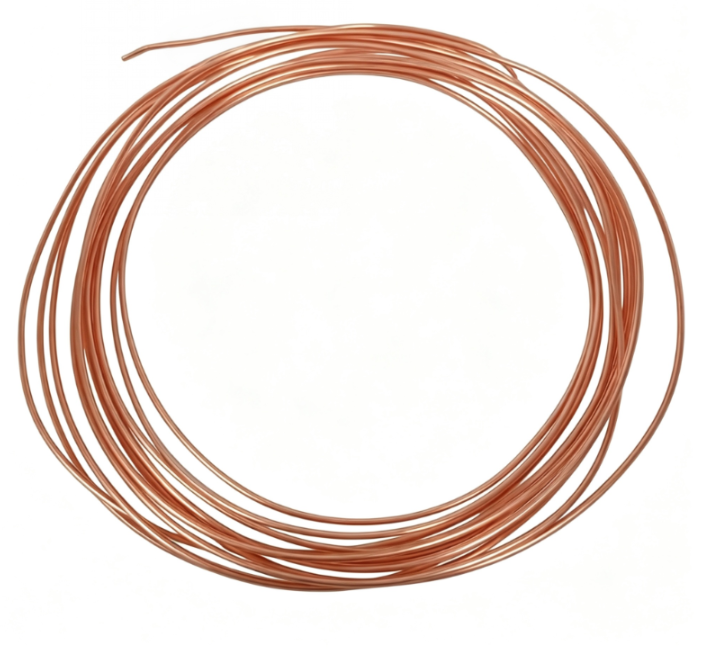
View more products about submersible pump winding wire+
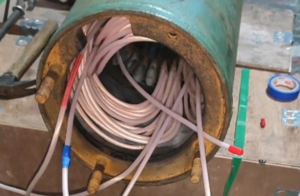
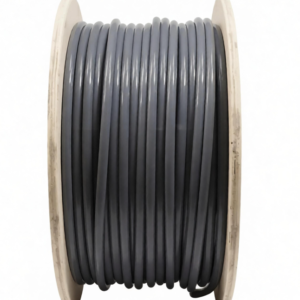
Submersible motors operate under the most unforgiving conditions imaginable for an electrical machine: continuously submerged in water, often at elevated temperatures and under significant hydraulic pressure. The winding wire must provide reliable electrical insulation while resisting water penetration, thermal degradation, and mechanical stress throughout years of service. XLPE+PA insulated winding wire—cross-linked polyethylene insulation with a polyamide (nylon) outer sheath—represents the most advanced solution for these demanding applications. This article examines the characteristics that make XLPE+PA wire the preferred choice for submersible motors, drawing on authoritative research that has established its reliability through decades of testing and field experience.
Understanding Water Treeing: The Fundamental Challenge
To appreciate why XLPE+PA insulation is essential for submersible motors, one must understand the degradation mechanism that threatens all polyethylene-insulated wires in wet environments. Water treeing is an electrochemical degradation process that occurs when polyethylene insulation is simultaneously exposed to water and electrical stress. Microscopic voids, contaminants, or surface irregularities create localized sites where water molecules penetrate the polymer structure. Under the influence of the electric field, these water-filled channels grow into tree-like structures that progressively erode the insulation‘s dielectric strength .
Research published in IEEE Xplore established that when polyethylene-insulated wire is immersed in water and voltage is applied—precisely the conditions in a submersible pump—treeing occurs at extremely low voltages. Critically, the study found that the copper conductor itself influences the treeing process, accelerating degradation at the interface between conductor and insulation . This finding led to a fundamental design insight: a metal barrier or semiconducting layer over the conductor dramatically increases insulation life through what researchers termed the “double layer” effect .
XLPE: Superior Resistance to Water Penetration
Cross-linked polyethylene (XLPE) addresses the water treeing problem through its molecular structure. Unlike standard polyethylene, where polymer chains are held together by relatively weak intermolecular forces, XLPE forms a three-dimensional network of chemical bonds between polymer chains. This cross-linked structure creates a much denser molecular architecture with significantly smaller gaps between molecules, effectively blocking the penetration of water molecules even under high pressure .
The practical implications of this structural difference are substantial. Experimental data demonstrates that XLPE insulation maintains insulation resistance above 100 MΩ after 1,000 hours of immersion at 3 MPa water pressure, whereas ordinary polyethylene may drop below 10 MΩ under identical conditions . This tenfold improvement in water resistance translates directly into extended service life for submersible motors.
The cross-linking process also enhances thermal stability. XLPE maintains reliable operation at continuous temperatures of 90°C to 105°C, with modified formulations extending the range further . This thermal capability accommodates the temperature rise that occurs in motor windings during operation, particularly in high-load conditions or when cooling is less effective. The low coefficient of thermal expansion of XLPE also means the insulation resists cracking from the repeated expansion and contraction that occurs as water temperature fluctuates .
The Polyamide Sheath: Mechanical Protection and Surface Integrity
While XLPE provides the primary dielectric barrier, the polyamide (PA) outer sheath serves a complementary but equally critical function. This thin nylon layer, typically 0.1 to 0.3 mm in thickness, protects the XLPE insulation from mechanical damage during the winding process and throughout the motor’s service life.
The importance of this protection becomes clear when considering the winding operation. Wire is pulled through tensioning devices, bent around stator slots, and subjected to abrasion against slot edges and adjacent turns. Any scratch or gouge in the insulation creates a site where water treeing can initiate. The PA sheath absorbs this mechanical abuse, maintaining the integrity of the underlying XLPE layer. The smooth surface of the polyamide also facilitates the winding process, allowing the wire to slide easily through equipment without snagging .
Validation Through Accelerated Testing
The reliability of XLPE+PA insulation has been validated through rigorous accelerated testing programs. Research published in IEEE Xplore evaluated the combined effects of gamma ray irradiation and electrical stress on XLPE wires designed for internal pump motors in boiling water reactors—an environment even more demanding than conventional submersible pumps . The study applied irradiation doses of 10⁴ to 10⁶ Gy simultaneously or sequentially with electrical stress in hot water. The conclusion was unequivocal: gamma ray irradiation below 10⁶ Gy does not deteriorate the properties of the insulation. In the actual service environment of 5×10⁴ Gy, the wires demonstrated sufficient reliability .
This research is particularly significant because it addresses the combined stresses that submersible motor insulation must withstand: radiation (in nuclear applications), elevated temperature, water exposure, and electrical stress acting simultaneously. The finding that XLPE insulation maintains its integrity under these combined conditions provides confidence in its performance in less extreme but still demanding submersible pump applications.
Design Implications for Submersible Motors
The characteristics of XLPE+PA insulation have direct implications for submersible motor design. The high dielectric strength of XLPE allows thinner insulation walls than would be required with standard polyethylene, improving slot fill factor and enabling more compact motor designs. The thermal rating of 90°C or higher accommodates the temperature rise that occurs during continuous operation.
The polyamide sheath‘s mechanical protection allows the use of automated winding equipment without risk of insulation damage, improving manufacturing efficiency and consistency. For motors that must be rewindable—an important consideration for large submersible pumps where replacement is costly—the integrity of the insulation during disassembly and rewinding is preserved by the durable PA outer layer.
Technical Standards
The manufacture and testing of XLPE+PA submersible winding wire is governed by international standards. IEC 60317-0-1 specifies general requirements for winding wires, including provisions for breakdown voltage testing that were revised to include new requirements for intermediate wire diameters . The Chinese national standard GB/T 6109.1-2025 provides the equivalent general requirements for enamelled round winding wire

Reviews
There are no reviews yet.