
View more products about submersible pump winding wire+
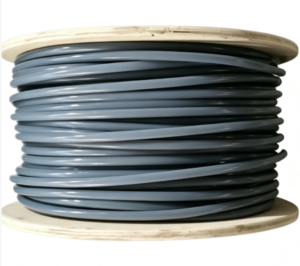
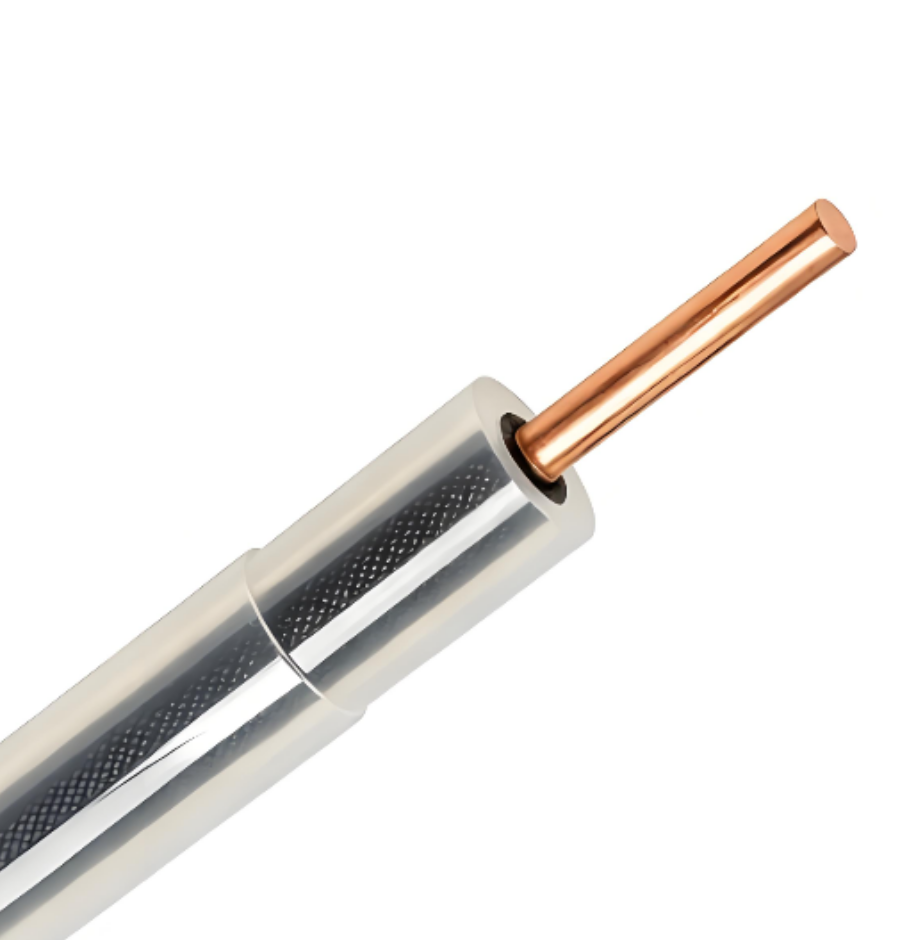
Submersible electric motors must function underwater or in other fluids, which means the winding wire must utilise a high-quality insulation system that is completely impervious to liquids. Submersible Winding Wires from Zhengzhou Tasuu WindingWire Industry Co., Ltd. were developed especially to meet the requirements of this demanding application. Tasuu winding wires consist of solid or multi-stranded copper conductors insulated with PVC/PE2/HL plastic insulation .
The insulation system is the defining feature of submersible motor winding wire. Unlike conventional motor windings that operate in air, submersible motor windings are directly exposed to water, oil, or other fluids. The insulation must prevent electrical leakage, resist water penetration, and maintain dielectric strength over years of continuous immersion. This article examines each insulation layer and sheath in the PE2/PA/HL construction, explaining the specific function each layer performs in protecting the conductor and ensuring reliable motor operation.
The Copper Conductor: Foundation of the Electrical System
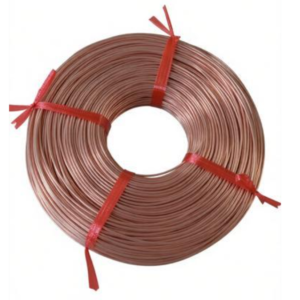
The conductor forms the electrical pathway and is manufactured from high-conductivity bare copper. Tasuu winding wires are available with either solid or multi-stranded conductors, with the choice determined by the required cross-sectional area and the flexibility demands of the winding process .
Solid conductors are available in diameters ranging from 0.6 mm to 4.6 mm, corresponding to cross-sectional areas of 0.283 mm² to 16.6 mm². Stranded conductors extend the range to larger cross-sections, with diameters from 4.5 mm to 17.1 mm and cross-sectional areas up to 150 mm² . The multi-strand design provides the flexibility necessary for winding into motor stator slots while maintaining the required current-carrying capacity. For submersible pump applications, standard production ranges typically fall between 0.8 mm and 3.4 mm in conductor diameter .
The copper conductor itself requires no insulation function beyond conducting current efficiently. However, its surface condition is critical for the adhesion of the subsequent insulation layers. The conductor must be clean, free from oxides and oils, and have a smooth surface to ensure that the plastic insulation bonds tightly without voids or air gaps .
The HL Semiconducting Layer: Electric Field Control
The HL layer, also referred to as the semiconducting layer, is applied directly over the copper conductor for high-voltage applications. This layer is not present in standard low-voltage submersible winding wire; it becomes necessary when operating voltages reach 3 kV and above .
The function of the HL layer is electric field equalisation. At medium voltage levels, the electric field concentration at the conductor surface can become sufficiently intense to initiate partial discharge in microscopic air voids or surface irregularities. The semiconducting layer smooths the electric field distribution, preventing localised stress concentrations that would otherwise lead to premature dielectric breakdown .
The HL layer is typically applied with a thickness ranging from 0.1 mm to 0.3 mm, depending on the conductor diameter and the operating voltage . The material consists of a polymer base compound with conductive fillers, such as carbon black, that give it a volume resistivity between approximately 1 and 10⁵ Ω·cm . This intermediate resistivity allows the layer to equalise the electric field without short-circuiting the conductor.
The PE2 Insulation Layer: Primary Dielectric Barrier
The PE2 layer, cross-linked polyethylene, provides the primary electrical insulation for the winding wire. Cross-linking is a chemical or physical process that creates molecular bonds between the polyethylene polymer chains, transforming the material from a thermoplastic that softens with heat into a thermoset that maintains its shape and properties at elevated temperatures .
The cross-linked structure is the key to PE2’s performance advantages over standard polyethylene. Standard PE can operate at temperatures up to approximately 70°C. Cross-linked PE2 extends this limit to 90°C, making it suitable for submersible motors where heat dissipation is limited by the surrounding water environment . The cross-linking also improves the insulation’s resistance to deformation under mechanical stress and its long-term aging stability.
The PE2 insulation wall thickness depends on the conductor dimensions and the operating voltage. Minimum insulation thickness begins at 0.3 mm for smaller conductors and lower voltages, increasing to as much as 3.5 mm for larger high-voltage constructions . The insulation must be applied concentrically around the conductor, with the eccentricity in any cross-section not exceeding 10% of the nominal wall thickness. This dimensional control ensures uniform dielectric strength around the conductor’s circumference.
The PE2 layer performs multiple functions. It provides the primary dielectric barrier that withstands the applied voltage without breakdown. It resists water penetration, preventing the formation of water trees that degrade insulation over time. It also maintains its mechanical integrity under the thermal cycling that occurs during motor start-stop operations .
The PA Sheath: Mechanical Protection and Surface Finish
The PA sheath, a thin layer of polyamide (nylon) applied over the PE2 insulation, serves a distinctly different function from the insulation layers beneath it. The polyamide sheath provides mechanical protection for the PE2 insulation, shielding it from abrasion and damage during the winding process and throughout the motor‘s service life .
The PA sheath is typically applied with a wall thickness ranging from 0.1 mm to 0.3 mm, depending on the outer diameter of the insulated conductor . Despite its thinness, this layer makes a significant contribution to the wire’s durability. During motor winding, the wire is pulled through tensioning devices, bent around stator slots, and subjected to abrasion against slot liners and other wires. Without the PA sheath, the softer PE2 insulation would be vulnerable to scratching and gouging that could compromise its dielectric properties.
The polyamide material also provides a smooth surface finish that facilitates the winding process. The low friction of the nylon surface allows the wire to slide easily through winding equipment and into stator slots, reducing the risk of insulation damage during assembly . The PA sheath must be tightly bonded to the underlying PE2 layer without voids or separation, as any air gap between the layers could create a path for electrical discharge.
PVC Insulation: Alternative for Lower Voltage Applications
While PE2/PA is the preferred construction for higher voltage submersible motors, PVC-insulated winding wire remains in use for lower voltage applications. PVC-insulated winding wires can be used for voltages up to 1,000 V and at temperatures up to 70°C .
PVC insulation offers advantages in cost and ease of processing. The material is inherently resistant to water and provides adequate dielectric strength for low-voltage submersible pump motors. However, PVC has lower thermal resistance than cross-linked PE2 and lower insulation resistance. The specific insulation resistance of PVC is typically an order of magnitude lower than that of PE2 .
The choice between PVC and PE2 insulation depends on the motor’s operating voltage, temperature requirements, and expected service life. For demanding applications where reliability and longevity are paramount, PE2/PA construction is the standard choice.
Manufacturing Process
The production of PE2/PA/HL winding wire involves multiple precision stages. The process begins with copper rod that is drawn down to the required conductor diameter. For stranded conductors, multiple wires are bunched or stranded together with controlled lay length and direction.
The conductor is then cleaned and, for high-voltage constructions, coated with the semiconducting HL layer. The PE2 insulation is applied through extrusion. The cross-linking of the polyethylene is achieved through either irradiation (using high-energy electron beams) or a chemical process, depending on the manufacturer‘s capabilities .
The PA sheath is applied over the PE2 insulation through a separate extrusion process or through double-layer co-extrusion. Recent patent technology describes a double-layer co-extrusion process in which the cross-linked polyethylene material and the nylon protective material are simultaneously extruded onto the conductor through separate screws of a dual-screw extruder . This process ensures that the layers are tightly bonded without air gaps and that the outer surface is smooth and uniform.
Throughout production, in-line measurement devices monitor conductor diameter, insulation thickness, and overall wire diameter. Finished product testing includes high-voltage withstand testing in water, dimensional inspection, and mechanical property verification .
Applications
PE2/PA/HL winding wire is designed for water-filled submersible motors used across diverse applications. Agricultural irrigation systems rely on deep well pumps that must operate reliably for years with minimal maintenance access. Municipal water supply systems draw drinking water from aquifers. Power plant cooling systems represent a sensitive application where the wire’s stability under continuous thermal and electrical stress is critical .
Mining dewatering systems benefit from the wire‘s resistance to water chemistry variations. Oil and gas platforms use submersible motors for firefighting systems and artificial lift, where the insulation must withstand both water and hydrocarbon exposure. Deep sea applications extend the wire’s utility to offshore environments where the combination of pressure, temperature, and water chemistry demands the highest insulation performance .
Technical Standards
The manufacture and testing of PE2/PA/HL submersible winding wire is governed by international and national standards. The primary Chinese standard is JB/T 4014.4-1996, which specifies cross-linked polyethylene insulated nylon sheathed water-resistant winding wires with rated voltages up to 600/1000 V . For the Indian market, IS 8783 provides the applicable standard for winding wires for submersible motors, with Part 4 covering cross-linked polyethylene insulated and polyamide jacketed wires .
At the international level, IEC 60317 provides general requirements for particular types of winding wires, including test methods for breakdown voltage and continuity of insulation. The German standard DIN VDE 0303-21 specifies the test method for dielectric breakdown strength at power frequencies. For mechanical property testing of insulation and sheathing compounds, IEC 60811-1-1 specifies procedures for determining tensile strength and elongation.

Reviews
There are no reviews yet.