
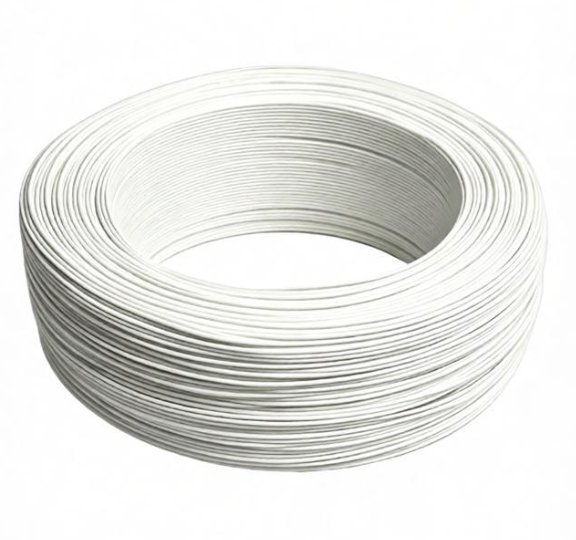
View more products about submersible pump winding wire+
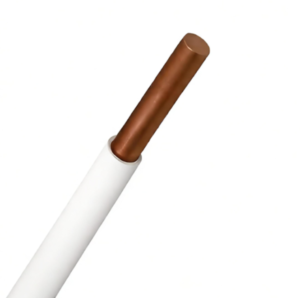
Product Characteristics
Water and Moisture Resistance
The defining characteristic of PP winding wire is its ability to operate reliably in direct contact with water for extended periods. The modified polypropylene insulation is impervious to water penetration, maintaining high insulation resistance even after prolonged immersion. This water resistance makes PP winding wire suitable for water-filled submersible motors where the winding is in continuous contact with the surrounding fluid.
Electrical Properties
Modified polypropylene offers excellent dielectric properties, including low dielectric constant and low loss factor. The insulation provides reliable electrical isolation under the voltage stresses encountered in standard submersible pump applications. The material maintains its electrical integrity under the thermal cycling and mechanical stresses of motor operation.
Thermal Performance
The modified polypropylene formulation provides heat resistance that exceeds standard PVC insulation. The thermal capability of PP winding wire covers the operating temperatures typically encountered in water-filled submersible motors, where the surrounding water provides cooling but ambient conditions may reach elevated temperatures in deep wells or geothermal applications.
Mechanical Toughness
Polypropylene is inherently tough and resistant to abrasion. The insulation layer protects the copper conductor during the winding process, resisting the mechanical stresses of insertion into stator slots and formation of end turns. The material also resists cracking under the vibration and thermal expansion encountered during motor operation.
Chemical Stability
Modified polypropylene resists attack from acids, alkalis, oils, and greases. This chemical resistance makes PP winding wire suitable for submersible pumps operating in a range of water conditions, from clean potable water to mildly contaminated industrial and agricultural water sources.
Applications in Water Systems
PP winding wire is primarily used in the winding of water-filled submersible electric motors for pumps. The water-resistant insulation allows these motors to operate directly in the fluid they are pumping, eliminating the need for complex sealing systems and enabling compact, efficient motor designs. The wire is used both in original equipment manufacturing and in the rewinding of submersible motors during repair and refurbishment.
Beyond submersible pumps, modified polypropylene insulated winding wire has found application in other water-contacting electrical systems and in specialized equipment where resistance to moisture and chemicals is essential.
International Standards
Chinese Standard: JB/T 4014.3
The primary standard governing PP winding wire for submersible motors is JB/T 4014.3-2013 (“Winding wires for submersible motors — Part 3: Modified polypropylene insulated winding wires with rated voltages up to and including 450/750 V”). This standard specifies the varieties, specifications, technical requirements, and testing methods for modified polypropylene insulated water-resistant winding wires used in water-filled submersible motors and similar applications .
The standard is issued by the Ministry of Industry and Information Technology of China and falls under the jurisdiction of the machinery industry standardization system. It replaced the earlier JB/T 4014.3-1996 version, which covered PVC-insulated water-resistant winding wires, and reflects the evolution toward polypropylene-based insulation systems with improved thermal and chemical performance .
The standard is available in English translation through Chinese Standard portals and is referenced by manufacturers and purchasers in international trade .
Indian Standard: IS 8783
The Bureau of Indian Standards has established a comprehensive framework for submersible motor winding wires under IS 8783. This multi-part standard addresses the complete range of materials and constructions used in submersible motor windings. IS 8783 (Part 4/Section 3):1995 specifically covers “Polyester and polypropylene insulated winding wires” for submersible motors, providing specifications for individual wire constructions within the broader IS 8783 framework .
The IS 8783 series also includes specifications for HR PVC insulated wires and cross-linked polyethylene insulated wires with polyamide jacketing, reflecting the diversity of insulation systems employed in submersible motor applications .
International Electrotechnical Commission (IEC)
The IEC provides the global framework for winding wire testing and specification through IEC 60317 (“Specifications for particular types of winding wires”). IEC 60317-0-1:2013+AMD1:2019+AMD2:2026 CSV establishes the general requirements for enamelled round copper winding wires, including definitions of nominal conductor dimensions, elongation requirements, breakdown voltage test provisions, and continuity of insulation specifications .
While IEC 60317-0-1 specifically addresses enamelled wires rather than extruded polymer-insulated constructions, its test methodologies and quality assurance principles are widely referenced in the PP winding wire context. The standard is maintained by IEC Technical Committee TC 55 (Winding Wires), the international body responsible for winding wire standardization .
For polymer-insulated wires, the relevant IEC standards include IEC 60227 (“Polyvinyl chloride insulated cables of rated voltages up to and including 450/750 V”), which provides the framework for extruded insulation testing that is adapted for polypropylene systems. The Chinese JB/T 4014.3 standard references IEC 60227-3 as a related normative document .
Test Method Standards
The testing of PP winding wire relies on a series of general test method standards. GB/T 2951.11-2008 provides the common test methods for insulation and sheath materials of electrical cables, including measurement of thickness and overall dimensions and determination of mechanical properties. GB/T 2951.12-2008 specifies thermal ageing methods. GB/T 3048.4-2007, GB/T 3048.5-2007, and GB/T 3048.8-2007 establish test methods for DC resistance of conductors, insulation resistance, and AC voltage withstand testing respectively. These test standards form the technical basis for verifying the performance of PP winding wire against the requirements of JB/T 4014.3
PP winding wire, with its single-layer modified polypropylene insulation, represents a practical and reliable solution for water-immersed electrical applications. Its water resistance, electrical performance, thermal capability, mechanical toughness, and chemical stability make it suitable for the demanding environment of submersible motor windings. The product is governed by Chinese standard JB/T 4014.3-2013, Indian standard IS 8783, and tested according to methodologies adapted from IEC 60317 and IEC 60227 frameworks. For manufacturers and repairers of water-filled submersible motors, PP winding wire offers a proven insulation system that delivers consistent performance in the most unforgiving operating conditions.

Reviews
There are no reviews yet.