
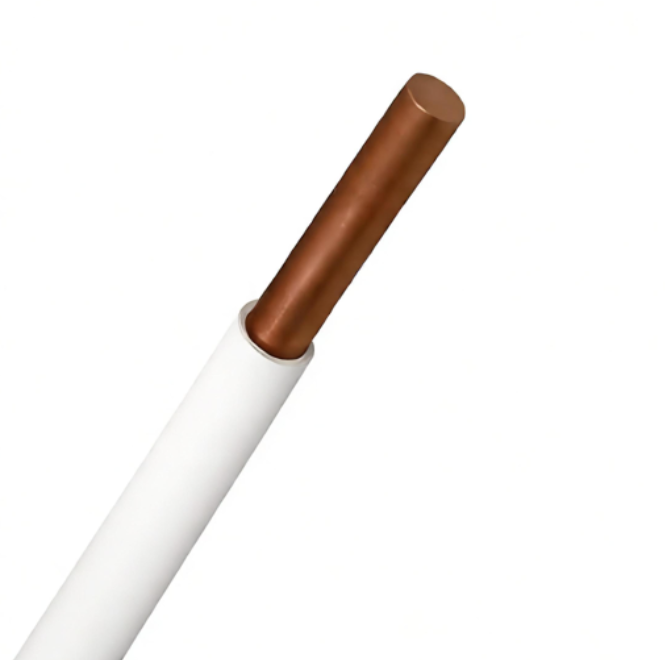
View more products about submersible pump winding wire+
Properties of Single PP Layer Insulated Winding Wire
Electrical Performance
Polypropylene offers a low dielectric constant and low loss factor, making it well-suited for applications where electrical efficiency matters. The insulation resistance of PP-insulated winding wire exceeds 500 megohm-kilometers after 24 hours of immersion in water at room temperature, demonstrating its fundamental suitability for submersible service. The material maintains dielectric integrity under the voltage stresses encountered in standard submersible pump motors, with breakdown voltages specified at 3000V for one minute without failure in typical test conditions.
Thermal Characteristics
Modified polypropylene insulation provides a heat resistance level typically ranging from 105°C to 130°C. This thermal capability exceeds standard PVC insulation and approaches the performance of cross-linked polyethylene systems, though it remains below the 90°C conductor rating of PE2/PA wire in continuous operation. The modified PP formulation specifically addresses the thermal limitations of standard polypropylene, which would otherwise soften at lower temperatures.
Mechanical and Chemical Protection
The single PP layer provides robust mechanical protection for the copper conductor. Polypropylene is inherently tough and resistant to abrasion, chemicals, and water absorption. The material resists attack from acids, alkalis, and oils, making it suitable for submersible pumps operating in a range of water conditions. The insulation layer is applied at thicknesses typically ranging from 0.2 mm to 0.6 mm, depending on conductor size and voltage requirements.
Simplified Construction
The single-layer construction offers practical advantages during rewinding. With only one insulation layer to consider, the wire is more flexible than dual-layer alternatives, facilitating insertion into stator slots and formation of end turns. The reduced diameter for a given conductor size allows more turns to fit in a given slot area, potentially improving motor performance in space-constrained designs. The simplified manufacturing process also translates to lower cost, with published data indicating that PP-insulated water-resistant winding wire can be produced at approximately 25% lower cost than comparable dual-layer constructions.
Conductor Diameter Range
Single PP layer insulated winding wire for submersible pumps is available across a broad range of conductor diameters to suit motors from fractional horsepower up to substantial industrial units. Based on published manufacturer specifications, the standard range covers conductor diameters from 0.60 mm to 3.35 mm for single-strand constructions. Within this range, common intermediate sizes include 0.63 mm, 0.67 mm, 0.71 mm, 0.75 mm, 0.80 mm, 0.85 mm, 0.90 mm, 0.95 mm, 1.00 mm, 1.06 mm, 1.12 mm, 1.18 mm, 1.25 mm, 1.30 mm, 1.32 mm, 1.40 mm, and 1.50 mm.
For larger current-carrying requirements, multi-strand configurations are available. These typically employ 7-strand or 19-strand constructions, with individual strand diameters scaled to achieve the desired total cross-sectional area. The broader submersible winding wire category encompasses conductor diameters up to 5.00 mm, with strand counts extending to 37, 49, and 61 for the largest sizes. The insulation thickness for single PP constructions generally ranges from 0.35 mm for smaller conductors to 0.40 mm and above for larger sizes, maintaining a consistent ratio of insulation to conductor diameter across the range.
The overall outer diameter of the insulated wire varies with conductor size. For example, a 1.00 mm conductor with 0.35 mm PP insulation has an upper limit average outer diameter of approximately 1.85 mm, while a 1.50 mm conductor with 0.40 mm insulation reaches approximately 2.45 mm. These dimensions must be carefully matched to the stator slot dimensions during rewinding to ensure proper fit and fill factor.
PP Insulated Wire in the Submersible Pump Winding Process
Stator Preparation and Slot Insulation
Rewinding a submersible pump motor with single PP insulated wire begins with thorough preparation of the stator core. The old winding is removed, and the stator slots are cleaned to remove all traces of varnish, insulation residue, and contaminants. Slot liners are inspected and replaced if damaged. The slot insulation system typically consists of multiple layers, with an inner layer, intermediate layer, and outer layer providing dielectric protection and mechanical cushioning for the winding.
Winding Insertion Techniques
The PP insulated wire is inserted into the stator slots using methods appropriate to the motor design. For motors with open or semi-open slots, the wire can be inserted directly by hand or with the assistance of winding tools. For closed-slot designs, which are common in submersible motors for their smoother bore and reduced friction losses, the winding may be inserted using needle winding techniques or specialized equipment. The flexibility of single PP insulated wire facilitates these operations, though care must be taken to avoid scraping the insulation against sharp edges of the laminations.
The wire tension during insertion must be controlled to prevent stretching of the conductor and damage to the insulation. Once inserted, the winding is secured with slot wedges or ties to maintain position during subsequent operations.
Connections and Testing
After all coils are inserted, the end windings are formed and the phase connections are made according to the motor‘s electrical configuration. Inter-phase insulation is installed, and the winding is tested for continuity, phase balance, and insulation resistance. A high-potential test verifies the dielectric integrity of the PP insulation before impregnation.
Varnish Impregnation and Curing
The wound stator is impregnated with insulating varnish to bond the winding, fill voids, and provide additional protection against moisture and contaminants. Vacuum-pressure impregnation (VPI) is commonly employed to achieve thorough penetration of the varnish into the winding. The stator is then cured in an oven according to the varnish manufacturer’s specifications. The compatibility of polypropylene insulation with the impregnating varnish must be verified, as some varnish solvents may affect certain polymer systems.
Final Assembly and Testing
After curing, the stator is assembled with the rotor, bearings, seals, and motor housing. The motor is filled with the appropriate coolant/lubricant fluid—typically water or a water-glycol mixture for water-filled designs. Final tests include insulation resistance measurement, DC resistance of each phase, no-load current verification, and rotational direction check.

Reviews
There are no reviews yet.