
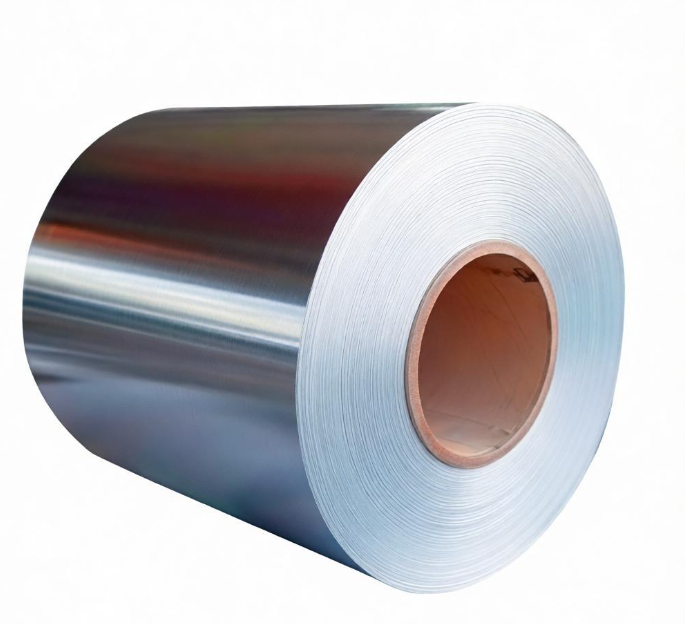
View more products about aluminium strip+
The Fundamental Properties of Aluminium as a Winding Conductor
Aluminium possesses distinct physical and electrical characteristics that shape its application in transformer windings. Its electrical conductivity is approximately 61% of copper’s International Annealed Copper Standard (IACS) value, necessitating a larger cross-sectional area to carry the same current. This lower conductivity translates to approximately double the conductor volume for equivalent current-carrying capacity, resulting in physically larger transformers.
However, aluminium’s lower mass density—roughly one-third that of copper—confers a significant weight advantage. A well-designed aluminium-wound transformer can achieve comparable, if not superior, service to a copper-wound counterpart. The material also offers substantial cost benefits, with aluminium being significantly less expensive than copper, making it particularly attractive for cost-sensitive applications and regions where copper availability is constrained.
Aluminium Foil Windings in Low-Voltage Applications
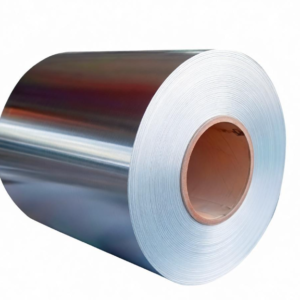
Low-voltage windings typically handle high currents, making foil construction particularly advantageous. In modern distribution transformers, foil winding has become a prevalent construction method, where the winding turn occupies the full width of the layer in either copper or aluminium foil. This arrangement offers several distinct benefits for LV applications.
Electromagnetic Balance and Short-Circuit Strength: Foil windings enable a high degree of electromagnetic balance, translating to superior mechanical short-circuit strength. In axial direction, the forces during a short circuit are limited to approximately one-tenth of those occurring in conventional strip windings. This is particularly critical for LV windings, which experience the highest electromagnetic forces due to their high current magnitudes.
Uniform Capacitance Distribution: The foil winding configuration provides evenly distributed turn-to-turn capacitance along the winding, resulting in a small potential gradient and strong impulse voltage withstand capability. This characteristic enhances the transformer’s resilience against voltage surges and switching transients.
Cost-Effective Manufacturing: Foil winding represents a cost-effective method for manufacturing LV windings, particularly when using aluminium rather than copper. The foil dimensions are typically specified to accommodate the required current rating; for example, a 433-volt LV winding carrying 1333.4 amperes might employ a foil of 400 mm by 0.95 mm cross-section.
Aluminium Foil Windings in High-Voltage Applications
High-voltage windings present a different set of design challenges, primarily centred on insulation coordination and voltage distribution. While traditional HV windings frequently employ continuous disc construction using round conductors or strip, foil winding finds application in certain HV scenarios.
Voltage Distribution Characteristics: The uniform capacitance distribution inherent to foil windings proves particularly beneficial in HV applications, where uneven voltage distribution can lead to insulation stress and partial discharge. The foil construction minimises the potential gradient along the winding, improving impulse voltage performance.
Economic Considerations: For distribution transformers up to certain ratings—in some regions, up to 250 kVA at 11 kV—aluminium windings are preferred due to their wide availability and lower cost. However, for higher rated transformers or those operating at 22 kV and 33 kV, many power utilities maintain a preference for copper windings. This preference reflects concerns about the increased volume required for aluminium conductors and the associated insulation requirements.
Thermal Management: The lower conductivity of aluminium results in higher I²R losses for a given current density, generating more heat under load. Aluminium-wound HV transformers may require larger cores, improved airflow, or additional cooling measures to maintain acceptable operating temperatures. Elevated temperatures accelerate insulation aging, potentially reducing service life unless carefully managed.
Emerging Research: Medium-Frequency Transformers and Advanced Applications
Recent research has challenged conventional assumptions about aluminium’s inferior performance, particularly in medium-frequency applications. A significant study conducted by researchers at IIT Bombay and presented at the 2026 IEEE Applied Power Electronics Conference and Exposition (APEC) has demonstrated that aluminium foil windings can offer superior performance in certain operating regions.
Eddy Current Reduction: Although aluminium has lower conductivity than copper, the reduced eddy-current generation in aluminium windings leads to a more uniform current distribution at medium frequencies. In a 20 kVA, 50 kHz, 110/800 V medium-frequency transformer (MFT) design, aluminium foil windings demonstrated a 17.02% reduction in secondary-winding AC resistance and a 16.8% reduction in primary-winding AC resistance compared to copper-wound counterparts.
Leakage Inductance Optimisation: The choice of winding material affects leakage inductance, a critical parameter in Dual Active Bridge (DAB) converters and other power electronics applications. The aluminium-foil design exhibited a 0.5% increase in leakage inductance, which is advantageous for DAB operation as it allows integration of the leakage inductance within the transformer itself.
Gravimetric Power Density: The aluminium design achieved a 28.1% improvement in gravimetric power density, a crucial metric for weight-sensitive applications such as railway traction, ship propulsion, offshore wind energy systems, and electric aircraft.
Technical Challenges and Mitigation Strategies
Despite its advantages, aluminium foil winding presents several technical challenges that must be addressed through careful design.
Mechanical and Termination Challenges: Aluminium is more prone to creep and oxidation than copper, requiring careful joint and connection design. The coefficient of thermal expansion for aluminium is significantly higher than for copper, which can lead to loosening of connections under thermal cycling. Specialised termination techniques, including compression connectors and bi-metallic joints, are essential for reliable service.
Thermal Performance: The higher resistance of aluminium results in increased operating temperatures. However, research has identified opportunities to exploit the skin effect and proximity effect in aluminium conductors. By selecting appropriate foil dimensions, the central volume of the conductor may experience very low current density, effectively creating an internal cooling channel that facilitates heat dissipation. Foil dimensions in the range of 10-15 mm width and 0.8-1.2 mm thickness have been shown to provide beneficial thermal characteristics when aluminium is used.
Physical Size Constraints: The increased conductor volume required for aluminium windings results in larger transformer dimensions. Under stringent efficiency standards such as the European Tier 2 Ecodesign directive, the size differential becomes more pronounced, as additional material is required to meet loss targets. This trade-off between physical footprint and material cost must be evaluated on a case-by-case basis.
Economic Analysis and Total Cost of Ownership
The economic justification for aluminium foil windings extends beyond initial material cost. While aluminium-wound transformers generally have lower upfront cost, the total cost of ownership must consider energy losses, cooling requirements, and expected service life.
Material Cost Advantage: The price differential between copper and aluminium is substantial and has persisted despite market fluctuations. This cost advantage is particularly significant in large transformers, where winding material represents a substantial portion of total manufacturing cost.
Operating Costs: The higher I²R losses in aluminium windings result in increased energy consumption over the transformer’s service life. This must be weighed against the capital cost savings to determine the economically optimal solution for each application.
Maintenance and Reliability: While aluminium transformers can provide service equal to copper designs when properly engineered, the increased thermal stress and termination complexity may result in higher maintenance costs over the service life.

Reviews
There are no reviews yet.