
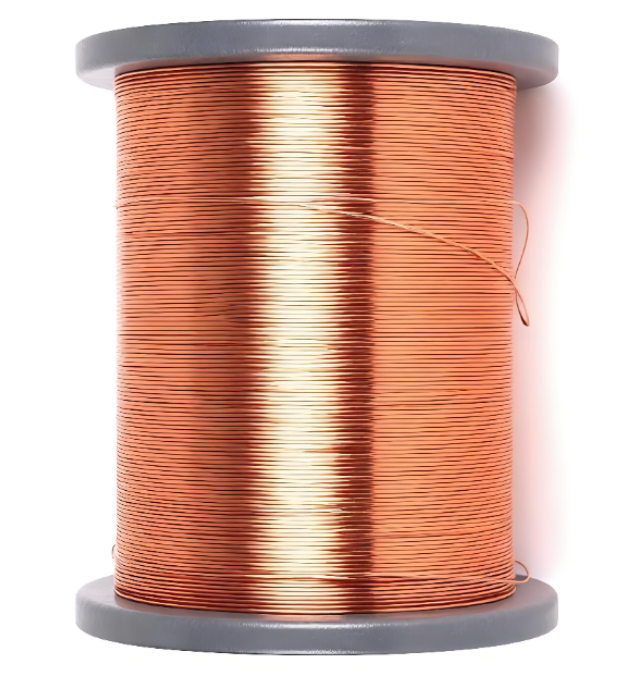
View more products about enameled cca wire+
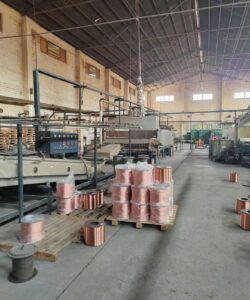
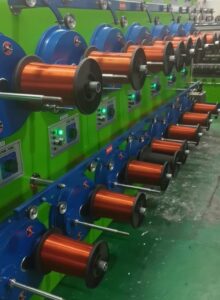
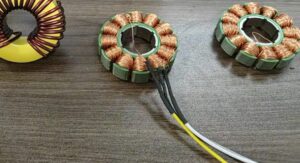
For standard transformer applications, diameters between 0.30 mm and 5.00 mm are most commonly specified, with fine-gauge wire (0.10–0.75 mm) used in high-frequency and small transformers, and larger gauges employed in power and distribution transformers. The wire is available in both annealed (A) and hard (H) states depending on tensile strength requirements .
Electrical Parameters
Conductivity: The 30% copper content by volume yields an IACS (International Annealed Copper Standard) conductivity of approximately 68–69% at 20°C . For equivalent resistance, ECCA wire provides approximately 2.45 times the length of pure copper wire for the same weight . While pure copper offers 100% IACS conductivity and aluminum offers approximately 62%, the 30% CCA grade sits between the two, offering a practical compromise for cost-sensitive transformer designs.
DC Resistivity: The maximum DC resistivity at 20°C is specified as 0.02520 Ω·mm²/m . This resistivity is approximately 1.46 times that of pure copper (0.01724 Ω·mm²/m), meaning that for the same resistance value, the cross-sectional area of ECCA wire must be proportionally larger. In transformer design, this is typically accommodated by increasing the conductor cross-section while still achieving significant weight savings.
Breakdown Voltage (Dielectric Strength): The enamel insulation is the primary determinant of breakdown voltage. For Class 155 (Class F) polyurethane or modified polyester enamel, typical dielectric strength values are: Grade 1≥ 3.0 kV (ball-pit method),Grade 2≥ 4.0 kV (ball-pit method)
The actual breakdown voltage depends on the insulation thickness, which is classified by Grade (1, 2, or 3) and varies with conductor diameter . The polyurethane enamel used for Class 155 also provides “direct solderability” – the ability to solder the wire without pre-stripping, as the enamel decomposes at soldering temperatures exposing the copper surface .
Voltage Rating (Application-Specific): As a magnet wire, ECCA does not carry a fixed voltage rating independent of its insulation system. Instead, the transformer designer determines the voltage class based on the winding configuration, insulation thickness, and clearance requirements. Typical applications range from low-voltage electronics (12–48 V) through medium-voltage power transformers (up to 1 kV) and higher with appropriate insulation design. The thermal class (155°C) is the defining temperature limit for continuous operation .
Current Carrying Capacity
Current rating is a function of conductor cross-sectional area, insulation temperature rating, and ambient operating conditions. For ECCA wire, ampacity can be estimated based on the conductor area and the 155°C thermal limit. Using copper-equivalent conductivity scaling:
-
For a 1.0 mm² cross-section ECCA conductor, continuous current capacity is approximately 3–4 A (insulated, free air) when derated to 70% of copper’s ampacity due to lower conductivity.
-
For larger cross-sections used in power transformers (e.g., 5–70 mm²), current ratings scale proportionally, with typical values ranging from 15–25 A for a 2.0 mm² conductor up to 100–200 A for heavier gauges.
Transformer designers should calculate ampacity based on the specific winding configuration, using the DC resistivity value of 0.02520 Ω·mm²/m as the basis for I²R loss calculations . The 155°C thermal rating ensures reliable performance in applications where winding temperatures are managed below this threshold. The Class 155 rating allows continuous operation at 155°C with a minimum temperature index of 155 and heat shock resistance at temperatures ≥ 175°C. The insulation provides excellent thermal stability, solvent resistance, and mechanical endurance across the operating temperature range
Transformer Application Summary
30% Cu Class 155 ECCA wire is specifically engineered for:
-
High-frequency transformers – the copper cladding provides excellent high-frequency transmission characteristics
-
General transformers and inductors – cost-effective alternative to pure copper
-
Distribution transformers – weight reduction without compromising thermal reliability
-
Motor windings and compressor coils – where light weight and thermal stability are essential

Reviews
There are no reviews yet.