
View more products about submersible pump winding wire+
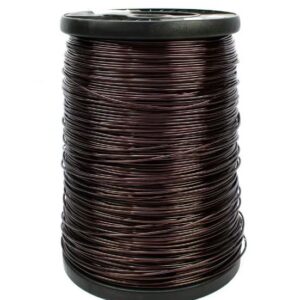
Construction of HL/XLPE/PA Winding Wire
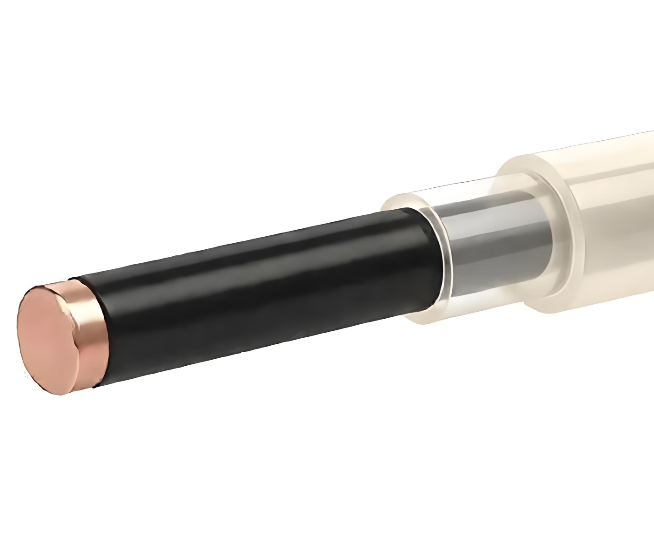
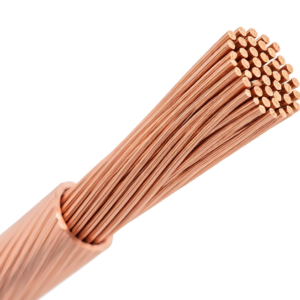
The HL/XLPE/PA winding wire consists of a solid or stranded copper conductor with three distinct insulation layers applied in sequence. The conductor is manufactured from high-purity oxygen-free copper, typically with a copper content of 99.97% or higher, ensuring efficient electrical transmission and minimal resistive heating . The conductor may be solid or multi-stranded, with diameters ranging from 0.6 mm to 4.6 mm for solid conductors and 4.5 mm to 17.1 mm for stranded configurations .
The first layer, the HL semiconducting layer, is applied directly over the copper conductor. This layer is not present in standard low-voltage submersible winding wire; it becomes necessary when operating voltages reach 3 kV and above. The function of the HL layer is electric field equalization. At medium voltage levels, the electric field concentration at the conductor surface can become sufficiently intense to initiate partial discharge in microscopic air voids or surface irregularities. The semiconducting layer smooths the electric field distribution, preventing localized stress concentrations that would otherwise lead to premature dielectric breakdown . The HL layer is typically applied with a thickness ranging from 0.1 mm to 0.3 mm, depending on the conductor diameter and operating voltage .
The second layer, cross-linked polyethylene (XLPE) insulation, provides the primary dielectric barrier. Cross-linking transforms the polyethylene from a thermoplastic to a thermoset material, creating a three-dimensional molecular network that significantly improves thermal stability and resistance to deformation under electrical stress . The XLPE insulation wall thickness depends on the conductor dimensions and operating voltage, ranging from 0.3 mm for lower voltage applications to 3.5 mm for medium voltage constructions . The insulation must be applied concentrically around the conductor, with eccentricity controlled to ensure uniform dielectric strength around the conductor‘s circumference.
The third and outermost layer, the polyamide (PA) sheath, provides mechanical protection for the XLPE insulation. The PA sheath, typically applied with a wall thickness of 0.1 mm to 0.3 mm, protects the insulation from abrasion during winding and service, contributes to the wire’s smooth surface finish for ease of slot filling, and adds a secondary barrier against water ingress . The polyamide material also provides resistance to chemicals and maintains flexibility at low temperatures.
Manufacturing Process
The production of HL/XLPE/PA winding wire involves a series of precision manufacturing stages. The process begins with copper rod that is drawn down to the required conductor diameter. For stranded conductors, multiple wires are bunched or stranded together with controlled lay length and direction to achieve the desired flexibility and mechanical integrity.
The conductor is then cleaned to remove any residual oils or oxides before insulation application. The HL semiconducting layer is applied first, typically through an extrusion process using a polymer compound with conductive fillers such as carbon black. The material‘s volume resistivity is carefully controlled to allow electric field equalization without short-circuiting the conductor.
The XLPE insulation is applied over the HL layer through extrusion. The cross-linking of the polyethylene is achieved through either irradiation (using high-energy electron beams) or a chemical process, depending on the manufacturer’s capabilities. Irradiation cross-linking creates molecular bonds between polymer chains without the need for chemical cross-linking agents, producing insulation with excellent electrical properties and consistent cross-linking density .
The PA sheath is applied over the XLPE insulation through a separate extrusion process. The polyamide material, typically nylon 1010 or a comparable grade, is extruded at controlled temperature and thickness to achieve the specified wall dimensions. The PA layer must be tightly bonded to the underlying XLPE insulation without voids or separation.
Throughout production, in-line measurement devices monitor conductor diameter, insulation thickness, and overall wire diameter. Finished product testing includes high-voltage withstand testing in water, dimensional inspection, and mechanical property verification.
Cost Advantages
The HL/XLPE/PA construction offers significant cost advantages for medium-voltage submersible motor applications. The primary advantage derives from the reduced insulation thickness achievable with XLPE compared to alternative insulation systems of equivalent dielectric strength. The thin insulation wall enables higher slot fill factors, meaning more copper can be accommodated in the same stator slot volume. The result is improved motor efficiency and power density, allowing manufacturers to produce smaller, lighter motors for a given power rating or to extract more power from existing motor designs.
The cross-linked structure of XLPE also enables operation at higher temperatures than standard polyethylene insulation. XLPE maintains reliable operation at continuous temperatures of 90°C, with modified formulations extending the range further . This thermal capability accommodates the temperature rise that occurs in motor windings during operation, particularly in high-load conditions or when cooling is less effective. The low coefficient of thermal expansion of XLPE also means the insulation resists cracking from the repeated expansion and contraction that occurs as water temperature fluctuates .
From a manufacturing perspective, the smooth surface finish and easy winding softness of the PA sheath facilitate efficient stator winding operations. The wire‘s softness allows for excellent slot filling and shaping, reducing process scrap and improving labor efficiency. The dimensional consistency of the insulation system ensures predictable electrical performance in production.
Suitable Pump Applications
The HL/XLPE/PA winding wire is designed for medium-voltage submersible motors operating at 6 kV and above. The primary applications include:
Mining dewatering systems represent a critical application where high-voltage submersible pumps are required to handle large volumes of water from deep mines. The combination of electric field control through the HL semiconducting layer and high dielectric strength from XLPE insulation addresses the specific demands of medium voltage operation in submerged environments.
Seawater pumping installations benefit from the corrosion resistance of the PA sheath and the reliable dielectric performance of the XLPE insulation. The wire is suitable for operation in seawater and other corrosive environments where conventional insulation systems would be vulnerable to degradation.
Power plant cooling systems represent a sensitive application where long-term reliability is paramount. The HL/XLPE/PA construction is specified for circulation pumps in these critical installations, where the wire‘s stability under continuous thermal and electrical stress is essential .
Deep sea applications extend the wire’s utility to offshore environments where the combination of pressure, temperature, and water chemistry demands the highest insulation performance.
International Brands Using HL/XLPE/PA Winding Wire
Several major international submersible pump manufacturers specify HL/XLPE/PA or equivalent high-voltage insulation for their medium-voltage motor products.
Franklin Electric continues to install radiation-crosslinked PE2/PA winding as standard in all synchronous and 12-inch rewindable motors, with the company approving its PPC insulated winding wire for variable frequency drive operation and ambient conditions up to 50°C . For higher voltage applications, the company‘s 12-inch rewindable motors are available with 1000V lead configurations .
Xylem (Flygt) manufactures medium-voltage submersible pumps up to 6.6 kV. The company’s Flygt medium voltage pumps use stator windings that are trickle impregnated in resin to class H insulation rated at 180°C, with a special winding technique employed to even out potential differences and minimize corona effects . This approach addresses the same electrical stress management challenges that the HL semiconducting layer solves in winding wire construction.
Grundfos specifies PE/PA insulated stator windings for its SP series deep well pumps, with the MMS motors available with PA windings as an option . The company‘s larger submersible motors for high-voltage applications utilize advanced insulation systems designed for reliable operation under continuous immersion.
Vansan produces PE2+PA insulated winding wire in its own factory, the only submersible motor manufacturer worldwide to do so. The company’s 3S motors are wound with PE2+PA insulated wires as standard, providing superior performance at water temperatures up to 50°C with high resistance against voltage fluctuation .
EBARA Pumps Europe equips its BSM and BSM 3S rewindable submersible motors with special windings using PE2+PA standard cable, guaranteeing longer motor lifespan and enhanced resistance to voltage fluctuations .
Technical Standards
The manufacture and testing of HL/XLPE/PA submersible winding wire is governed by international standards. The Indian Standard IS 8783 Part 4 Section 3 specifies requirements for cross-linked polyethylene insulated and polyamide jacketed winding wires for submersible motors . The Chinese standard JB/T 4014 covers winding wires for submersible motors, with the general requirements specified in JB/T 4014.1. For electrical testing, IEC 60811-1-1 specifies procedures for tensile strength and elongation, IEC 60093 covers insulation resistance measurement, and DIN VDE 0303-21 provides the test method for dielectric breakdown strength at power frequencies .
Conclusion
The HL/XLPE/PA submersible winding wire with triple insulation layers represents the state of the art in medium-voltage submersible motor insulation. The construction‘s semiconducting layer equalizes the electric field at high voltages, the XLPE insulation provides high dielectric strength and thermal resistance up to 90°C, and the PA sheath delivers mechanical protection and surface smoothness. International manufacturers including Franklin Electric, Xylem, Grundfos, Vansan, and EBARA have adopted XLPE or PE2+PA insulation systems for their submersible motor products. For medium-voltage submersible pump applications in mining, seawater, power generation, and deep-sea environments, the HL/XLPE/PA construction provides the reliable electrical insulation that continuous immersion demands.

Reviews
There are no reviews yet.