
View more products about submersible pump winding wire+
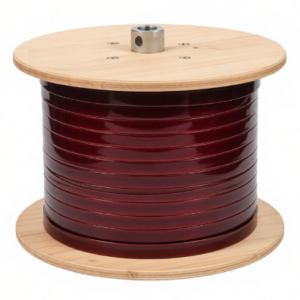
Submersible electric motors operate under water or other fluids, making the winding wire‘s insulation system the single most critical factor determining motor reliability and service life. PE+PA winding wire, consisting of a copper conductor insulated with polyethylene (PE) and sheathed with polyamide (PA), represents the established solution for water-filled submersible motors. This construction combines the excellent electrical insulation properties of polyethylene with the mechanical protection and water resistance of a nylon sheath .
Copper Conductor Design
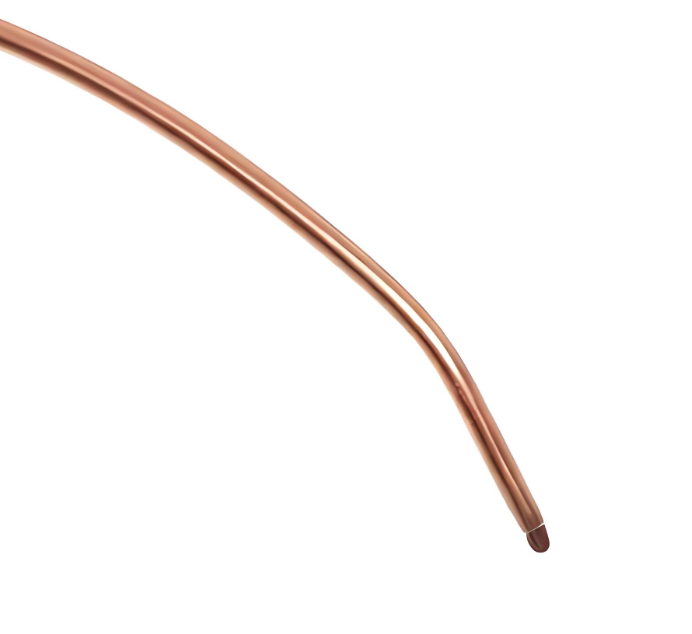
The conductor forms the electrical pathway and is manufactured from high-conductivity bare copper. PE+PA submersible winding wire is available in both solid and stranded configurations, with the choice determined by the required cross-sectional area and the flexibility demands of the winding process.
Solid conductors are produced in diameters ranging from 0.8 mm to 4.5 mm, corresponding to cross-sectional areas of 0.5 mm² to 19.60 mm² . These dimensions cover the majority of small to medium submersible pump motors where the winding process can accommodate a relatively stiff conductor. Solid conductors offer advantages in slot fill factor and simplify termination in motor stator assemblies.
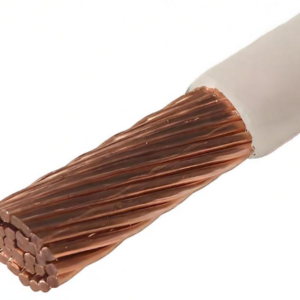
Stranded conductors extend the range to larger cross-sections, with diameters from 3.6 mm to 17.10 mm and cross-sectional areas of 8.0 mm² to 150.0 mm² . Common stranded configurations include 7-strand designs such as 7/0.80 mm and 7/1.12 mm, as well as 19-strand designs ranging from 19/0.69 mm to 19/1.18 mm . The multi-strand design provides the flexibility necessary for winding into motor stator slots while maintaining the required current-carrying capacity.
Conductor diameter tolerances are specified according to applicable product standards, with typical tolerances ranging from ±0.011 mm for 1.06 mm conductors to ±0.030 mm for 3.00 mm conductors . These tight dimensional controls ensure consistent insulation application and predictable electrical performance.
Insulation Layer: Polyethylene (PE)
The PE insulation layer provides the primary dielectric barrier for the winding wire. Polyethylene is selected for its excellent electrical insulating properties, high insulation resistance, and inherent water resistance.
Insulation thickness ranges from 0.3 mm to 3.5 mm, depending on the conductor dimensions and the operating voltage for which the wire is designed . For standard 450/750 V applications, thinner insulation walls are acceptable, while higher voltage ratings require proportionally thicker PE layers.
Application temperature for PE-insulated winding wire extends from -10°C to 80°C . This thermal range accommodates the operating conditions of most submersible pump applications, where the surrounding water provides cooling but also limits heat dissipation. The long-term operating temperature of PE winding wire should not exceed 70°C in continuous service .
Water pressure rating for this construction is 1 MPa, ensuring reliable operation at the depths typical of deep well submersible pump installations . The PE insulation resists water penetration, preventing the formation of water trees that would degrade dielectric strength over time. The wire is designed for operation in water with a pH value between 6.5 and 8.5 .
Colour of the PE insulation is white or natural, providing a clean appearance and facilitating visual inspection during winding operations .
Sheath Layer: Polyamide (PA)
The PA sheath, a thin layer of polyamide (nylon) applied over the PE insulation, serves a distinctly different function from the insulation layer beneath it. The polyamide sheath provides mechanical protection for the PE insulation, shielding it from abrasion and damage during the winding process and throughout the motor’s service life .
Sheath thickness ranges from 0.1 mm to 0.3 mm, depending on the outer diameter of the insulated conductor . Despite its thinness, this layer makes a significant contribution to the wire‘s durability. During motor winding, the wire is pulled through tensioning devices, bent around stator slots, and subjected to abrasion against slot liners and other wires. Without the PA sheath, the softer PE insulation would be vulnerable to scratching and gouging that could compromise its dielectric properties.
Colour of the PA sheath is natural . The polyamide material also provides a smooth surface finish that facilitates the winding process, allowing the wire to slide easily through winding equipment and into stator slots . The PA sheath must be tightly bonded to the underlying PE layer without voids or separation, as any air gap between the layers could create a path for electrical discharge.
Manufacturing and Material Selection
The production of PE+PA submersible winding wire begins with high-purity copper rod that is drawn through successive dies to reduce the wire diameter to the required size. For stranded conductors, multiple wires are bunched or stranded together with controlled lay length and direction.
Following stranding, the conductor is annealed to restore softness and flexibility lost during the drawing process. The annealed conductor is then cleaned to remove any residual oils or oxides before insulation application.
The PE insulation is applied through an extrusion process. The polyethylene compound is selected for its specific gravity, melt flow characteristics, and electrical properties. The extrusion temperature and line speed are controlled to achieve the specified wall thickness with concentricity within acceptable tolerances.
The PA sheath is applied over the PE insulation through a separate extrusion process or through double-layer co-extrusion. The polyamide material, typically nylon 1010 or a comparable grade, is extruded at controlled temperature to achieve the specified wall dimensions. The PA layer must be tightly bonded to the underlying PE insulation without voids or separation .
Factory Testing of Finished Products
Every production batch undergoes comprehensive finished product testing to verify compliance with specification requirements. The testing protocols address the dimensional, electrical, and mechanical characteristics that determine the wire’s fitness for submersible motor service .
Dimensional inspection verifies conductor diameter, insulation thickness, sheath thickness, and overall wire diameter against specification tolerances. The insulation thickness average must meet the nominal value, and eccentricity must be controlled to ensure uniform dielectric strength around the conductor circumference.
Insulation resistance testing measures the resistance between the conductor and the surrounding water or ground. Test procedures follow the methods specified in applicable standards, with results compared against minimum requirements. High insulation resistance is essential for preventing current leakage in water-filled motor environments .
Water pressure testing is particularly critical for submersible applications. The finished wire sample is subjected to pressurized water conditions without breakdown, verifying that the insulation system maintains its dielectric integrity under the hydraulic pressures encountered in deep well installations .
Mechanical property testing verifies tensile strength and elongation at break. At 23°C, the minimum tensile strength is 10 N/mm² and minimum elongation is 100%, tested in accordance with IEC 60811-1-1 . After aging at 80°C for seven days (7×24 hours), these values must remain at or above the same minimums, demonstrating the long-term stability of the insulation system .
Dielectric breakdown strength is measured at 50 Hz and 20°C, with a minimum value of 70 kV/mm according to DIN VDE 0303-21 . This high breakdown strength ensures reliable electrical isolation even under the demanding conditions of submerged operation.
Technical Standards
The manufacture and testing of PE+PA submersible winding wire is governed by recognized technical standards. The primary Chinese standard is JB/T 4014, which specifies general technical requirements, test methods, inspection rules, and packaging for submersible motor winding wires . The specific requirements for PE+PA constructions are covered in JB/T 4014.2, which addresses polyethylene insulated nylon sheathed water-resistant winding wires .
For the Indian market, IS 8783 provides the applicable standard for winding wires for submersible motors, with relevant sections covering polyethylene insulated and polyamide jacketed constructions. At the international level, IEC test methods are widely referenced, including IEC 60811-1-1 for mechanical properties and IEC 60093 for insulation resistance measurement

Reviews
There are no reviews yet.