
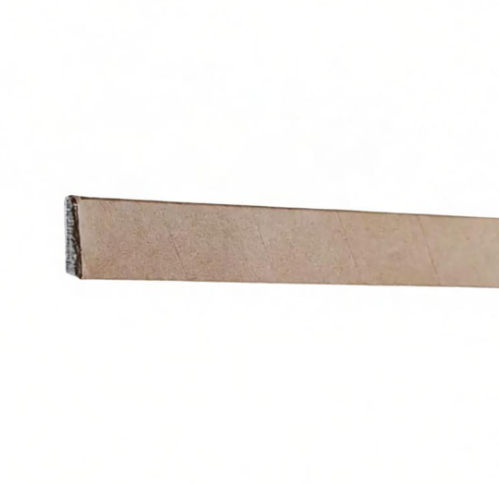
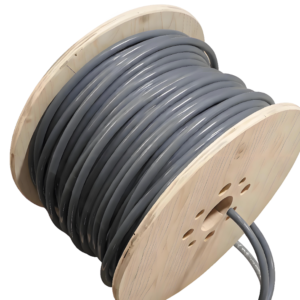
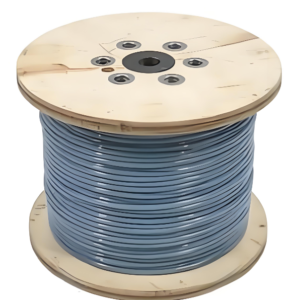
View more products about paper covered winding wires+
Dimensional Range We Offer
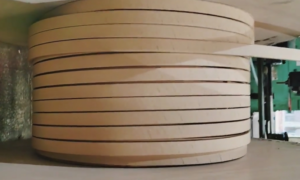
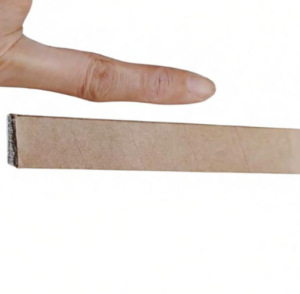
We manufacture paper covered aluminium winding wires with conductor dimensions ranging from 2.00mm to 16.0mm in width and 0.80mm to 5.60mm in thickness in compliance with IEC 60317-27-4 . However, we recognise that some applications require dimensions beyond these standard ranges, particularly for large power transformers where current-carrying capacity takes precedence over standardisation. For the 8mm x 20mm specification, we have developed specialised production processes that maintain the same rigorous quality standards as our standard product lines.
Our production equipment is capable of handling rectangular aluminium conductors up to 25mm in width and 10mm in thickness, giving us the flexibility to accommodate a wide range of custom dimensions. The 8mm x 20mm size falls well within our manufacturing envelope, allowing us to produce these large conductors with the precision and consistency that our customers expect.
Aluminium Materials We Use
We source high-purity electrical aluminium, typically alloy grades 1350 or 1370, with an aluminium content exceeding 99.7%. The selection of these high-purity alloys is critical for maintaining the required electrical conductivity of approximately 62% IACS, ensuring that our conductors meet the electrical performance requirements of power transformers. We work closely with our material suppliers to verify the chemical composition and electrical properties of every incoming batch, maintaining strict traceability throughout our production chain.
The choice between copper and aluminium conductors is one we often discuss with our customers. We manufacture both, but for the 8mm x 20mm size, aluminium offers distinct advantages. The weight savings compared to an equivalent copper conductor are substantial—approximately one-third the weight—which translates into significant benefits for transformer manufacturers in terms of reduced transportation costs, simplified handling during assembly, and lower structural support requirements. For large power transformers where conductor mass can reach several tonnes, these weight savings become a decisive factor.
Our Manufacturing Process for Large Conductors
Conductor Preparation
Our manufacturing process begins with the aluminium rods supplied by our qualified vendors, typically 9.5mm in diameter . These rods undergo a series of forming operations to achieve the required 8mm by 20mm rectangular cross-section. The process involves coarse drawing and extrusion through precisely dimensioned dies, followed by annealing to achieve the mechanical properties and electrical conductivity required for transformer windings.
Throughout this forming stage, we implement rigorous in-process quality control. We maintain dimensional accuracy to within 0.001mm, which is essential for ensuring consistent electrical and thermal performance and enabling the uniform application of paper insulation that follows. Our quality control technicians monitor every stage of the conductor preparation process, verifying that the conductor meets our dimensional specifications before proceeding to the cleaning stage.
Surface Preparation and Cleaning
We place great emphasis on conductor surface cleanliness, recognising that even microscopic contaminants can compromise paper adhesion, introduce impurities into transformer oil, or create localised heating points during service. Following the mechanical forming operations, we pass our conductors through ultrasonic cleaning systems using pure water, which thoroughly removes surface contaminants, oxides, and processing residues .
This cleaning step is particularly important for aluminium conductors, which are more susceptible to oxidation than copper. Our cleaning process ensures that the aluminium surface is chemically clean and ready for paper application, providing an optimal substrate for paper adhesion and long-term reliability. We conduct regular surface cleanliness tests to verify the effectiveness of our cleaning process.
Paper Winding Process
The paper covering is applied in a spiral wrapping process where the paper tape is wound around the aluminium conductor with precise tension control and overlap . For large conductors like the 8mm x 20mm size, our winding machines are equipped with heavy-duty tension control systems capable of handling the conductor weight while maintaining consistent paper placement.
We offer our customers flexibility in the winding method, which can be customised according to their requirements . Our options include:
-
Self-lock type overlap joint with 1.5-2mm overlap for consistent coverage
-
Half-lapped tapping for enhanced coverage and dielectric strength
-
Opposite direction lap wrap for multiple layers, improving overall insulation integrity
The number of paper layers applied is determined by the transformer’s voltage rating and specific dielectric requirements. Our standard offerings range from two to four layers, with the ability to accommodate custom layer configurations on request.
Insulation Materials We Offer
We select our paper tapes from suppliers qualified to IEC 60554-1 and IEC 60554-3-5, which define the electrical, mechanical, and physical properties required for electrical insulating papers . Our material selection options include:
Standard Kraft Paper: This remains our most widely used insulation material due to its proven performance, excellent dielectric properties, compatibility with transformer oil, and cost-effectiveness. Kraft paper provides reliable insulation in oil-immersed transformer environments and is suitable for the majority of our customers’ applications.
Telephone Cable Paper: We offer this as an alternative for applications requiring specific electrical characteristics. It provides consistent insulation thickness and good mechanical properties.
High-Voltage Cable Paper: We specify this for applications requiring enhanced dielectric strength. It offers superior electrical performance for higher voltage ratings.
NOMEX Paper: As a premium alternative, NOMEX paper offers class H insulation with temperature resistance up to 200°C . We recommend NOMEX for demanding transformer applications such as traction transformers, pole-mounted distribution transformers, and power substation equipment where temperature resistance and dielectric strength requirements are high.
The selection of paper type is a collaborative decision between our technical team and the customer, considering the transformer’s operating temperature class, voltage rating, and specific service conditions.
Quality Assurance and Testing
Standards Compliance
We manufacture our 8mm x 20mm paper covered aluminium winding wire in compliance with relevant international standards, primarily IEC 60317-27-4 for paper tape covered rectangular aluminium winding wire . We also produce to GB (Chinese national standard) specifications when required, and we are familiar with NEMA standards for the North American market.
Our quality management systems are certified to ISO 9001 and IATF 16949, ensuring consistent product quality across all production batches . We maintain complete traceability from material receipt through to final product dispatch, providing our customers with the documentation they need for their quality assurance programmes.
Testing Procedures
We implement a comprehensive testing programme for our paper covered aluminium winding wires. Our standard test programme includes:
Dimensional Verification: We measure conductor dimensions, insulation thickness, and overall wire dimensions using precision gauging equipment. The increase in dimensions due to paper covering is carefully controlled to meet customer specifications.
Breakdown Voltage Testing: We conduct dielectric tests to verify that the insulation system meets the specified voltage withstand requirements. The breakdown voltage of our paper-covered aluminium wire typically ranges from 600V for single-layer configurations to 3000V for double-layer half-lapped configurations .
Continuity of Insulation: We test for the presence of pinholes or other defects in the paper covering that could compromise insulation integrity. The pin hole test, introduced in the 2013 revision of IEC 60317-27, is an important part of our quality control process .
Adhesion Testing: We verify that the paper covering adheres properly to the conductor surface, ensuring that the insulation remains intact during transformer winding operations.
Visual Inspection: Our quality control technicians inspect every reel of finished wire for appearance defects, including proper paper coverage, absence of tears or creases, and consistent paper layer application.
Customer-Specific Requirements
We recognise that each transformer manufacturer has unique requirements, and we maintain the flexibility to accommodate customer-specific testing protocols, special marking requirements, and packaging preferences. Our technical team works closely with customers to establish the appropriate test programme for each order, ensuring that the finished product meets all specified requirements.
Custom Solutions and Application Support
Our customisation capabilities extend beyond conductor dimensions. We work with our customers to determine the appropriate insulation configuration, including paper type, number of layers, and winding method. The 8mm x 20mm paper covered aluminium wire can be supplied with two, three, or four layers of paper, depending on the transformer’s voltage rating and dielectric requirements.
The 8mm x 20mm paper covered aluminium wire is typically specified for large power transformer applications where high current-carrying capacity is essential. The substantial cross-sectional area of 160mm² enables these transformers to handle high power levels while maintaining acceptable temperature rise limits.
We also provide technical support for transformer designers, assisting with the selection of conductor dimensions, insulation configurations, and paper types to optimise transformer performance while managing cost and manufacturability considerations.

Reviews
There are no reviews yet.